

Akkeron Diavolo 2025
A tear-shaped attacker with fast ball exit and real bite, tempered by a softer touch when blocks and defensive volleys get busy.
Our Take
Shape
Tear
Weight
355 - 375 gr
Touch
Medium
Core
EV25 Black Soft
Faces
K12IMPACT Carbon
Frame
100% Full Carbon
What we like
- Explosive flat smash output
- Biting *víbora* with pace
- Cushioned blocks and volleys
What we don't
- Low wall returns lose depth
- Demands early preparation at net
- Limited help on late contact
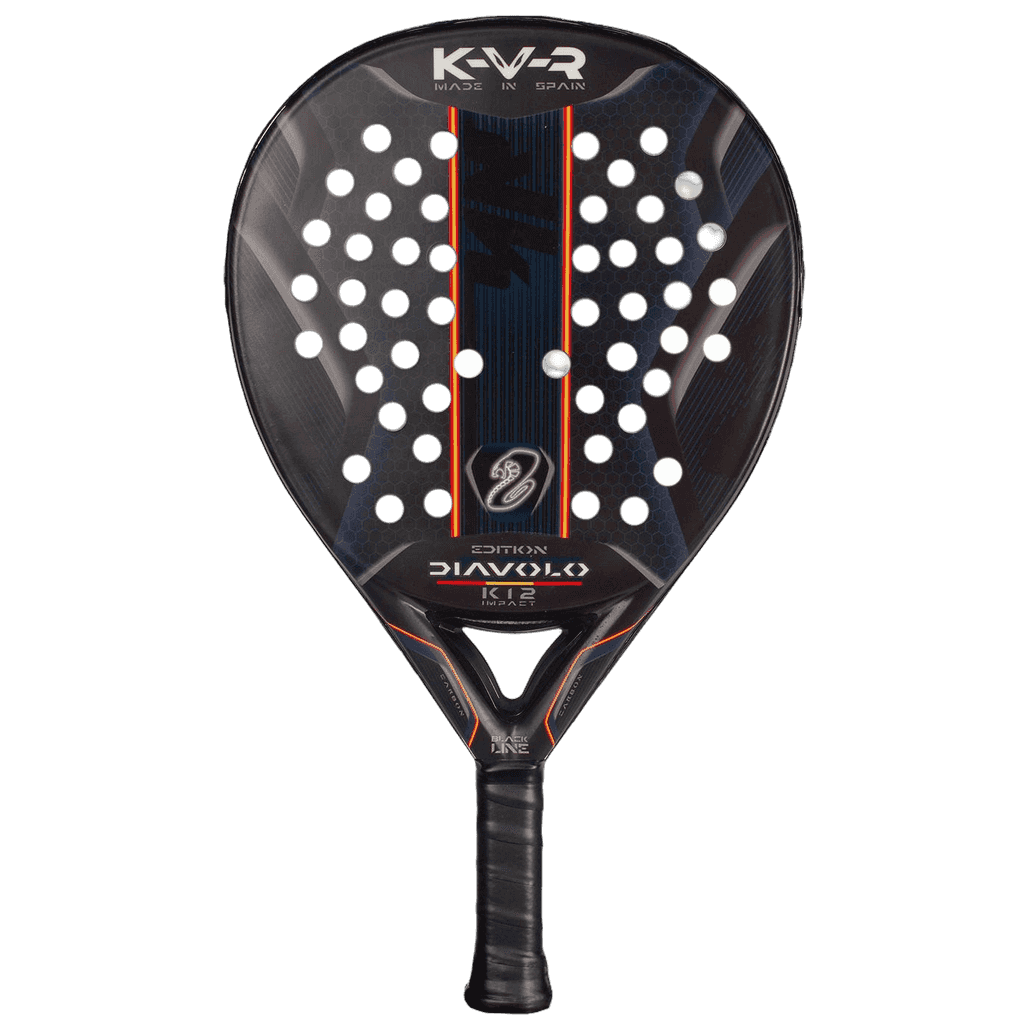
The Akkeron Diavolo 2025 is an attack-first racket with a lively response and a clear preference for taking charge above the net. I felt its best side appeared when I accelerated through the ball rather than when I tried to play passive, low-risk padel.
It is not a forgiving all-court racket disguised as a power model. The Diavolo rewards clean preparation, arm speed, and confident overhead technique; rushed contact, especially near the floor or off the wall, gets less help.
Technical analysis
Shape & balance
Its tear shape gives the Diavolo a slightly broader operating range than a pure diamond racket, and its medium-low balance keeps more mass near the hand. The sweet spot feels high enough to favor volleys, overheads, and attacking drives. When I meet the ball there, it produces a very direct, heavy response.
That placement has a cost. Low contact from the baseline is less automatic, particularly on balls that die after the glass. I found that defensive returns struck below center could lose both depth and direction unless I stayed relaxed and used a full enough swing.
Materials & construction
The 100% Full Carbon frame, K12IMPACT Carbon faces, and EV25 Black Soft core create a medium feel that is more cushioned than the racket’s attacking character suggests. It does not feel spongy or vague, but it takes some of the sting out of firm volleys and blocks.
Ball exit is quick. The softer core helps the ball leave the face without needing a huge swing, while the carbon face keeps the response crisp once I add acceleration. That combination works well for an aggressive player, although the frame still asks for accurate contact rather than covering up late technique.
On-court feel
Baseline play
From the baseline, I appreciated the comfort on blocks and defensive volleys. Against pace, the Diavolo does not feel harsh in the hand, and I could send a controlled defensive lob without fighting the racket.
Off-the-wall play is the weaker area. A clean rebound and centered contact are fine, but low, off-center balls demand proper timing. This is not the racket I would choose for simply absorbing pressure and letting the racket build depth for me.
At the net
At the net, the Diavolo becomes much more convincing. Punch volleys come off quickly, and the tear-shaped head helps put weight through the ball without making every shot feel uncontrollable. I could press through the middle or angle a firmer volley with good penetration.
Maneuverability is competent rather than exceptional. In fast hand exchanges, it is not as quick as a round control racket. I needed to prepare early, especially on body shots.
Bandeja and víbora
The racket has real bite on the víbora. The face grips the ball well enough to create a biting, skidding trajectory, and I could load spin without losing too much pace. A controlled bandeja also benefits from the comfortable core, particularly when I want depth rather than a flat winner.
Smash
This is its natural territory. Flat smashes feel explosive, and the Diavolo responds well when I commit to an x3 attempt or a hard finish through the middle. It does not create power from nothing, though. Players with limited overhead acceleration will not get the same payoff.
Conclusion
I would put the Diavolo in the hands of an intermediate-to-advanced player whose game is built around net pressure, aggressive overheads, and finishing opportunities. Its power, spin potential, and unexpectedly comfortable blocking response make sense for that profile.
The trade-off is clear: you give up some maneuverability and defensive forgiveness. If your points are often spent digging out low balls off the wall, or if you want the sweet spot to sit lower and rescue late contact, this racket will feel demanding.
What other reviewers say
- PadelTestLabfr
This review characterizes it as an attacking racket with quick output on flat smashes and x3s, plus pronounced bite for viboras and kick shots. Its softer core cushions blocks and defensive volleys, but the high sweet spot penalizes wall returns struck below center.
- Padel Racket Reviewsen
The rating clearly puts power ahead of the other attributes: it scores very highly for punch, while control, comfort, maneuverability, and forgiveness sit at a more moderate level. It is positioned for a committed attacking player rather than someone seeking maximum ease of use.
- Racketguide.comen
The sole owner review highlights a good sweet spot as its main positive. It is a brief observation, but it suggests the racket can feel relatively forgiving when contact is made in its optimal hitting area.
Switch Intelligence
Be the first to share where you switched from.
Community reviews
Real feedback from players who used this racket.
Add your review
To submit your review, log in first. You can still read all approved community reviews below.
Add review


