

Dunlop Galactica OS Nisse LTD 2026
A firm, composed round racket that rewards clean timing with precise placement, sharp spin, and calm hands through defensive exchanges.
Our Take
Shape
Round
Weight
355 - 365 gr
Touch
Medium-Hard
Core
Pro EVA
Faces
3K Carbon
Frame
Carbon Fiber
What we like
- Broad forgiving oversize sweet spot
- Stable, accurate blocked volleys
- Spin-heavy *bandejas* and *víboras*
What we don't
- Limited free ball exit
- Flat smashes lack acceleration
- Rough texture wears outdoors
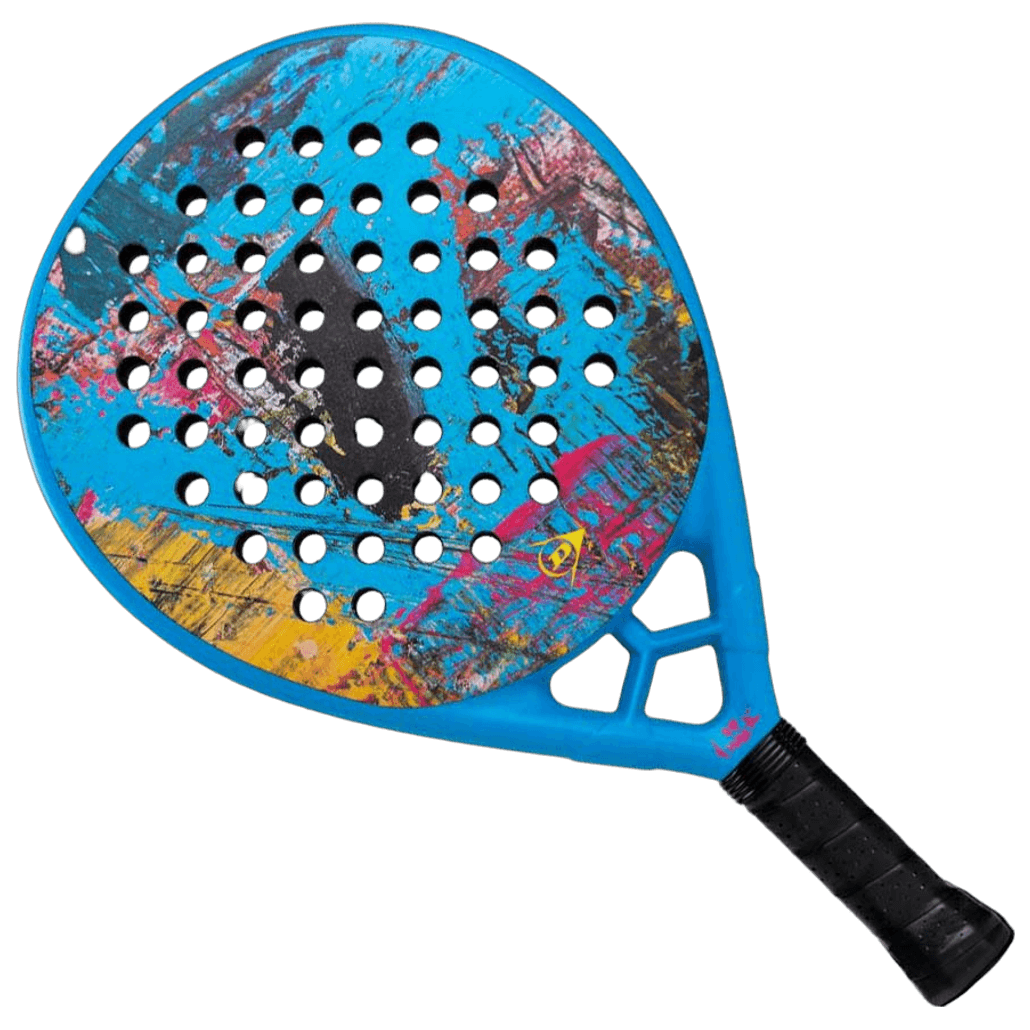
The Dunlop Galactica OS Nisse LTD 2026 is a control-first racket with a firm, dry response and more forgiveness than its demanding feel initially suggests. It wants me to build points with placement, spin, and clean preparation rather than hunt for easy winners.
Its round shape and medium-hard feel suit an intermediate-to-advanced player who generates their own pace. I found it quick enough in fast exchanges, but it does not bail me out when I am late.
Technical analysis
Shape & balance
The round profile keeps the racket stable and predictable through the hitting zone. Its oversize sweet spot sits slightly higher than I expected from a conventional control racket, which gives blocked volleys and slightly off-center bandejas a better chance of staying on line.
Balance feels neutral to slightly head-heavy rather than cumbersome. That matters in defense: I can get the racket through wall exits and quick blocks without feeling that the head is dragging behind my hand. Still, this is not a soft, automatic racket. Low contact points need a deliberate swing, especially when I am trying to turn defense into depth.
Materials & construction
The Carbon Fibre frame, 3K Carbon faces, and Pro EVA core produce a compact, direct impact. There is not much trampoline effect. I get clear feedback from the ball, which helps with touch shots and direction, but players who prefer a cushioned response may find it a little too dry.
The carbon face also gives the racket useful bite. On brushed contact, the ball grips long enough to shape a controlled víbora or add margin to a low-driven lob. The rough finish contributes to that spin early on, although outdoor use can gradually smooth that texture and reduce some of its assistance over time.
On-court feel
Baseline play
From the baseline, this racket rewards preparation. Defensive lobs are easy to place because the broad sweet spot gives me confidence to open the face and guide the ball high and deep. Off-the-wall play is similarly clean: when I meet the ball in front, the response is stable and accurate.
What it does not provide is free ball exit. A passive block from deep may land short, and a low ball will not suddenly jump off the faces. I need leg drive and racket-head speed to create depth. For players who rely on the racket to do the work in defense, that can become tiring over a long match.
At the net
At the net, the Galactica OS Nisse LTD feels more natural. The maneuverability lets me react quickly to body volleys and sharp exchanges, while the stable face makes it easy to keep blocks low. I particularly liked its ability to redirect pace without overhitting.
The trade-off is punch. A firm volley placed into space works well; a lazy volley aimed through an opponent does not carry much extra weight. This racket favors construction over brute force.
Bandeja and víbora
This is where its character comes together. The face gives me enough bite to shape spin-heavy bandejas and víboras, and the larger sweet spot is forgiving when contact is not perfectly centered. Directional control remains very good even when I am under pressure.
Smash
Flat smashes are its weak point. I can finish when my technique and timing are right, but the racket does not add easy acceleration or explosive ball exit. Kick smashes benefit more from the textured face and spin potential than from raw power.
Conclusion
I would choose this racket if my game is built around controlling tempo, defending with intention, and creating openings through spin and placement. It suits players who already prepare early and do not need a soft core to help them get the ball moving.
The trade-off is clear: excellent precision and a forgiving sweet spot, but limited free power. Players who want effortless depth from the baseline or a flatter, more violent smash will likely want a more reactive, head-heavy option.
What other reviewers say
- PadelTestLabes
The review portrays it as a demanding control racket with a dry feel and a broad sweet spot that keeps blocked volleys and slightly mistimed bandejas on line. It excels at spin-heavy víboras and bandejas, but requires sound technique, leg drive, and timing to create depth and pace.
Switch Intelligence
Be the first to share where you switched from.
Community reviews
Real feedback from players who used this racket.
Add your review
To submit your review, log in first. You can still read all approved community reviews below.
Add review


