

Dunlop Galactica Pro Nisse LTD 2026
A demanding tear shape that rewards full swings with a heavy finish, but asks for sharp timing when the pace rises at the net.
Our Take
Shape
Tear
Weight
370 gr
Core
Pro EVA
Faces
16K Carbon
Frame
Carbon Fiber
What we like
- Heavy x3 smash output
- Loaded *víbora* with bite
- Penetrating attacking volley depth
What we don't
- Slow in reflex exchanges
- Off-center contact loses stability
- Demanding defensive ball exit
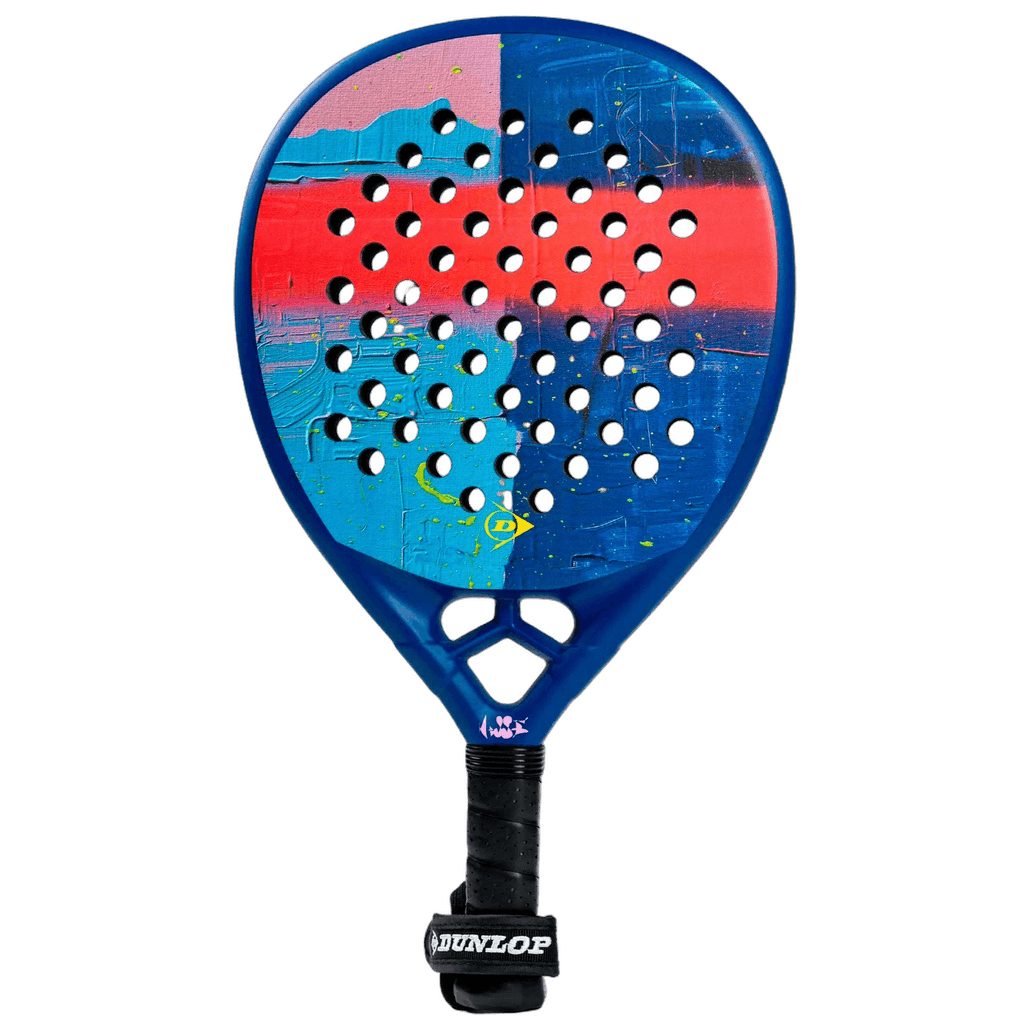
Dunlop Galactica Pro Nisse LTD 2026 is an attacking racket with a serious, demanding edge. It wants the point moving forward, rewards a committed swing, and feels most at home when I am looking to make the ball heavy through the air.
This is not a racket that smooths over late preparation or loose contact. Players with solid overhead technique will get more from it than those wanting easy defensive help.
Technical analysis
Shape & balance
The tear shape gives it a more rounded attacking profile than a full diamond, but the high balance still shifts the emphasis toward the upper part of the racket. I feel that leverage most clearly on overheads: once the head is moving, it carries through the ball with authority.
That same setup has a cost. It is not especially quick in tight exchanges, and I would not choose it for players who rely on rapid hand changes at the net. The sweet spot is reasonably useful rather than huge, so off-center contact loses pace and feels noticeably less stable.
Materials & construction
A Carbon Fibre frame, 16K Carbon faces, and Pro EVA core create a firm, direct response. The racket does not have a soft, springy ball exit; it asks me to put energy into the shot, then pays that effort back with a dense, controlled impact.
The rough-faced finish adds useful grip on the ball, particularly when I cut underneath a víbora or work sidespin into a low volley. It is not a wildly elastic build, though. Defensive shots do not jump out of the face on their own, and that lower rebound becomes more obvious when I am stretched behind the service line.
On-court feel
Baseline play
From the baseline, I get the best results by playing with intention. Blocks are accurate if I set the racket early, and a low-driven lob can be hit with good depth because the face feels stable through contact. Off-the-wall play is less forgiving: if I arrive late or catch the ball outside the center, the response drops away quickly.
For me, this is a racket that favors an active defense over passive survival. It will help a player who can prepare early and accelerate cleanly, but it does not provide much free ball exit when the point gets rushed.
At the net
Volleys come off heavy, especially when I can punch through the ball rather than flick at it. The balance gives penetrating depth on controlled attacking volleys, and the firm face helps me keep a chiquita low when I have time to shape it.
Fast reflex exchanges are its weaker territory. The head takes more work to reposition than a more maneuverable racket, so quick body volleys and emergency blocks require sharp hands. This is not the racket I would pick for a touch-first net game.
Bandeja and víbora
This is where its character makes the most sense. Court feedback consistently points to the víbora as one of its strongest shots, and I can see why: the racket lets me drive a low, loaded ball with enough bite to keep opponents under pressure. A well-struck bandeja also carries good weight.
Preparation matters. If I am late, the balance becomes a liability and direction suffers. Clean contact is non-negotiable.
Smash
The smash is another clear strength, particularly for x3 attempts. With a full swing, the racket transfers energy well and produces a heavy ball rather than a hollow, overly bouncy response. It rewards technique and timing more than brute force.
Conclusion
I would put this in the hands of an intermediate-advanced or advanced player who already attacks confidently and wants more authority on overheads, volleys, and aggressive finishing shots.
The trade-off is clear: it is less maneuverable in frantic net exchanges, less forgiving off-center, and not especially generous from defense. For a player who prepares early and hits through the ball, those compromises make sense.
What other reviewers say
- PadelTestLabfr
The review finds its strongest shots to be x3 smashes and víboras, where the medium-high balance, 370 g build and rough face produce a heavy, low-spinning ball. It demands early preparation on bandejas and clean contact, while quick reflex volleys and off-centre shots expose its main limitations.
Switch Intelligence
Be the first to share where you switched from.
Community reviews
Real feedback from players who used this racket.
Add your review
To submit your review, log in first. You can still read all approved community reviews below.
Add review


