

Enebe Space 2.0 2026
A teardrop racket with crisp 12K carbon feel, steady control, and enough punch to finish points without losing composure.
Our Take
Shape
Tear
Weight
355 - 370 gr
Touch
Medium
Core
Medium EVA
Faces
12K carbon
Frame
Carbon fiber
What we like
- Stable, predictable baseline play
- Clean *bandeja* with depth
- Volleys with good bite
What we don't
- Limited easy-access power
- Less forgiving on mishits
- Defense demands clean timing
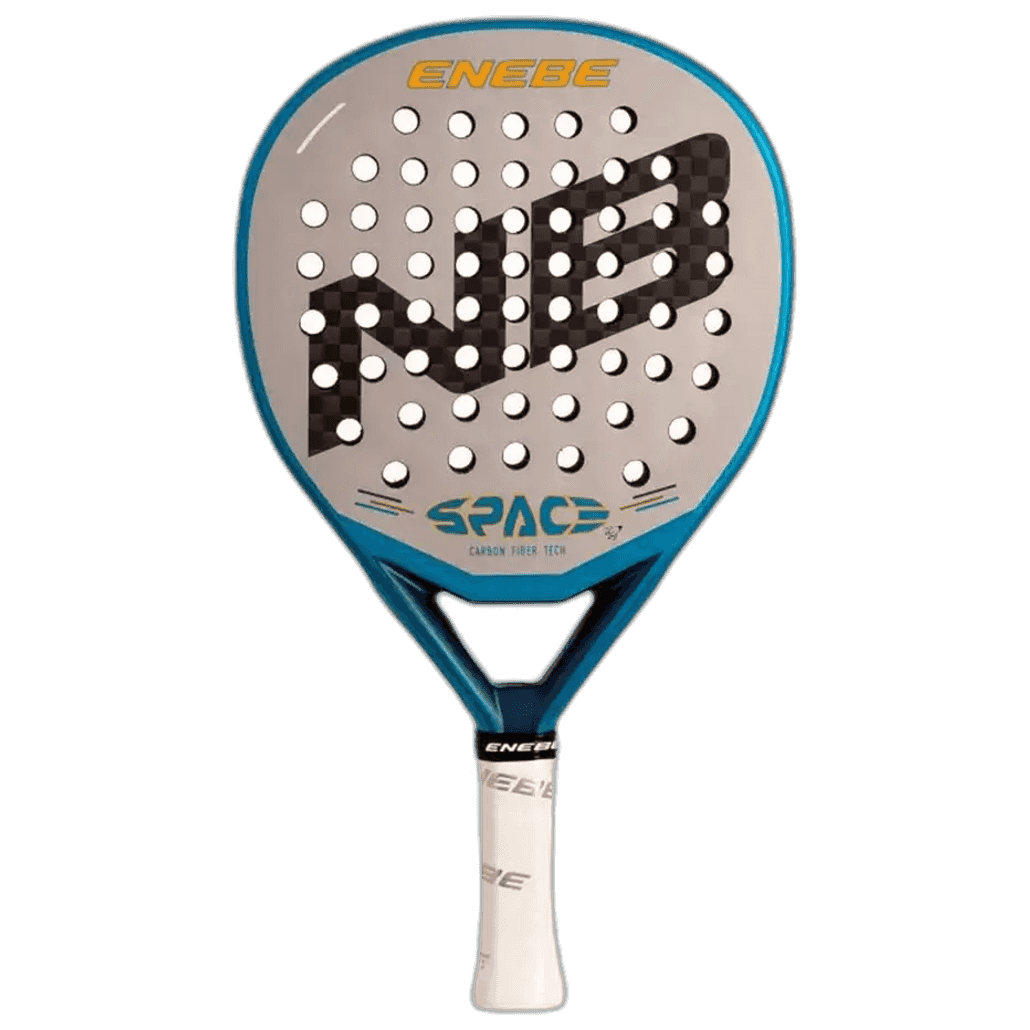
The Enebe Space 2.0 2026 sits in that middle lane I like: it’s not trying to be a brute, and it’s not a soft, effortless control racket either. What I get is a tear-shaped frame with a clear bias toward order, decent punch, and enough rebound to keep the ball moving without feeling dead.
This is a racket for players who want help building points from the baseline and still want something trustworthy once they step closer to the net. The 12K carbon faces and Medium EVA core give it a firm-ish, responsive character. Not harsh. Not plush. Right in that in-between space where touch depends a lot on your timing.
It feels comfortable for an all-court player, but I wouldn’t read that as “easy mode.” It asks for clean mechanics. If your contact point is sloppy, the racket reminds you pretty quickly.
Technical analysis
Shape & balance
The tear shape gives this Enebe a more versatile footprint than a pure attack racket. I feel the sweet spot sitting in a practical zone: not huge, but forgiving enough that off-center contact doesn’t fall apart. Balance is fairly neutral to slightly head-oriented, which helps it carry some weight through the shot without making the frame feel cumbersome.
That said, it doesn’t have the kind of top-end leverage you want if your main language is smash after smash. It’s more about controlled acceleration than raw violence. If you’re used to very head-heavy rackets, this one will feel calmer and easier to place, but also less explosive.
Materials & construction
The fiberglass frame keeps the structure from feeling too dry, while the 12K carbon on the faces adds a firmer, more precise response on impact. The Medium EVA core is a good match here. It gives the racket a middle-ground feel: enough rebound to help on deeper shots, but enough structure to keep block and placement shots from flying off the face.
I like the way the build balances feedback and comfort. The ball exit is lively enough that I don’t have to overwork easy balls, but the racket still asks for clean contact. It’s not the kind of frame that hides bad technique, and honestly, I prefer that. What it does not give you is the soft, very cushioned feel of a more comfort-first racket.
On-court feel
Baseline play
From the baseline, the Space 2.0 2026 feels stable and predictable. Defensive lobs come out with decent height and a clean trajectory, and blocks off heavy pace are solid as long as you meet the ball early and keep the face organized. I also found the rebound useful on low balls that need help clearing the net without forcing the swing.
It does ask for a bit of work under pressure. When you’re late, the response gets less generous. You can still defend with it, but it rewards timing more than laziness.
At the net
Up at the net, the racket shows its better side. Volleys come off with enough bite to keep opponents under pressure, and the frame stays composed when the exchange speeds up. I wouldn’t call it explosive, but it does let me direct the ball cleanly and hold my line in fast hands battles.
What I notice most is that it favors placement over chaos. If you want to knife the ball into spaces, it helps. If you want a racket that turns every volley into a missile, this is not that profile.
Bandeja and víbora
This is where the racket feels most natural to me. The combination of shape and medium feel makes bandeja work straightforward, with enough rebound to keep the shot deep and enough control to avoid floating it. The víbora also comes off with decent bite, though I’d still put this racket closer to control than aggression.
Conclusion
The Enebe Space 2.0 2026 makes sense for players who live between control and attack. If you build points well, like playing with structure, and want a racket that behaves cleanly in defense and at the net, it fits that game.
What you give up is easy access to pure power and that extra free help on awkward contact. It’s not the most forgiving frame in the world, and it won’t mask sloppy timing. But for a player who wants a sensible, responsive racket with good ball exit and enough precision to stay in charge, it does the job well.
Switch Intelligence
Be the first to share where you switched from.
Community reviews
Real feedback from players who used this racket.
Add your review
To submit your review, log in first. You can still read all approved community reviews below.
Add review


