

Joma Master Lite 2026
A soft, forgiving round racket that makes the baseline and back wall feel less punishing while new players find their rhythm.
Our Take
Weight
360 - 370 gr
Touch
Soft
Core
FLEXO BlackEVA Soft
Faces
Fiberglass
Frame
100% Carbon Tubular
What we like
- Easy ball exit on blocks
- Large sweet spot on recoveries
- Comfortable defensive lobs and walls
What we don't
- Lacks punch on smashes
- Relaxed response on víboras
- Less quick in net exchanges
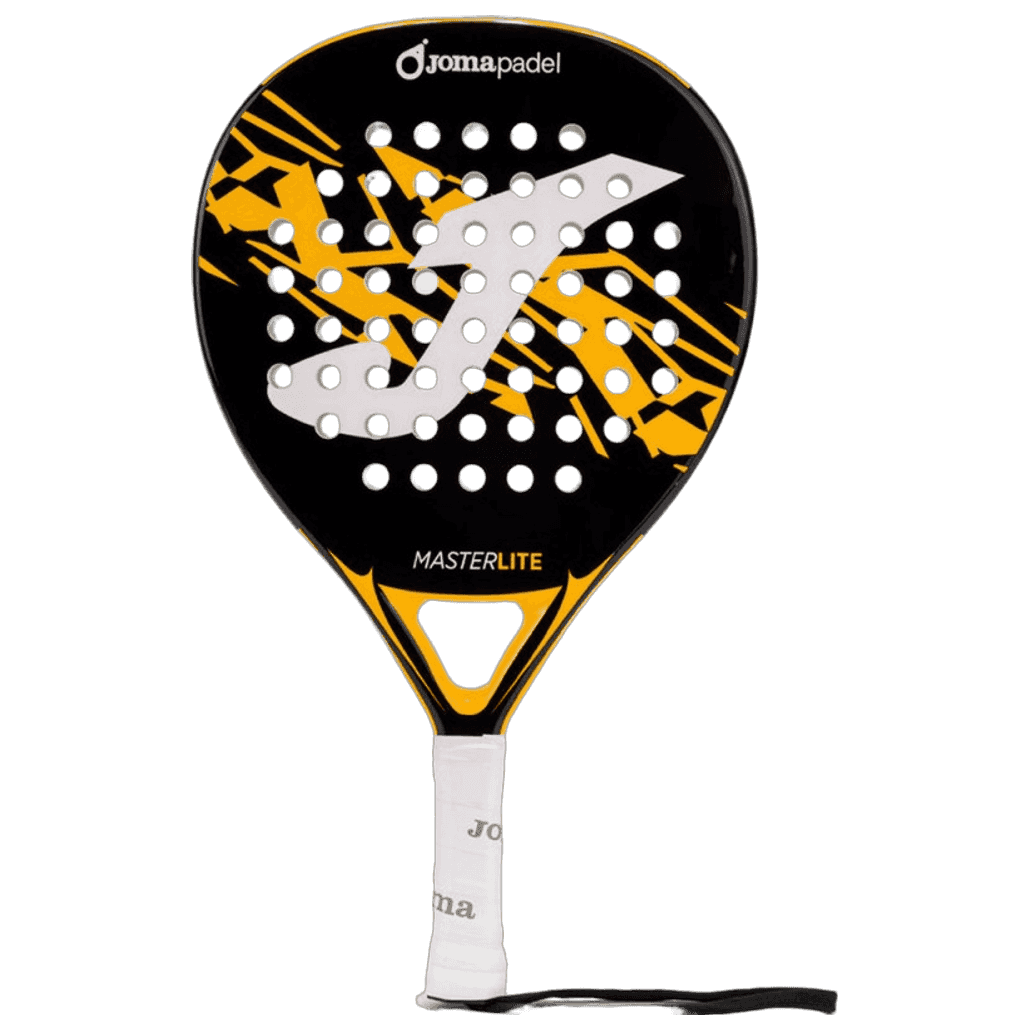
Joma Master Lite 2026 is a soft, forgiving racket built around easy ball exit and a very large margin for error. I see it mainly as a beginner-friendly option for players who want help from the baseline rather than a racket that demands clean, fast acceleration.
The Soft feel is its defining trait. It cushions contact, gets the ball moving without much effort, and makes defensive exchanges less punishing.
It is not a racket for finishing points through raw speed. Players who rely on an aggressive smash or a loaded víbora will find its response too relaxed.
Technical analysis
Shape & balance
Although Joma does not specify the shape in the available data, the on-court profile points clearly toward a round shape: a broad, accessible sweet spot and a control-first response. Reviews consistently place it in the forgiving end of the market, particularly for players still building reliable contact.
The balance feels manageable rather than head-heavy, which helps when preparing late on defensive balls and reacting around the body. That said, it is not an ultra-light, flicky racket in hand. Over a long match, players who prefer a very quick head may notice that it asks for a little more work in fast exchanges at the net.
Materials & construction
The 100% Carbon Tubular frame gives the racket enough structural stability to avoid feeling loose or overly flexible on contact. Its Fiberglass faces are doing much of the comfort work: they soften impact and provide the easy rebound that defines this model.
Inside, the FLEXO BlackEVA Soft core produces a cushioned response with plenty of ball exit. On slow defensive shots, that is useful. I can block, guide an off-the-wall ball, or send a defensive lob without having to force the stroke. The trade-off is a less direct, less crisp response when I want to flatten the ball aggressively.
On-court feel
Baseline play
This is where the Master Lite makes the most sense. The generous sweet spot is noticeable on blocks and wall recoveries, especially when contact is not clean. Research on this model also points to baseline and wall play as its stronger areas, and that matches its soft construction.
I found it easy to play depth with a compact swing. Low-driven lobs come off comfortably, while a normal defensive lob gets enough lift without feeling like the ball sticks in the faces. Control is good because the racket does not punish a slightly open face, although the very high rebound means touch shots need a relaxed hand. If I overpush a chiquita, it can leave the racket faster than intended.
At the net
Volleying is simple and confidence-building. The soft core helps on passive blocks, and the sweet spot gives useful forgiveness when the ball arrives quickly at the shoulder or hip. For a player learning to hold the net, that is valuable.
What it does not provide is much penetration on firm attacking volleys. I can place the ball well, but I do not get the heavy, sharp response of a harder carbon-faced racket. It rewards direction and consistency more than finishing power.
Bandeja and víbora
The bandeja is serviceable because the racket is easy to maneuver through a controlled swing. I would use it to keep the opponents back, not to force a winner. The víbora is less convincing: the soft faces and forgiving response do not generate the same bite or acceleration that an attacking player may want.
Conclusion
I would point beginner players, occasional players, and developing intermediate players toward this racket if their priority is comfort, control, and easy rebound from the baseline. It makes learning defense, blocks, and off-the-wall play less frustrating.
The trade-off is clear. You gain forgiveness and ball exit, but give up punch in the smash, sharper touch in aggressive overheads, and some quickness during sustained net exchanges.
What other reviewers say
- PadelSapienses
This assessment places it squarely in the beginner category: it performs better for control, baseline play, and wall shots than for smashes or víboras. Its soft, round construction is forgiving while learning, though the 365 g weight somewhat limits maneuverability over long matches.
Switch Intelligence
Be the first to share where you switched from.
Community reviews
Real feedback from players who used this racket.
Add your review
To submit your review, log in first. You can still read all approved community reviews below.
Add review


