

Level Titanium Pro 2026
A firm, attack-minded tear shape that puts real weight behind the smash while keeping enough margin for the baseline grind.
Our Take
Shape
Tear
Weight
353 - 368 gr
Core
Black EVA
Faces
3K Carbon
Frame
100% Carbon
What we like
- Stable punch on blocking volleys
- Lively exit for deep volleys
- Direct *víbora* response and penetration
What we don't
- Demands committed swings from baseline
- Slower in rapid hand exchanges
- Less forgiving on passive defense
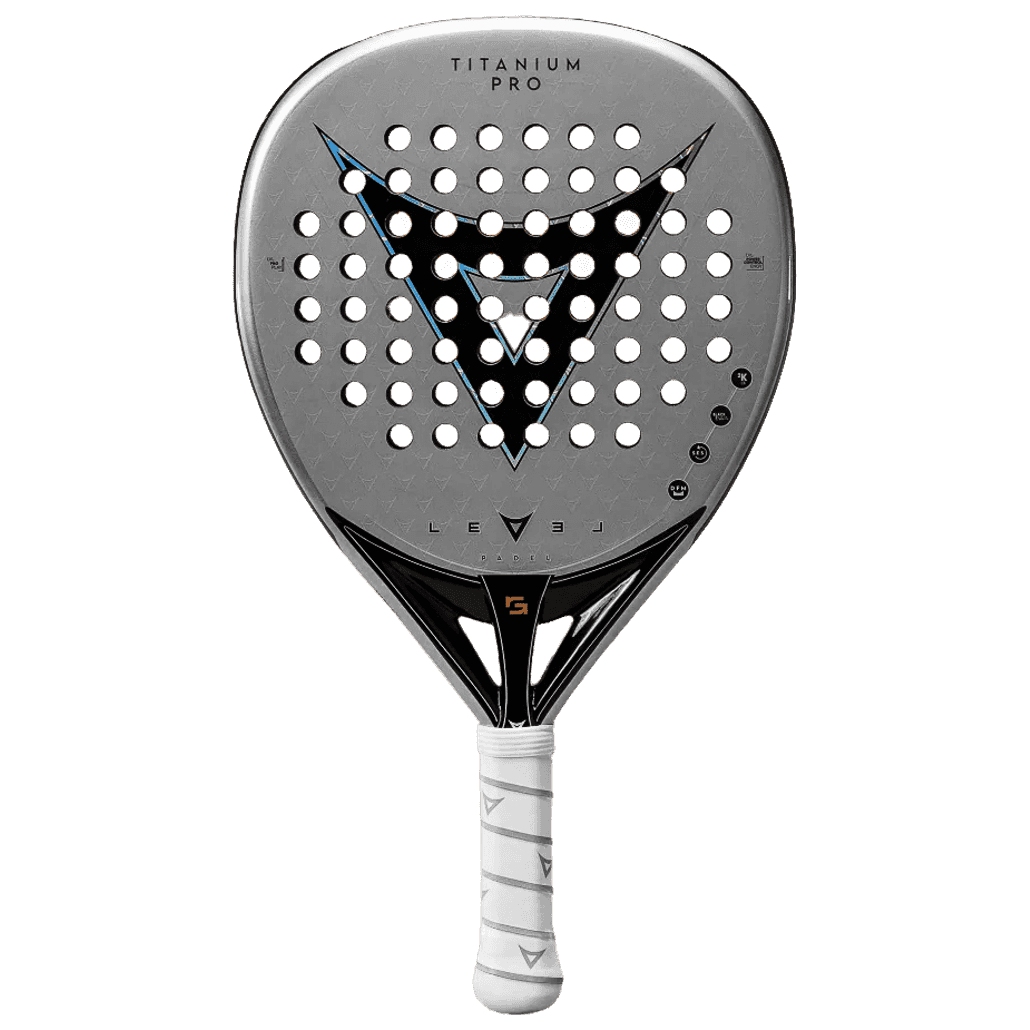
Level Titanium Pro 2026 is an attack-minded racket with a tear shape, a firm carbon build, and enough control to keep aggressive players from feeling disconnected in the slower phases of a point.
I see it as a racket for players who want to press from the net and finish overheads, but who still need a dependable response on blocks and defensive lobs. It is not a soft, effortless option for casual arm speed.
There is a clear trade-off here: it should reward a committed swing and clean contact more than passive defense.
Technical analysis
Shape & balance
The tear profile puts the Titanium Pro between a round control racket and a full diamond power racket. That usually means a more accessible sweet spot than a diamond, while still giving the upper part of the face enough presence for attacking shots.
Level does not publish a precise balance point, so I would not label it head-heavy without measuring it. Still, the stated power-oriented profile and only moderate maneuverability suggest that it will feel more substantial through the ball than especially quick in rapid hand exchanges. Players who prepare early will get more from it than players who rely on late wrist adjustments.
Materials & construction
The 100% carbon frame should give the structure a stable, direct response, particularly on firm volleys and blocks where frame flex can make the face feel vague. Its 3K carbon faces point toward a controlled carbon touch rather than the sharper, more demanding sensation associated with stiffer high-k carbon layups.
Inside, the Black EVA core is the key to its character. Based on the racket’s advertised rebound and control profile, I would expect a fairly lively ball exit without the trampoline effect of a soft fiberglass racket. That is useful when you need depth from the baseline, but it also means touch shots need a quiet hand. I would not expect it to absorb pace as comfortably as a softer control-focused model.
On-court feel
Baseline play
From the baseline, this should be a more capable racket than its power-first numbers might suggest. The forgiving side of the tear shape and the claimed broad sweet spot should help on defensive lobs, especially when contact is not perfectly centered after off-the-wall play.
That said, I would not choose it for purely reactive defense. The racket looks better suited to driving through a ball or sending a purposeful lob than simply placing the face behind hard volleys. If your defensive game depends on effortless absorption and short preparation, there are calmer, more head-light options.
At the net
At the net, the Titanium Pro’s construction makes sense. I would expect stable punch on blocking volleys and enough ball exit to keep volleys deep without having to overhit. The carbon frame should also help the racket stay composed when the ball arrives quickly at the body.
Quick exchanges are the compromise. It is unlikely to feel as flickable as a low-balance round racket, particularly on rushed backhand volleys or late chiquitas. Clean positioning matters.
Bandeja and víbora
This is where I would expect the racket to earn its place. The tear shape should let me accelerate through a bandeja without feeling that the contact point is excessively high, while the carbon faces ought to provide a direct enough response for a penetrating víbora.
It may not generate effortless slice on its own. Players who already create racket-head speed and brush the ball well will get more bite than those looking for the racket to manufacture it.
Conclusion
I would look at the Titanium Pro if my game is built around taking the net, hitting firm volleys, and using overheads to keep opponents pinned back. It appears to offer serious attacking potential without becoming a narrow, unforgiving diamond racket.
The trade-off is comfort. It is not the racket I would pick for a soft touch, maximum hand speed, or passive defensive play. Give it a committed swing and solid preparation, though, and its carbon construction and tear profile should make a lot of sense.
Switch Intelligence
Be the first to share where you switched from.
Community reviews
Real feedback from players who used this racket.
Add your review
To submit your review, log in first. You can still read all approved community reviews below.
Add review


