

Nox AT10 Luxury Genius 12K Alum Xtrem 2026 Agustin Tapia
A firm, precise tear-shape that rewards clean timing with pace, spin, and a very stable response at the net.
Our Take
The Court
22 reviewsShape
Tear
Weight
360 - 375 gr
Touch
Medium-Hard
Core
HR3 BLACK EVA
Faces
Carbon Fiber 12K Alum Xtrem
Frame
Carbon fiber
What we like
- Fast, controlled volleys at net
- Stable blocks against pace
- Spin-friendly *bandeja* and *víbora*
What we don't
- Needs work on slower balls
- Less forgiving on mishits
- Stronger feel on arm





Updated on 26 Aug (shipping cost not calculated)
Are you a store owner? Join our platform to be featured here.
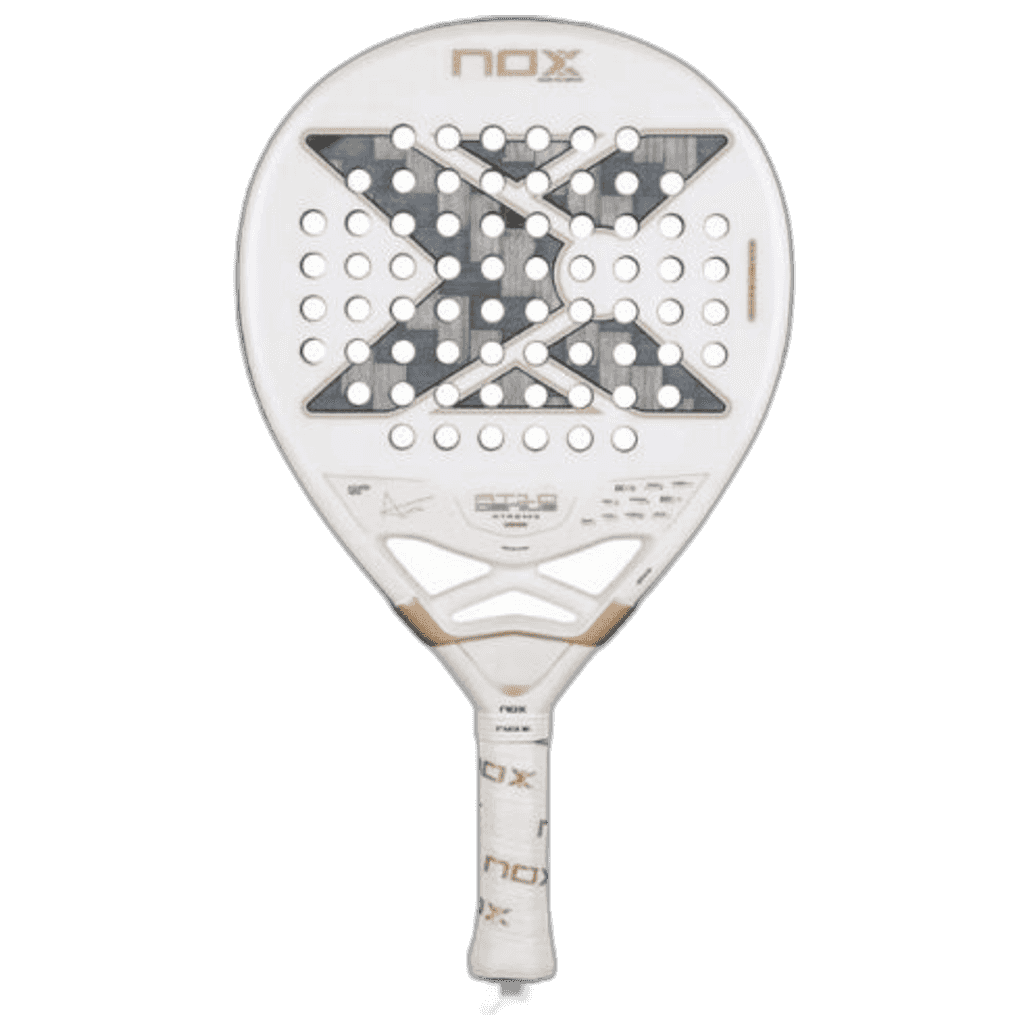
Nox AT10 Luxury Genius 12K Alum Xtrem 2026 Agustin Tapia is the sharpest, firmest AT10 I’ve felt in this line. It plays with a very clear personality: fast through the air, direct on impact, and happier when the point is being played at speed than when everything slows down and gets mushy.
I’d call it a technical racket first and a generous racket second. The tear shape gives it attacking intent, but what really defines it is the medium-hard feel and the way it keeps the response linear. It rewards clean timing. If you’re late, or lazy with your prep, it reminds you.
Technical analysis
Shape & balance
The tear shape sits in that useful middle ground where you get enough help overhead without turning the racket into a head-heavy club. What stands out most is how easy it is to move. For a racket with this much control and firmness, it feels quick in transitions and very manageable at the net.
That said, it does not hand you free ball. The balance is well judged, but the frame is built to stay stable rather than to launch the ball for you. If you want a softer, more forgiving AT10, this is not that version.
Materials & construction
The mix of Fibra de carbono in the frame, Carbon Fiber 12K Alum Xtrem on the faces, and HR3 BLACK EVA in the core gives the racket its straight-to-the-point behavior. The contact feels crisp and clean, with enough firmness to keep the ball from lingering too long on the faces.
That construction also explains the racket’s precision at speed. Blocks feel solid, volleys stay organized, and the sweet spot is generous enough to save you from total punishment on slight mishits. Still, it is not plush. The rebound is controlled rather than lively, so easy output is not the main selling point.
On-court feel
Baseline play
From the baseline, I liked it most on compact, well-timed shots. Defensive lobs come out with good direction, and blocks against pace feel stable because the racket doesn’t twist around much. Off-the-wall play is clean too, as long as you bring your own swing speed.
What it doesn’t do is bail you out with effortless depth. On slower balls, you have to work. There’s less free rebound than in softer AT10 variants, and that will matter if you rely on the racket to do the lifting for you.
At the net
This is where the racket feels most natural. Volleys come out fast and controlled, with a very predictable response when the ball is coming hard. It lets you keep pressure on without feeling like the face is wandering or overreacting.
I also found it very easy to keep the ball low and precise in fast exchanges. That stability is the big thing here. It’s not a trampoline, and that’s a good thing for technical net play.
Bandeja and víbora
These shots suit it really well. The racket makes it easy to produce spin and direct the ball without forcing the swing. The contact is firm, but not dead, so you can hit an aggressive bandeja or víbora with confidence and still trust the ball to stay on line.
The one catch is arm feel. Compared with softer AT10 versions, this one asks a bit more from you over time. If your shoulder or elbow likes a gentler response, you’ll notice the difference.
Conclusion
For me, this is the AT10 for players who want clarity first. It’s quick, stable, and very honest in how it responds. If you like a racket that tells you exactly what you gave it, this one makes a lot of sense.
What you give up is easy power and that softer, more cushioned feeling some players want on defense. It’s less forgiving, less relaxed, and less arm-friendly than the easier AT10 options. But in exchange you get a racket that feels disciplined, fast, and very controlled when the pace rises.
What other reviewers say
- PadelCriticen
The racket is presented as the firmest, sharpest AT10 2026 variant: it gives a very controlled response, stable blocks, and excellent precision at speed. At the net it wins on consistency and easy spin on víboras and bandejas, but it is not built for raw power or a soft feel.
- padelracket.reviewen
The analysis says this model prioritizes clarity and control over free help: it feels stiffer, responds earlier, and gives up some easy output and forgiveness. In return, it swings quickly, performs well at the net, and feels linear and predictable for technical players.
Switch Intelligence
Be the first to share where you switched from.
Community reviews
Real feedback from players who used this racket.
22 reviews

I have expected way more for that price. Although volleys are strong and it is quite easy to play overheads it is not forgiving and easy racket. For me biggest disadvantage is torssion, lack of durabiltity and i think this black eva doesnt fit rhe racket overall. It seems they have fixed it in 2027 model though.


For me, it is good control and big sweet spot, but too heavy


Add your review
To submit your review, log in first. You can still read all approved community reviews below.
Add review


