

Osaka Pro Power 2026 Raul Marcos
A firm tear-shape built to put weight behind the smash, with a demanding response once contact drifts from center.
Our Take
Shape
Tear
Weight
355 - 375 gr
Core
EV50 high-density foam
Faces
Japanese 3K twill-weave carbon
Frame
Twin-tube blown frame, 9 layers of carbon + 1 layer of Kevlar
What we like
- Heavy, direct smash output
- Stable frame on firm volleys
- Driven bandeja and víbora depth
What we don't
- Punishing off-center contact
- Limited ball exit from baseline
- Compact, inconsistent sweet spot
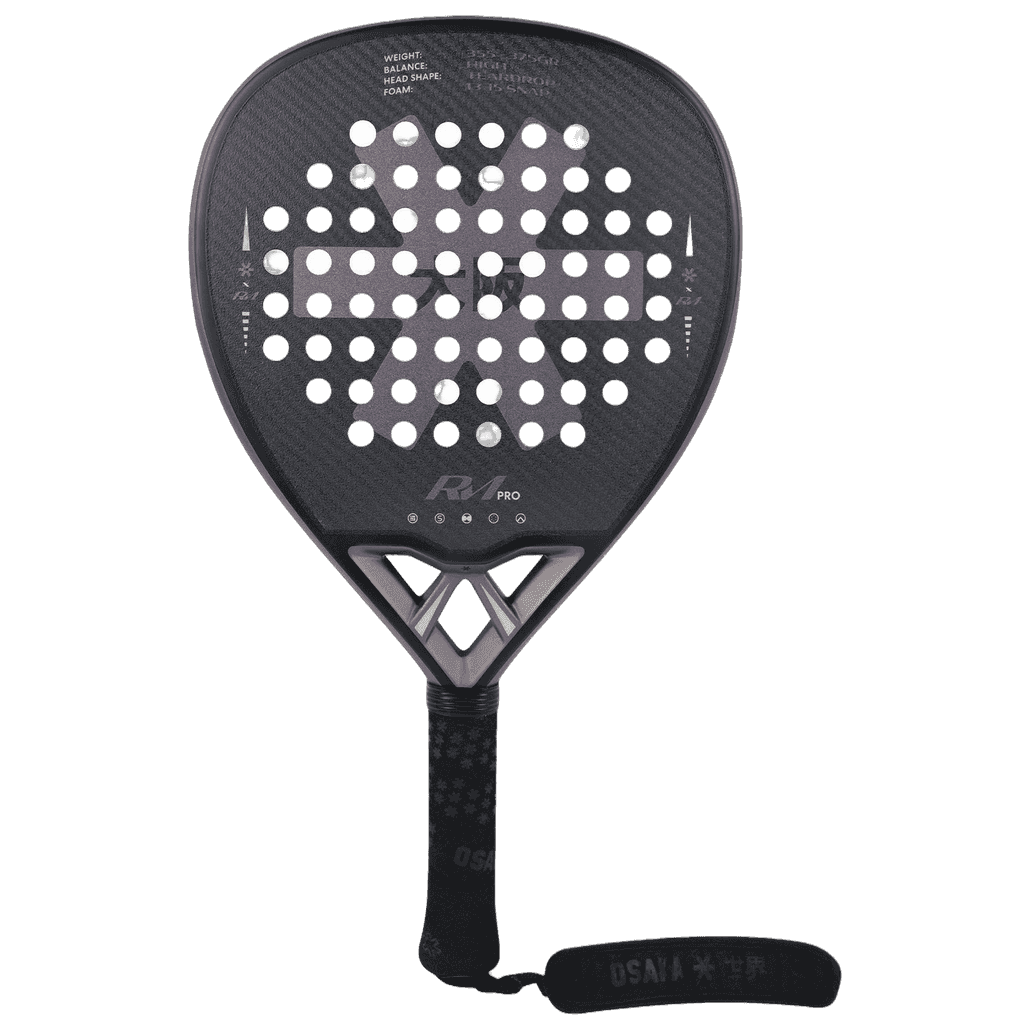
Osaka Pro Power 2026 Raul Marcos is a power-first racket with a firm, uncompromising response. It wants decisive swings, especially overhead, and it does not soften poor contact for you.
I see it fitting an intermediate-to-advanced player who builds points patiently but wants a more forceful finish at the net. It has usable control, but comfort is not its main selling point.
Technical analysis
Shape & balance
The tear shape gives it a more versatile platform than a full diamond racket, yet its character still leans clearly toward attack. It feels quick enough through the air for fast exchanges, without being a truly head-light, effortless racket.
I would not call it a forgiving option from the first ball. The listed sweet spot is relatively compact, and independent testing has also pointed to inconsistent response outside the center. Strike cleanly and it behaves with authority; arrive late or catch the ball near the frame, and the racket can feel noticeably harsher.
Materials & construction
Osaka uses a twin-tube blown frame built with nine carbon layers and a Kevlar layer, paired with 3K twill weave Japanese carbon faces. That construction explains the firm, direct contact. The frame feels stable when I am accelerating through volleys or loading an overhead, rather than flexing or wobbling at impact.
Inside, the EV50 high-density foam gives the racket a stiff feel with limited free ball exit. Independent reviewers have also described the response as demanding on off-center contact, and that is the key trade-off here: it rewards active technique, but it will not bail out a passive block or a rushed defensive swing. Feedback is direct, although not especially detailed; competitive players who rely on a very clear read of the ball may find its touch slightly blunt.
On-court feel
Baseline play
From the baseline, I need to prepare early and use a complete swing. The racket does not generate easy depth on a relaxed defensive lob, particularly when the ball is low or arriving quickly after the glass.
Blocks can be solid because the frame remains stable, but they need clean placement. On off-the-wall play, the small effective hitting area becomes more obvious: a centered strike travels with good penetration, while a contact toward the edge loses consistency and can feel punishing in the hand.
At the net
At the net, the Pro Power makes more sense. Firm volleys come off with weight, and the face stays composed when I press the ball into the court. There is enough maneuverability for quick reactions, though it is not the sort of racket that flicks through rapid hand battles by itself.
Shorter touch shots require restraint. A chiquita or soft drop shot can sit up if I let the hard response do too much work. I get better results by opening the face carefully and absorbing the pace rather than trying to cushion the ball at the last moment.
Smash
The smash is its natural territory. With a committed swing, the racket transfers force efficiently and produces the heavy, direct contact its name suggests. It also suits an aggressive bandeja and víbora when I want depth and a driven trajectory rather than maximum slice.
What it does not do as well is make overheads easy under pressure. If my contact drifts outside the sweet spot, the response drops off sharply. This is a racket for players who already strike overheads cleanly, not one that hides technical inconsistency.
Conclusion
I would choose this Osaka for an attacking player who values a firm hit, stable volleys, and serious overhead output. It has enough control to construct points, but its real contribution is making clean, aggressive contact feel decisive.
The trade-off is clear: limited forgiveness. Players who spend most of their matches defending, rely on easy ball exit, or want a larger, softer sweet spot will have a harder time with it.
What other reviewers say
- Padel Racket Reviewsen
The review rates its power highly and finds the handling reasonably good, but describes a stiff, punishing response on off-centre contact. It also flags an inconsistent sweet spot and limited feedback for serious competitive players.
Switch Intelligence
Be the first to share where you switched from.
Community reviews
Real feedback from players who used this racket.
Add your review
To submit your review, log in first. You can still read all approved community reviews below.
Add review


