

Pallap Power Elite 2025
A high-balance diamond built to finish above the net, with enough bite to make aggressive overheads count.
Our Take
Shape
Diamond
Weight
360 - 365 gr
Core
EVA 28
Faces
Rocksolid 24K Carbon
Frame
Carbon Kevlar Frame
What we like
- Heavy, penetrating smash response
- Stable on hard net volleys
- Biting spin on víboras
What we don't
- Cumbersome on late defensive balls
- Slow in quick hand exchanges
- Less forgiving low-face contact
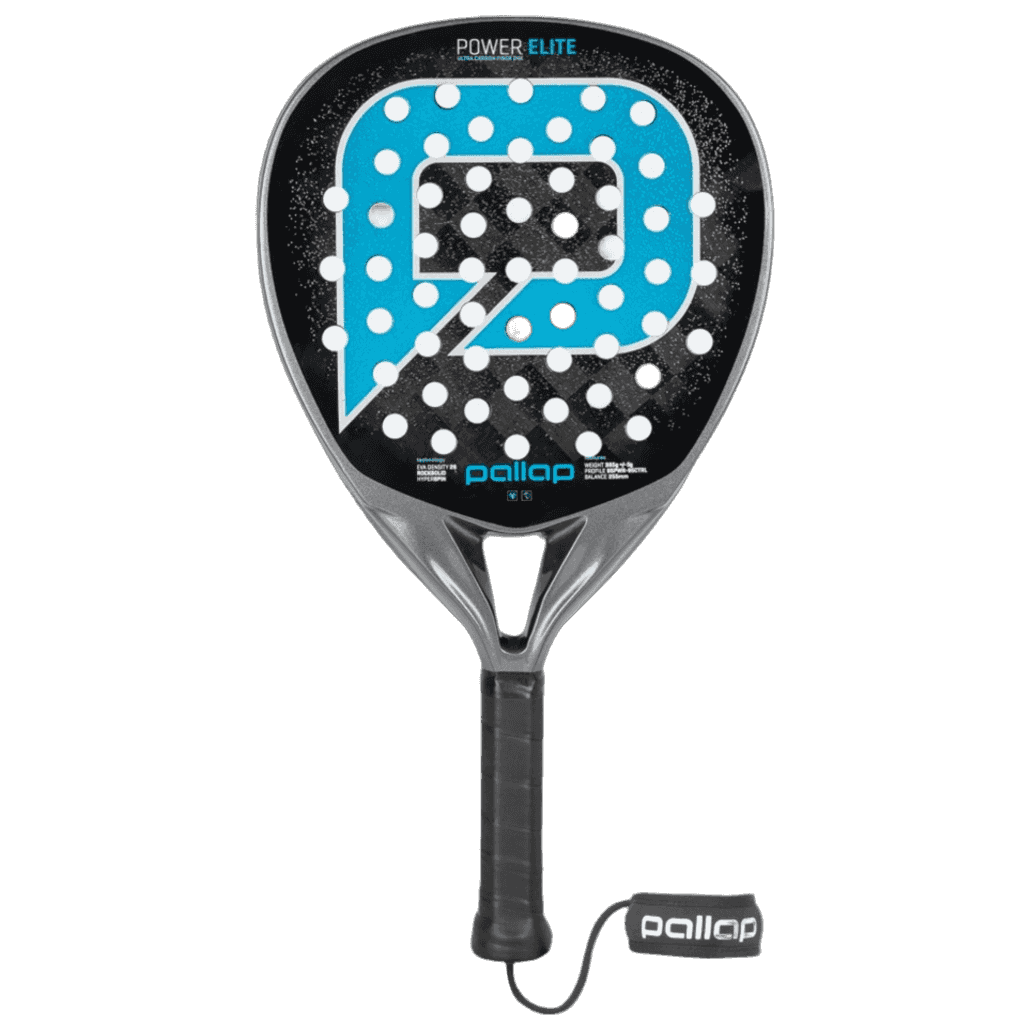
The Pallap Power Elite 2025 is an unapologetically attacking racket. Its diamond shape and high balance put the emphasis on overhead pace, heavy volleys, and finishing chances rather than easy defense.
I see it fitting advanced players who take the net early and can generate their own timing from the baseline. It rewards a committed swing. It does not smooth out late preparation or poor contact.
There is usable control here, but power is clearly the priority. That personality comes through most strongly on smashes and aggressive spin shots.
Technical analysis
Shape & balance
The diamond mold places the sweet spot higher in the face, and the head-biased balance gives the racket real momentum through the ball. On attacking shots, I can feel that mass working for me: volleys carry more weight, and an overhead does not need an exaggerated swing to travel deep.
The trade-off is clear. It is not a particularly quick racket in hand, especially in rapid exchanges close to the body. Players who rely on reflex blocks or frequent grip changes may find it less agile than a round or lower-balance racket. The sweet spot is reasonably usable, but it is not especially generous when contact drifts low on the face.
Materials & construction
Pallap uses a Carbon Kevlar Frame, Rocksolid 24K Carbon faces, and an EVA 28 core. That construction points toward a firm, direct response rather than a soft, springy ball exit. The frame should also help the racket stay stable when receiving pace, which matters on hard volleys and defensive blocks.
The carbon face gives the ball a crisp release when I accelerate properly. Spin access should be a strong part of the package, particularly for cutting a víbora or shaping a lower overhead with bite. Still, this is not the sort of face that gives free depth on slow defensive swings. It asks for clean technique and enough racket-head speed.
On-court feel
Baseline play
From the baseline, the Power Elite feels more demanding than forgiving. I would use it to play a low-driven lob, punch a return deep, or step into an off-the-wall ball with intent. When I am set, it produces a direct and penetrating response.
Under pressure, though, the high balance can make late defensive contact feel cumbersome. A soft block will not always carry as easily as it does with a more elastic, lower-balance racket. I would not choose this model for a player whose game depends on effortless defense or frequent resets from difficult positions.
At the net
At the net, the racket makes much more sense. Firm volleys come off with authority, and there is enough stability to absorb a hard ball without the face twisting too much. I particularly like this profile for attacking the middle or driving a volley through the feet of the opposing net player.
Quick hand battles are the limitation. The racket is capable, but it is not nimble. If your net game is based on soft touch, fast redirections, and repeated short blocks, you will need to work harder than with a head-light racket.
Smash
This is its natural territory. The high balance and carbon construction support a fast, heavy smash, while the face should provide good grip for kick and side-spin variations. An aggressive bandeja can also stay deep and troublesome rather than floating short.
It will reward players who already strike overheads confidently. For those still learning to control power and placement, it can feel more like work than help.
Conclusion
I would pick the Power Elite 2025 for an advanced attacking player who wants a racket that encourages forward play, heavy volleys, and decisive overheads. Its power-first character is backed up by the high-balance diamond format rather than just a cosmetic label.
The compromise is maneuverability and defensive ease. It is not a relaxed baseline racket, and it will not rescue rushed contact. Bring sound technique, take the net with purpose, and it has the tools to make your attacking game more punishing.
What other reviewers say
- BallIndorfr
The test positions it as an attack-oriented racket, combining high power, a head-biased balance and strong access to spin for smashes and net pressure. It is recommended for advanced players rather than beginners who prioritise defensive control.
- padelbenchmarken
Its editorial play ratings place power well ahead of control (80/100 versus 48/100), with middling manoeuvrability (62/100). It is characterised as a high-balance diamond racket for advanced, power-focused players.
Switch Intelligence
Be the first to share where you switched from.
Community reviews
Real feedback from players who used this racket.
Add your review
To submit your review, log in first. You can still read all approved community reviews below.
Add review


