

Pallap Velocity Team 2025
A comfortable tear-shaped racket that keeps defensive play calm, then moves crisply through volleys and measured attacks at the net.
Our Take
Shape
Tear
Weight
350 - 355 gr
Core
EVA 30
Faces
12K Carbon
Frame
Dual Carbon Frame
What we like
- Forgiving sweet spot off walls
- Quick, stable compact volleys
- Controlled defensive lob exit
What we don't
- Limited free smash power
- Muted impact on finishing volleys
- Needs adjustment for beginners
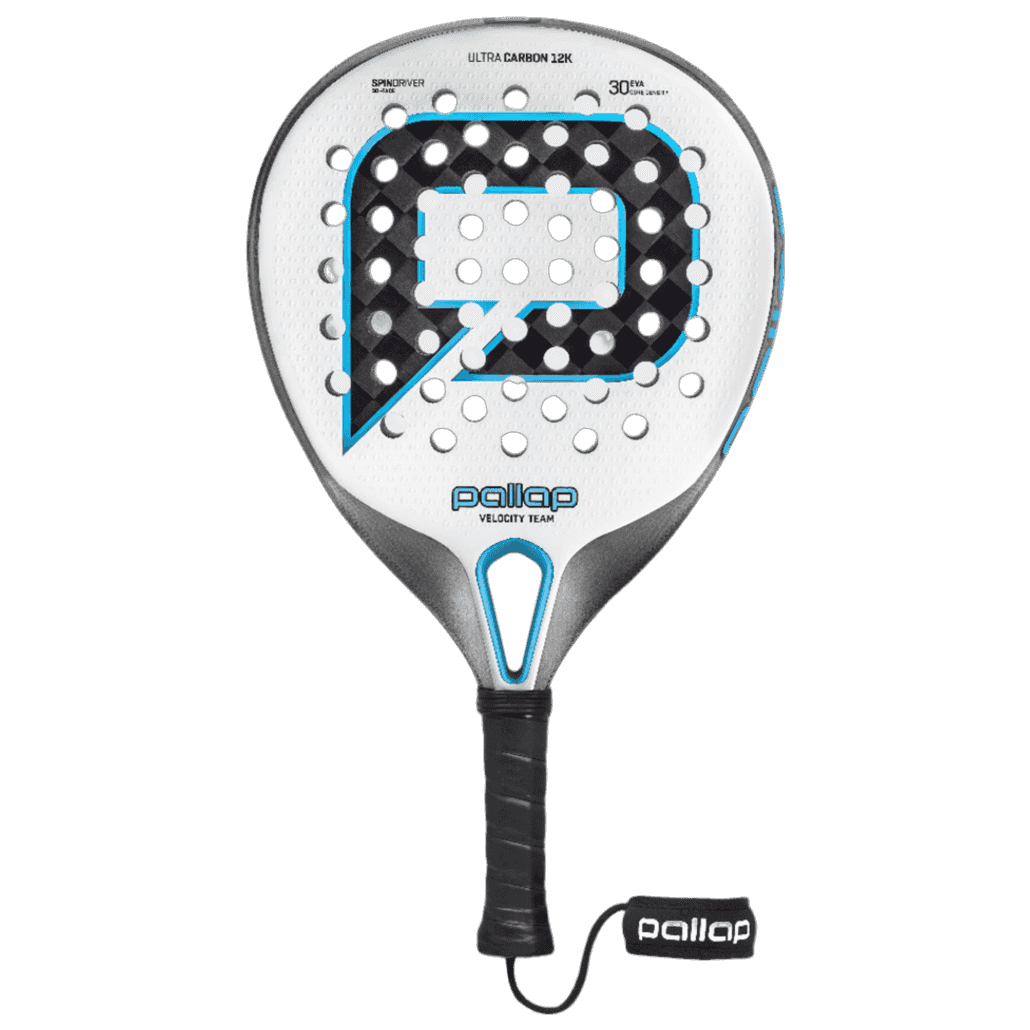
The Pallap Velocity Team 2025 is a comfort-first all-court racket with a controlled, forgiving response. It is not built to win points through raw smash power; it earns its place through clean direction, a generous contact zone, and easy transitions from defense to the net.
I found its character most appealing in longer points. It stays composed when I am blocking hard volleys, defending low balls off the wall, or trying to reset the rally with a defensive lob.
Players with a reasonably settled technique will get the most from it. Beginners may find the response a little different at first, but it is not a demanding racket once the timing clicks.
Technical analysis
Shape & balance
The tear shape gives the Velocity Team a balanced attacking and defensive profile. The sweet spot sits high enough to help on volleys and overheads, without pushing the balance so far forward that the racket becomes slow in hand.
Its balance feels moderately centered rather than head-heavy. That matters in quick exchanges: I can react late on a body volley, change direction on a block, or bring the racket through quickly for a drop shot without feeling like the head is dragging behind me.
There is still enough mass through the upper section to make a bandeja feel stable, but this is not a racket that naturally produces a heavy, punishing ball with minimal effort. Players who rely on a very aggressive overhead game may want more head weight and a firmer response.
Materials & construction
Pallap uses a Dual Carbon Frame, Carbon 12K faces, and an EVA 30 core. On court, that construction translates to a relatively comfortable carbon racket rather than a dry, overly stiff one.
The faces provide a clean, predictable strike, especially when I am guiding the ball rather than hitting flat out. The core gives useful ball exit on defensive shots and compact volleys, so I do not need a huge swing to send the ball deep. That comfort also holds up well through extended rallies, which matches the feedback I have seen from court testing.
The trade-off is clear: the response is controlled before it is explosive. The racket will help me place a smash, but it does not add the extra punch of a harder, more offensive carbon setup.
On-court feel
Baseline play
From the baseline, the Velocity Team is easy to trust. Its generous sweet spot helps when contact is not clean, particularly on off-the-wall returns where I am more focused on surviving the ball than striking it perfectly.
I liked it most for low-driven lobs and defensive lobs. The racket gives enough exit to clear the net without feeling springy or vague, while directional control stays consistent. Blocks also come off the face with a calm, cushioned response.
What it does not do especially well is turn defensive positions into instant attacking ones. If I want to fire a very fast passing shot from deep or force the ball through the opponent with a short swing, I have to supply that pace myself.
At the net
At the net, it feels quick and stable. Compact volleys are a strong point: I can absorb pace, keep the ball low, and redirect it without the frame twisting noticeably. The forgiving response is useful when exchanges speed up and contact moves away from the center.
The softer edge in its response also helps with chiquitas and controlled drop volleys. I can take pace off the ball without it dying on the face.
On the other hand, players who like to finish volleys with a sharp, hard impact may find it slightly muted. It favors placement and repeatability over a crisp, aggressive hit.
Conclusion
I would choose the Velocity Team for a control-minded intermediate or advanced player who spends real time defending, constructing points, and moving forward behind a smart ball rather than a low-percentage winner.
It offers comfort, forgiveness, and a reliable all-court response. The compromise is power: it will not give a free smash or the most penetrating overhead ball. If my game depends on imposing heavy pace at the net, I would look for a firmer, more head-heavy racket.
What other reviewers say
- BallIndorfr
The test presents it as a stable, manoeuvrable all-court racket that transitions quickly from defence to the net. It highlights forgiving directional control and quick responses on volleys, drop shots and smashes, while noting that inexperienced players may need an adjustment period.
- Padel Connectfr
Its court testing and player-feedback ratings put comfort first, followed by control and forgiveness. Power, manoeuvrability and spin rate as more moderate, pointing to a balanced racket for established players.
Switch Intelligence
Be the first to share where you switched from.
Community reviews
Real feedback from players who used this racket.
Add your review
To submit your review, log in first. You can still read all approved community reviews below.
Add review


