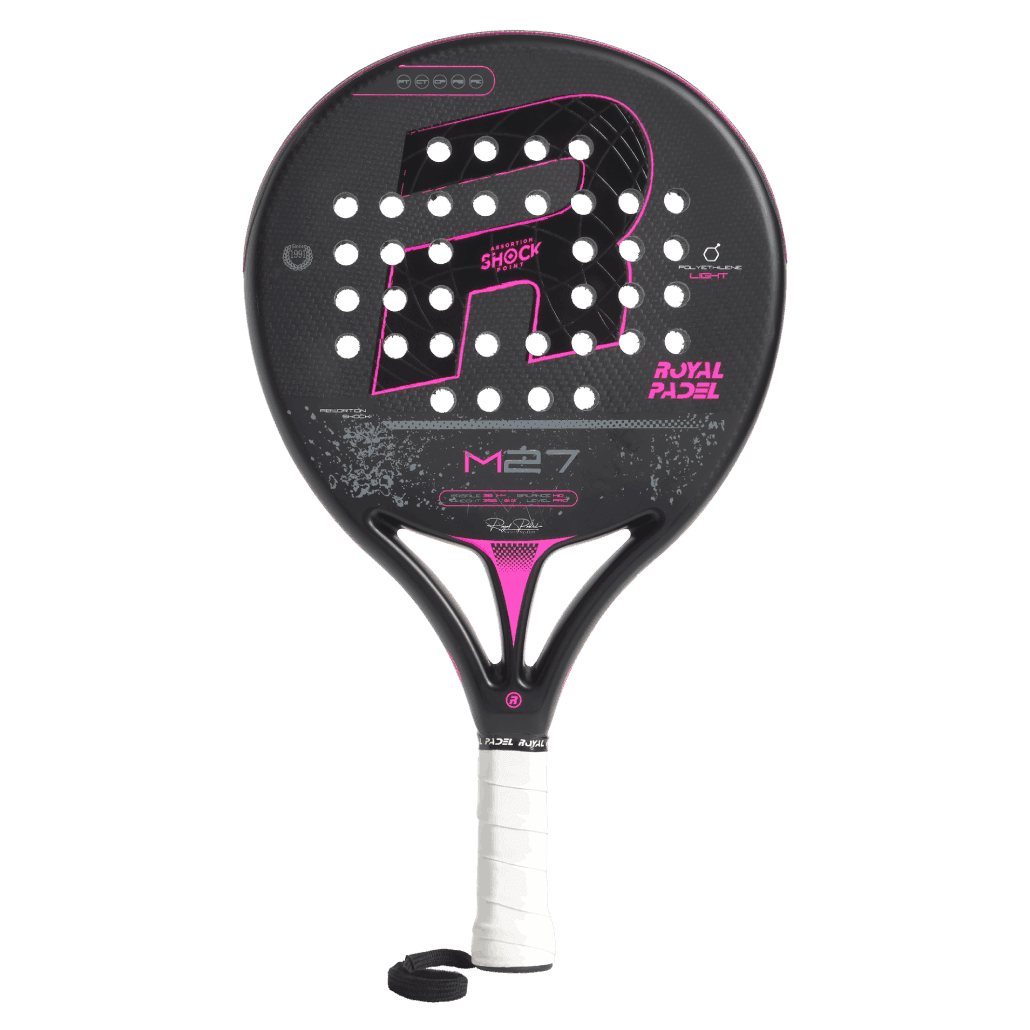
Royal Padel M27 Poly 2026
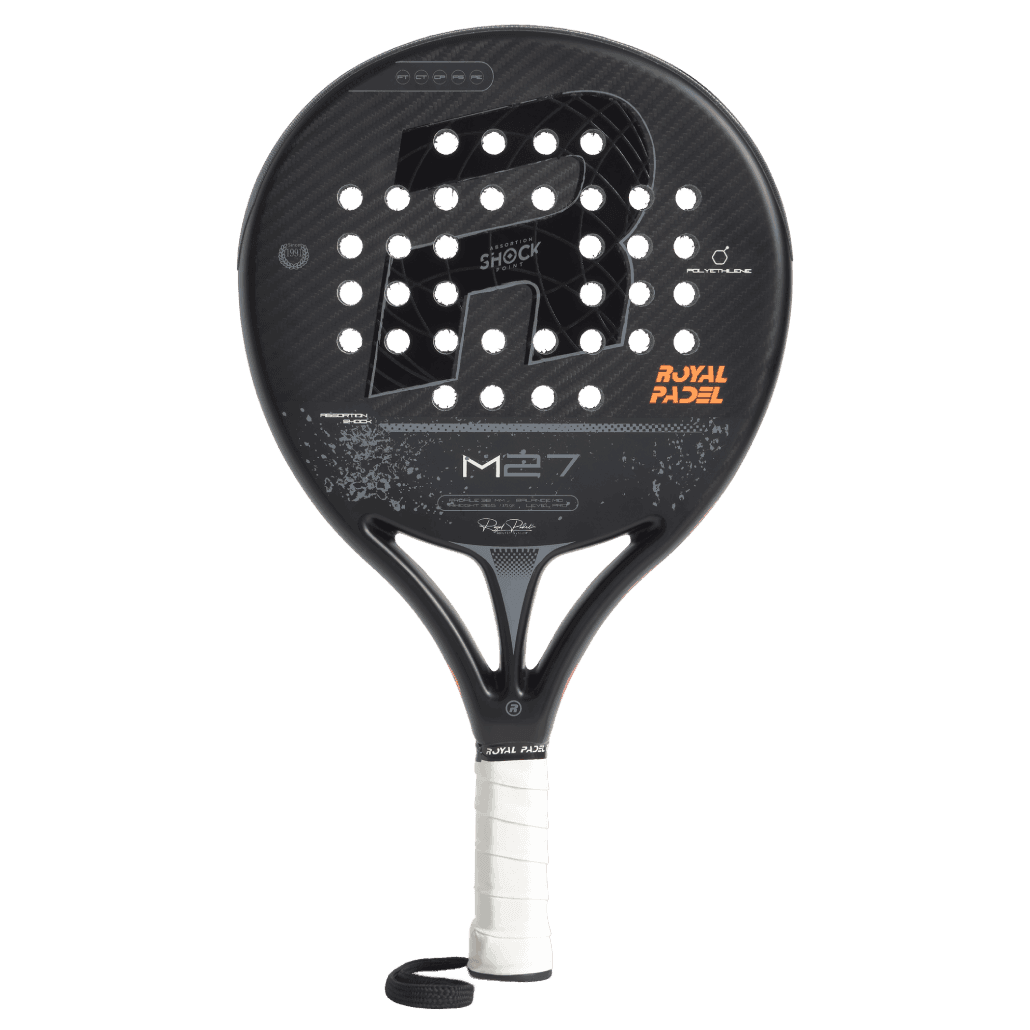
A round, arm-friendly racket with a huge sweet spot, calm control from the back court, and clean ball exit without losing precision.
Shape
Round
Weight
360 - 380 gr
Touch
Medium-Soft
Core
High-density polyethylene
Faces
3K Carbon
Frame
Carbon fiber
What we like
- Large sweet spot forgiveness
- Secure control from baseline
- Comfortable arm-friendly response
What we don't
- Limited full-smash punch
- Needs adaptation for beginners
- Less agile than light control rackets
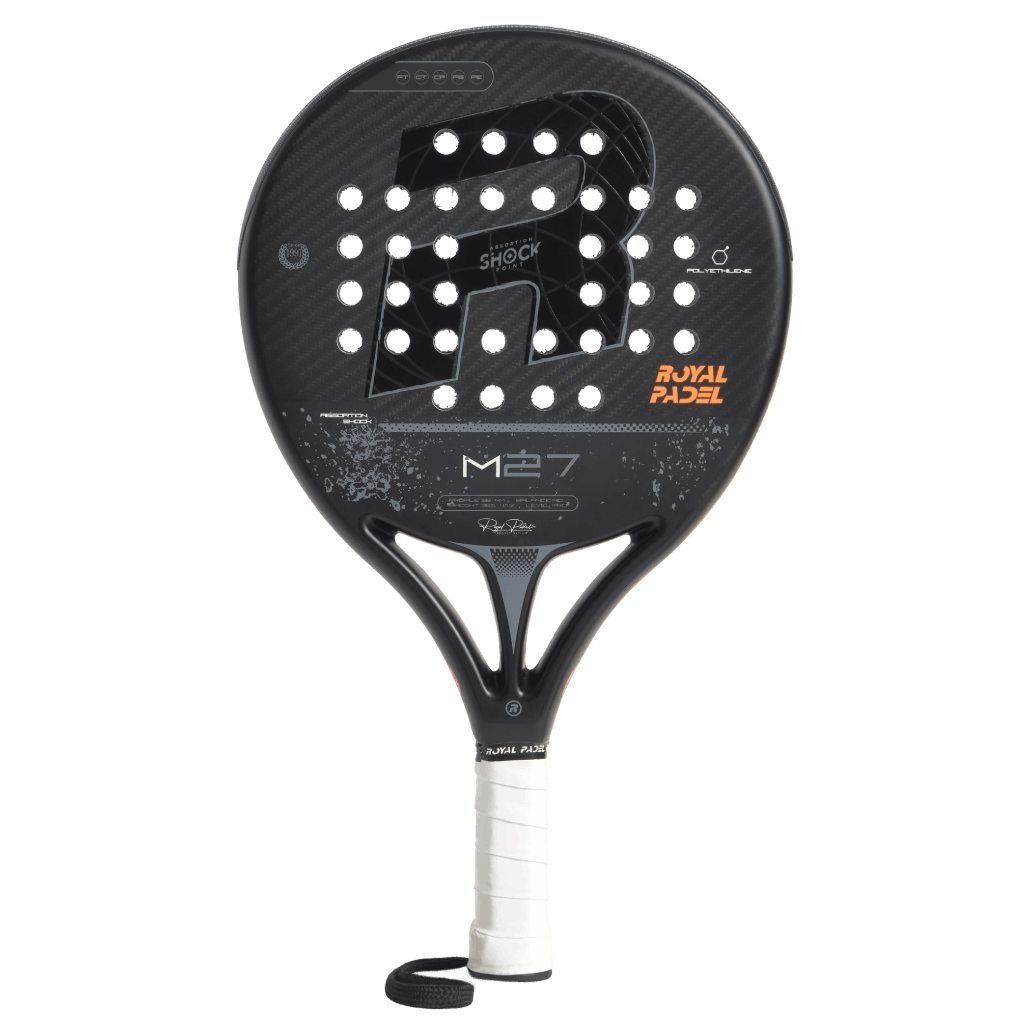
The Royal Padel M27 Poly 2026 is a round control racket with a very clear identity: it prioritizes security, ball placement, and a forgiving response over raw finishing power. In my hands, it feels like a racket that wants to build points calmly from the back of the court and keep the net exchanges tidy.
The carbon fiber frame, 3K carbon faces, and high-density polyethylene core give it a comfortable, medium-soft response. That combination points to a racket that’s easy on the arm and stable enough to trust in long rallies, especially if you value control and a generous sweet spot.
Technical analysis
Shape & balance
The round shape does most of the heavy lifting here. It pushes the sweet spot into a very playable area and gives the racket that forgiving, centered response I notice right away on off-center contacts. The balance stays sensible, so it doesn’t feel like a head-heavy frame that drags late in the swing.
That said, it’s not the easiest control racket I’ve used if you’re looking for ultra-light maneuverability. It moves well enough, but there’s enough structure in the frame and faces to give it a slightly more planted feel. For me, that’s part of its appeal: it stays stable, but you do need to commit a bit more than with featherweight options.
Materials & construction
Royal Padel’s use of carbon fiber in the frame and 3K carbon on the faces gives the racket a clean, predictable response. The surface doesn’t feel harsh. It has enough structure to keep the ball honest, but the overall medium-soft feel softens impact and helps the ball exit without turning the racket into a trampoline.
The high-density polyethylene core is a big part of why this racket feels so comfortable. It absorbs impact well and keeps vibrations in check, which I think will matter to players who spend a lot of time blocking hard balls or defending from the baseline. It doesn’t give you the crispest, most explosive contact, but it does give you consistency.
On-court feel
Baseline play
From the back of the court, this racket makes it easy to slow things down and place the ball where you want it. Defensive lobs come out with good depth, and blocks feel secure because the racket gives you time to set the ball rather than forcing a rushed response. That large sweet spot really shows here.
What I like most is how calm it stays under pressure. You don’t get a wild rebound, so the ball doesn’t jump away from you on awkward contacts. The trade-off is that if you’re looking for a racket that helps you turn defense into instant offense, this one is more about control than surprise.
At the net
Up front, it behaves with the same discipline. Volleys are easy to place, and the racket gives you a lot of confidence when you want to redirect pace instead of swinging for winners. It feels especially comfortable in exchanges where control matters more than aggression.
It’s not a racket that begs you to finish every point at the net. The response is clean, but not especially violent. If you try to force the pace with the wrist, it won’t reward you as much as a more attack-oriented frame would.
Bandeja and víbora
This is probably one of the racket’s best zones. The combination of control, comfort, and easy ball exit makes the bandeja feel very natural. I can keep it deep and well directed without having to overhit.
The víbora also comes off with good bite for a control racket, though it’s still more about placement than acceleration. You get enough help to keep the ball low and awkward, but not the kind of free power that turns these shots into automatic damage.
Conclusion
I see the Royal Padel M27 Poly 2026 as a very solid choice for players who want a control-first racket with a forgiving face and a comfortable feel over long sessions. It works best for players who build points from the baseline, value clean volleying, and like to keep errors down.
What you give up is obvious: it doesn’t have the most punch on full smashes, and it won’t satisfy players chasing easy finishing power. It also asks for a bit of adaptation if you’re very new to the game. But if your priority is control, comfort, and a racket that behaves predictably under pressure, this one makes a strong case.
What other reviewers say
- PadelReviewes
The review portrays it as a round, medium-soft racket that feels secure from the back of the court and makes it easy to place the ball and build points patiently. At the net it controls volleys and bandejas well, but it is not framed as a racket for very aggressive finishing power.
Switch Intelligence
Be the first to share where you switched from.
Community reviews
Real feedback from players who used this racket.
1 review

Very strange racket if you previously never played with RP rackets. Too soft, heavy and low power - good for defense, but no offense
Add your review
To submit your review, log in first. You can still read all approved community reviews below.
Add review