

Royal Padel Whip Polietileno 2025
A soft, forgiving round racket that slows the game down, letting patient defenders place the ball and build from the baseline.
Our Take
Shape
Round
Weight
360 - 375 gr
Touch
Soft
Core
Soft polyethylene
Faces
Fibertech
Frame
Carbon
What we like
- Broad sweet spot on defense
- Cushioned impact eases elbow discomfort
- Controlled lobs and sliced placement
What we don't
- Slow ball exit needs acceleration
- Smashes lack finishing help
- Punch volleys lack penetration
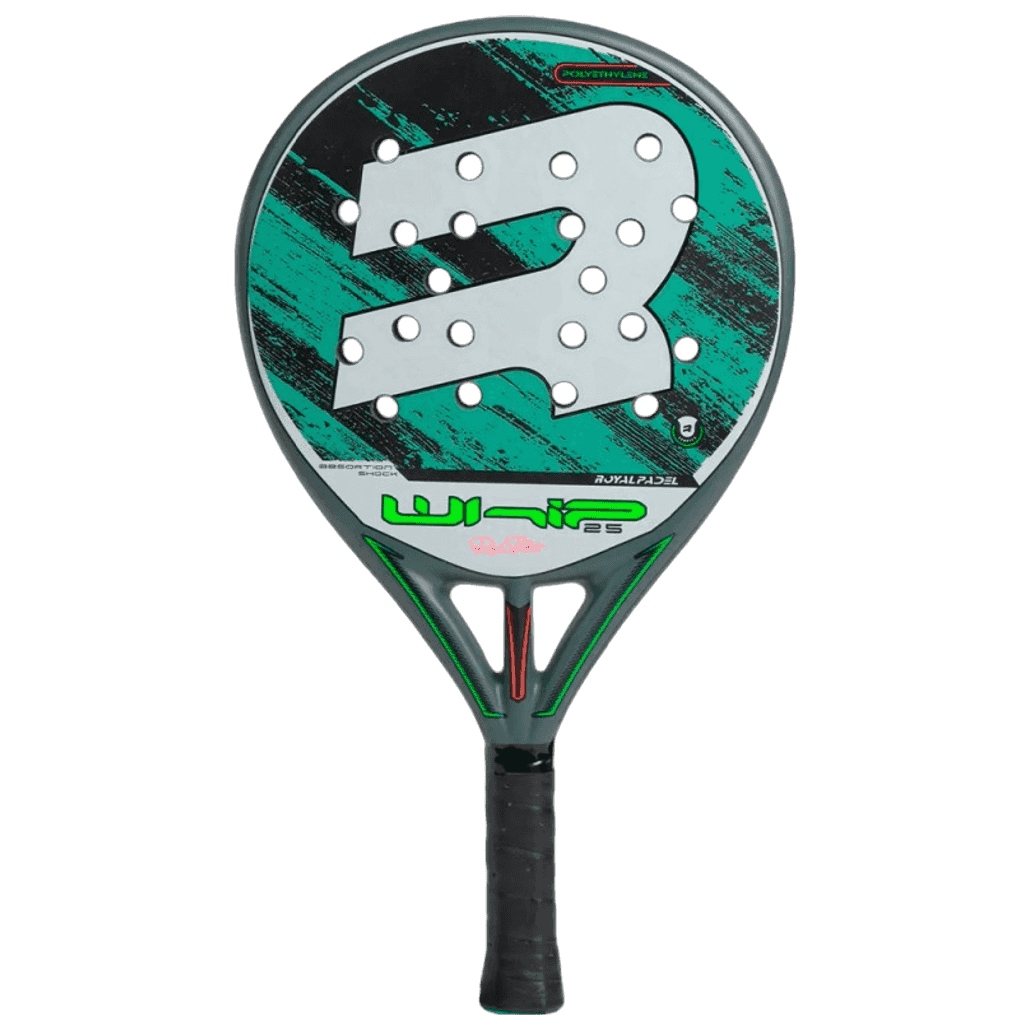
Royal Padel Whip Polietileno 2025 is a comfort-first racket built for patient padel. Its character is clear from the first few balls: soft, forgiving, and much happier helping me build a point than trying to end one.
The round shape, generous sweet spot, and soft feel make it a reassuring option on days when my timing is not quite there. It cushions impact exceptionally well, but that same cushioning means I have to create my own pace.
This is for players who value placement, defense, and an arm-friendly response over explosive finishing power.
Technical analysis
Shape & balance
The round mold keeps the sweet spot broad and accessible. I notice it most on defensive contacts that are slightly late or low on the face: the racket still gives me a usable ball rather than punishing the miss with vibration or a dead response.
Its balance feels manageable rather than head-heavy, so I can get the racket into position quickly for blocks, volleys, and off-the-wall play. It does not feel especially fast through the air in the way a very head-light racket does, but it is easy enough to maneuver and stable when I meet the ball cleanly.
Materials & construction
The carbon frame gives the structure some stability, while the Fibertech faces and soft polyethylene core define the response. This is a deeply cushioned setup. The ball compresses into the faces, stays there for a fraction longer, and leaves with a controlled, muted exit.
That softer construction is a real advantage for players managing elbow discomfort or simply tired of harsh impacts. I would not call it a racket that masks every hard shot, though. Against a heavy volley or a fast smash, the soft core can absorb so much energy that my return sits shorter than I intended unless I actively push through the ball.
On-court feel
Baseline play
From the baseline, this is where the Whip Polietileno makes the strongest case for itself. Defensive lobs are easy to shape, and I can guide low-driven lobs with more confidence than I can with a firmer, more reactive racket. The broad sweet spot also helps on rushed wall exits, where I often need a safe ball more than a spectacular one.
Ball exit is deliberately restrained. That gives me time and control on placement shots, slices, and changes of direction, but it does not give away free depth. If I play passively, the ball can come off slow and land too comfortably for the opponents at the net.
At the net
At the net, I like the racket for touch volleys, blocks, and controlled angles. The soft face takes pace off the ball well, which is useful when I am defending the body or trying to keep a volley low rather than forcing it.
The rough finish also gives usable bite. I can put shape on a drop shot or a chiquita without needing to overwork my wrist. Hard punch volleys are less convincing. The racket places the ball accurately, but it does not produce the penetrating, heavy contact that pushes opponents back on its own.
Bandeja and víbora
A measured bandeja suits this racket better than an aggressive víbora. I can control height, direction, and slice very well, especially when I am trying to keep the opponents pinned without overhitting.
Once I try to accelerate sharply, the soft response limits the reward. The ball does not leave the face with much urgency, so players who rely on a fast víbora to force a weak reply may find it too subdued.
Conclusion
I would choose this racket for a control-oriented player who spends plenty of time defending, constructing points, and valuing a comfortable impact. It is particularly appealing if a firmer carbon racket has been bothering the arm.
The trade-off is straightforward: comfort and forgiveness come ahead of power. Smashes need clean technique and real acceleration, and even then this racket will not provide much help finishing high balls.
For patient players, that is not a flaw—it is the whole point of the design.
What other reviewers say
- BestPadelen
The tester finds it comfortable and forgiving, particularly for defending and building points from the back of the court. Control and the forgiving sweet spot stand out, while power is clearly secondary and the rough face adds usable spin.
- PadelRaquettefr
This test describes a heavily cushioned response: the ball sinks into the face, seems to dwell briefly, and comes out slowly. That brings excellent comfort and stability for patient placement and slice play, but little help finishing high balls or absorbing heavy opponents’ pace.
- Racketguidees
An amateur player with elbow synovitis rated it as well suited to recovering from an elbow injury. It is a brief testimonial, but it aligns with the tests’ picture of a notably arm-friendly impact.
Switch Intelligence
Be the first to share where you switched from.
Community reviews
Real feedback from players who used this racket.
Add your review
To submit your review, log in first. You can still read all approved community reviews below.
Add review


