

Siux Astra Hybrid Air 2026
A light, forgiving tear-shape racket with easy ball exit, calm response, and enough bite to build points without forcing the finish.
Our Take
Shape
Tear
Weight
340 - 360 gr
Touch
Medium-Soft
Core
EVA
Faces
Fiberglass
Frame
Fiberglass
What we like
- Very maneuverable in transitions
- Generous sweet spot on mishits
- Controlled *bandeja* and *víbora*
What we don't
- Limited power on smashes
- Soft response lacks stiffness
- Not built for hard finishing



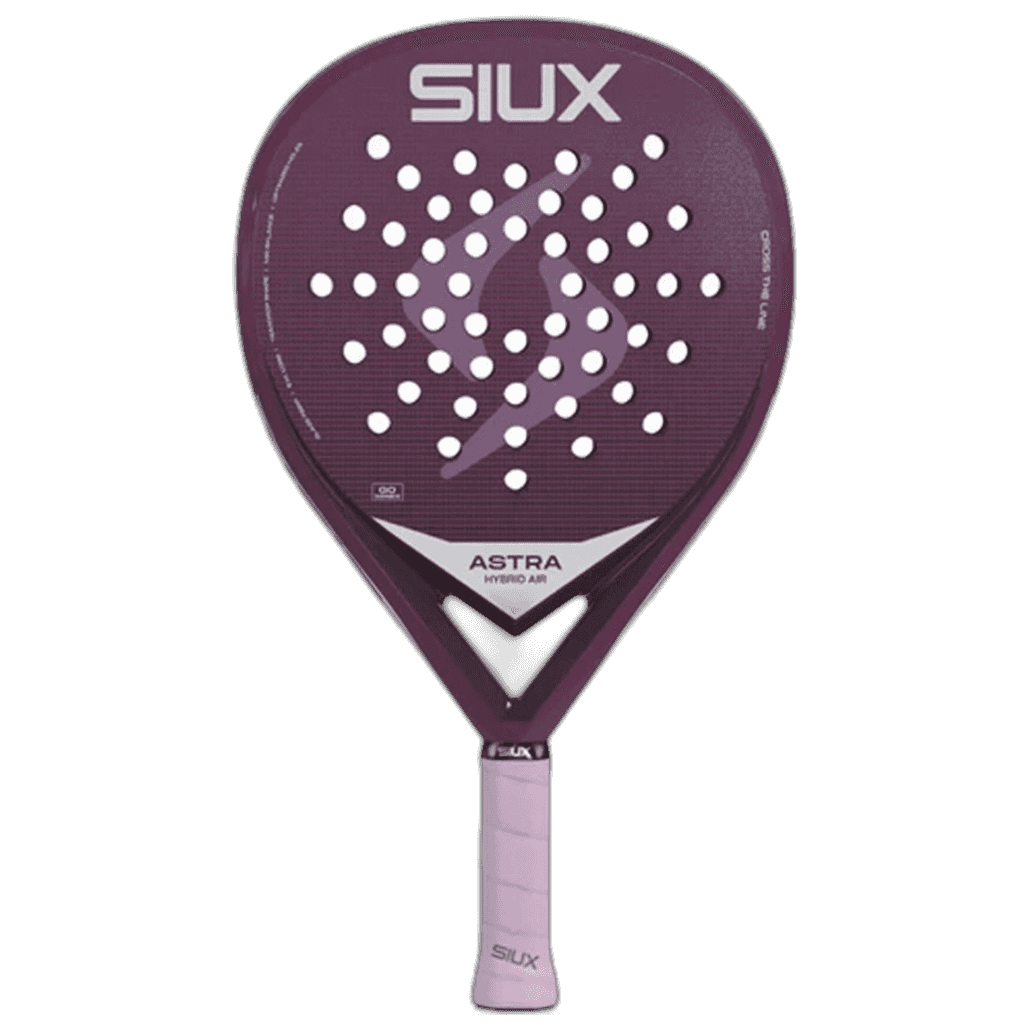
Siux Astra Hybrid Air 2026 is a comfortable, easy-going racket with a very clear bias toward control and maneuverability. It feels friendly from the first hits, and that matters because it doesn’t ask you to fight it to make the ball work.
I see it as a racket for players who build points with patience, want a generous sweet spot, and appreciate a soft-medium response that takes some pressure off the arm. It’s not trying to bully the ball. It’s trying to help you place it.
That gives it a pretty specific identity: useful from the baseline, secure at the net, and more about clean execution than raw damage.
Technical analysis
Shape & balance
The tear shape gives this racket a practical middle ground. It doesn’t feel overly head-heavy, and that shows in how quickly it moves through contact. The balance sits in a zone that makes transitions easier than on many attack-first rackets, so I can react fast on awkward balls without feeling late.
That same setup also explains why it’s not a brute-force frame. The racket wants you to play with timing and placement, not to force a heavy finish from every overhead.
Materials & construction
Siux uses fiberglass on the frame and fiberglass on the faces, with a EVA Medium-Soft core. That combination gives the racket a forgiving response and a ball output that feels comfortable rather than explosive. Off-center hits stay more manageable than they do on stiffer constructions, which I noticed right away in defensive exchanges.
The downside is predictable: you don’t get that rigid, locked-in response that some attacking players like when they accelerate hard. The racket gives a bit, and that softness is part of its appeal, but it also caps the upper ceiling in power.
On-court feel
Baseline play
From the baseline, this racket is easy to trust. Defensive lob work feels calm, and the ball comes off the faces with enough help that I don’t need to overwork the swing to get depth. In blocks, it absorbs pace well and keeps the reply under control.
What I like most here is the margin it gives on imperfect contact. The sweet spot is generous enough that I can stay compact and still keep the point alive. It’s not a racket that forces panic when I’m under pressure.
At the net
Up close, it behaves in a similarly civilized way. Volleys come off cleanly, with enough response to redirect pace without needing a huge gesture. That makes transitions feel smooth, especially when I’m trying to keep the exchange fast and tidy.
It does not feel like a weapon for finishing points with one swing. If I want to crush the ball through traffic, this isn’t the frame I’d choose. But for controlling the net and keeping my opponent uncomfortable, it works well.
Bandeja and víbora
This is probably where the racket fits best in attacking play. The soft feel helps me guide the ball rather than fight it, and both bandeja and víbora come off with enough bite to keep pressure on the pair in front of me. I can place the ball with confidence and keep the exchange moving.
It also helps that the racket stays manageable in repeated overheads. I don’t feel punished after a long sequence, which is useful if your game depends on staying active above the shoulders without overhitting.
Conclusion
I’d call the Siux Astra Hybrid Air 2026 a control-first, comfort-first racket with very good maneuverability and a forgiving response. It suits players who value clean buildup, easy handling, and reliable touch more than outright aggression.
What you give up is top-end power. Smashes are not its strongest card, and very attacking players will probably want something stiffer and more demanding. If your game is built around placement, defense, and secure net play, though, this one makes a lot of sense.
What other reviewers say
- PadelReviewes
From the baseline it feels reassuring and helps you build points patiently, with comfortable ball output and solid maneuverability. At the net it performs well on volleys and bandejas, but it is not aimed at very aggressive smashes or players who want a stiff response.
- Solo Palas de Padeles
The review portrays it as a light, highly maneuverable and comfortable racket, especially suited to adding control and spin without tiring the arm. It also notes that the soft feel and fiberglass face make off-center hits more forgiving and help you defend with more confidence.
- PadelScouten
The racket is described as a versatile, friendly option with a medium-soft feel, a generous sweet spot, and a response that favors control over brute power. Its behavior encourages placement, quick volleys, and safe transitions without demanding too much energy.
Switch Intelligence
Be the first to share where you switched from.
Community reviews
Real feedback from players who used this racket.
Add your review
To submit your review, log in first. You can still read all approved community reviews below.
Add review


