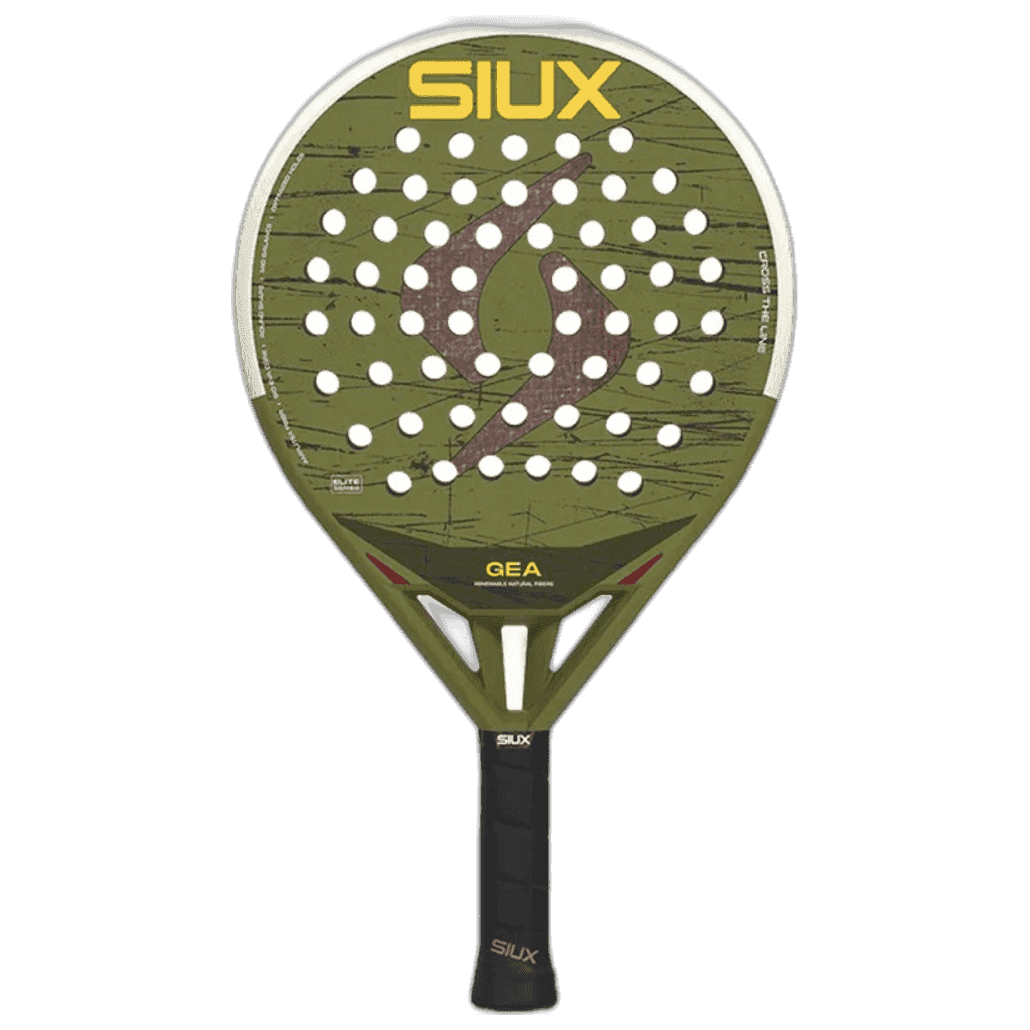
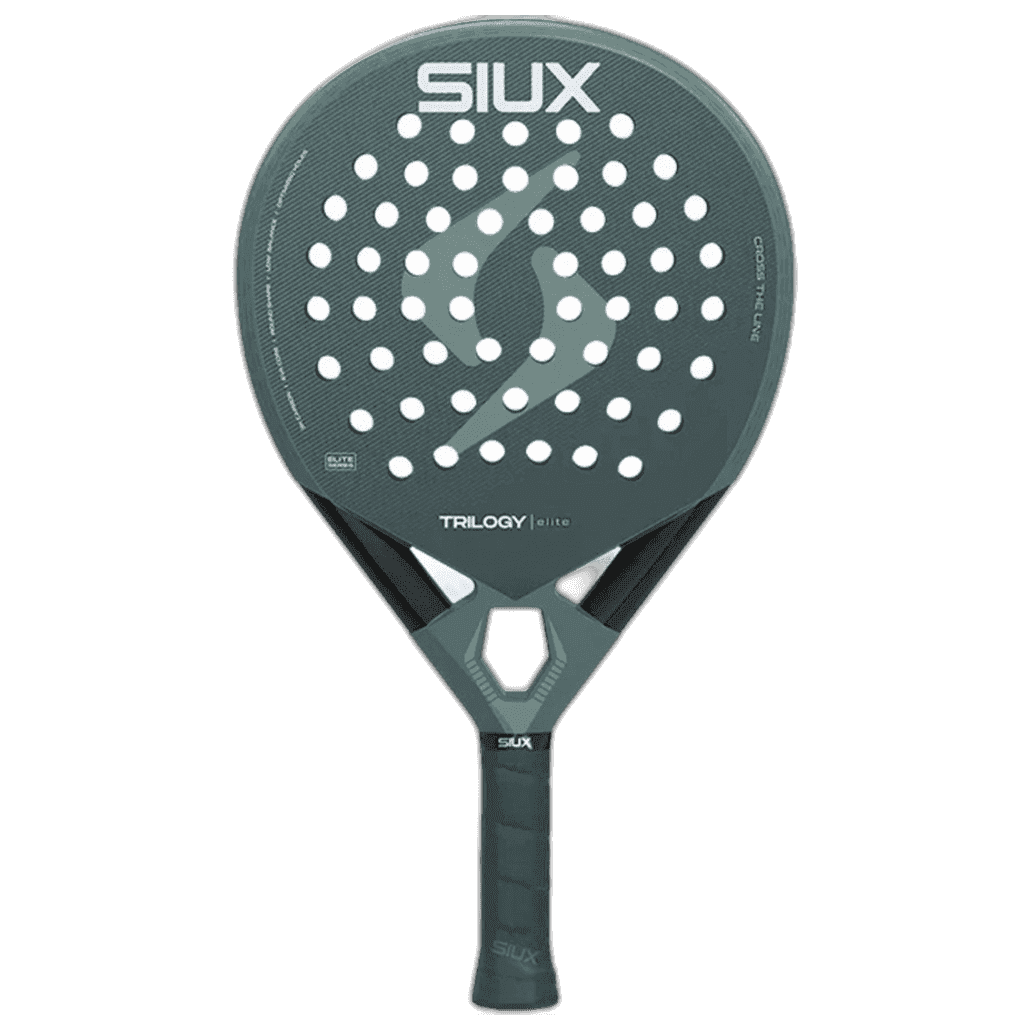
Siux Trilogy Elite 6 2026
A calm control racket with a plush response, quick handling, and a sweet spot that makes defense feel unusually forgiving.
Our Take
Shape
Round
Weight
355 - 375 gr
Touch
Medium-Soft
Core
EVA
Faces
3K carbon
Frame
Carbon fiber
What we like
- Quick handling on defense
- Large sweet spot forgiveness
- Stable volleys and blocks
What we don't
- Limited finishing power
- Little free ball speed
- Overheads lack extra bite



Updated on 27 Jul (shipping cost not calculated)
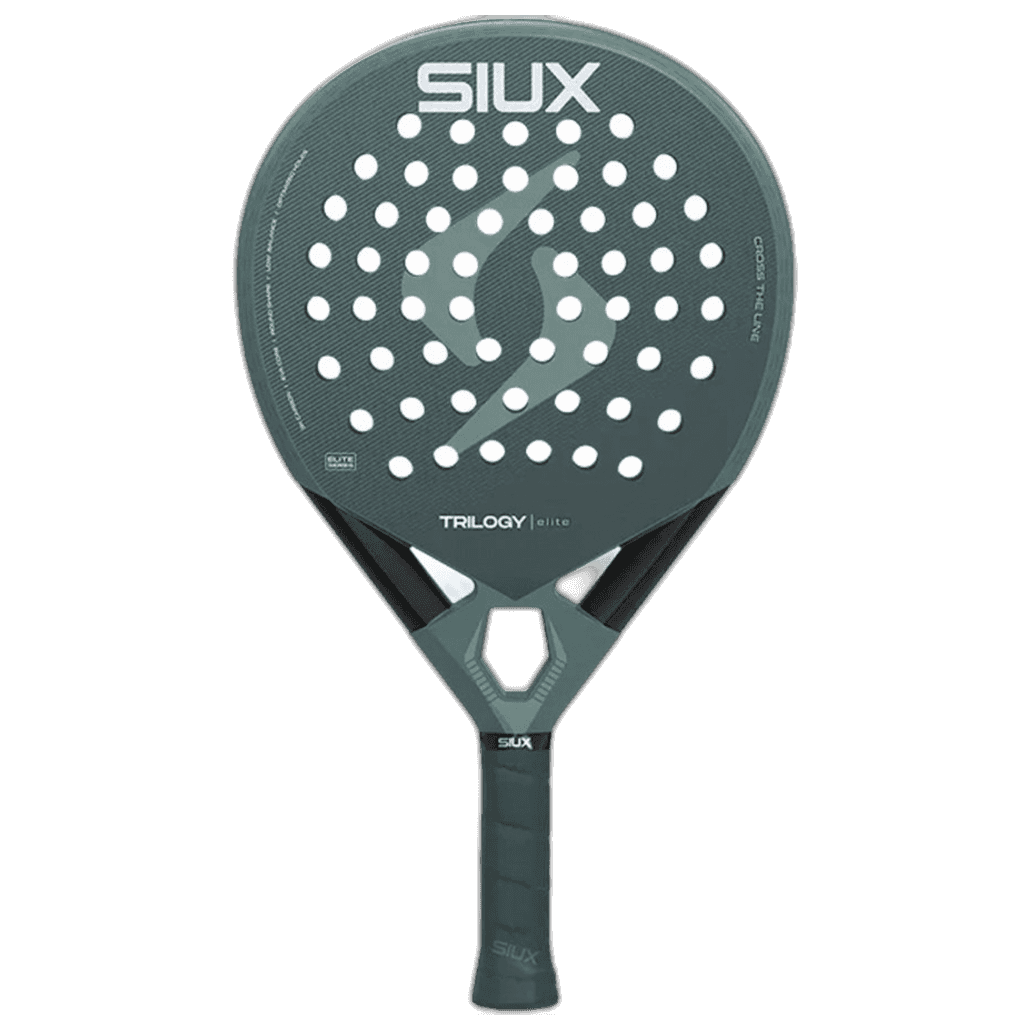
Siux Trilogy Elite 6 2026 is a control-first racket with a very clear identity: easy handling, a big sweet spot, and enough comfort to keep rallies tidy under pressure. I see it as a racket for players who want to place the ball precisely rather than force winners from every ball.
The rounded shape and low balance give it quick reactions. That matters both from the baseline and at the net, because it feels fast in the hand without becoming erratic. It does not chase raw power, and that’s exactly the point.
Technical analysis
Shape & balance
The Round shape and low balance are the first things you notice. The racket comes around quickly, which makes it easy to adjust late on blocks, lobs, and those awkward balls that arrive off the wall with little time to prepare. In practice, it feels very manageable and encourages clean, compact swings.
That setup also explains why the sweet spot feels generous. You do not need to hit the center with surgical precision every time to get a decent response. For me, that translates into confidence on defense and a calmer hand in fast exchanges.
Materials & construction
Siux uses a carbon fiber frame with 3K carbon faces and an EVA core, and the result is a medium-soft feel that leans toward comfort and control. The hit is not mushy, but it is definitely not a dry, demanding racket either. There is enough response to keep the ball moving without punishing you on off-center contact.
What I like here is the stability. It does not twist easily when you block a heavy ball or meet a fast volley early. What it does not give you is explosive output. If your game depends on finishing points with brute force, this is not the racket that will hide that limitation.
On-court feel
Baseline play
From the baseline, the Trilogy Elite 6 2026 feels calm and accurate. Defensive lobs come off with good length, and chiquitas are easy to shape because the racket lets you work the ball without overhitting. In off-the-wall play, the fast handling helps a lot; I can get the face in position quickly and keep the return under control.
Ball exit is good for a control racket, but it is still clearly on the restrained side. That is fine if your priority is placement. It is less satisfying if you want the racket to add speed for you on every reply.
At the net
At the net, the racket feels stable rather than aggressive. Volleys are easy to direct, and the large sweet spot makes blocking hard-paced balls less stressful than with a sharper, more demanding frame. I also like it on quick exchanges because the head does not feel sluggish.
What it lacks is bite on the final push. You can build pressure with placement, but you will not get much free weight behind the ball. That shows most when you try to speed up a point from the forecourt without preparing the shot properly.
Bandeja and víbora
This is probably where the racket makes the most sense in attacking play. The control helps you keep the bandeja deep and the víbora accurate, with enough comfort to repeat the motion across long matches. I never felt like I was fighting the racket to keep the ball in.
Still, I would not call it a weapon for aggressive overhead finishing. It guides the ball well, but it does not load the shot with much extra punch. If you want your overheads to do more of the work for you, this will feel limited.
Conclusion
I would point this racket toward players who value control, comfort, and quick handling above all else. It suits a weekly player who likes to construct points, defend well, and keep things orderly at the net without asking the arm to do too much.
The trade-off is obvious: less power, less help on pure finishing shots, and not much margin for players who want an attacking racket that drives the ball hard by itself. If your game is built around placement and consistency, though, it makes a lot of sense.
What other reviewers say
- PadelTestLabit
The racket is presented as very control-oriented, with a low balance and a large sweet spot that makes defense and ball placement easier. Its medium-soft feel favors comfort and consistency in rallies, but power is limited for a purely attacking style.
- Racketguide.comen
It is framed as a control racket for advanced players, offering stability and comfort in both defense and net play. The round shape and low balance help with quick handling, although the design clearly favors placement over raw finishing power.
Switch Intelligence
Be the first to share where you switched from.
Community reviews
Real feedback from players who used this racket.
Add your review
To submit your review, log in first. You can still read all approved community reviews below.
Add review