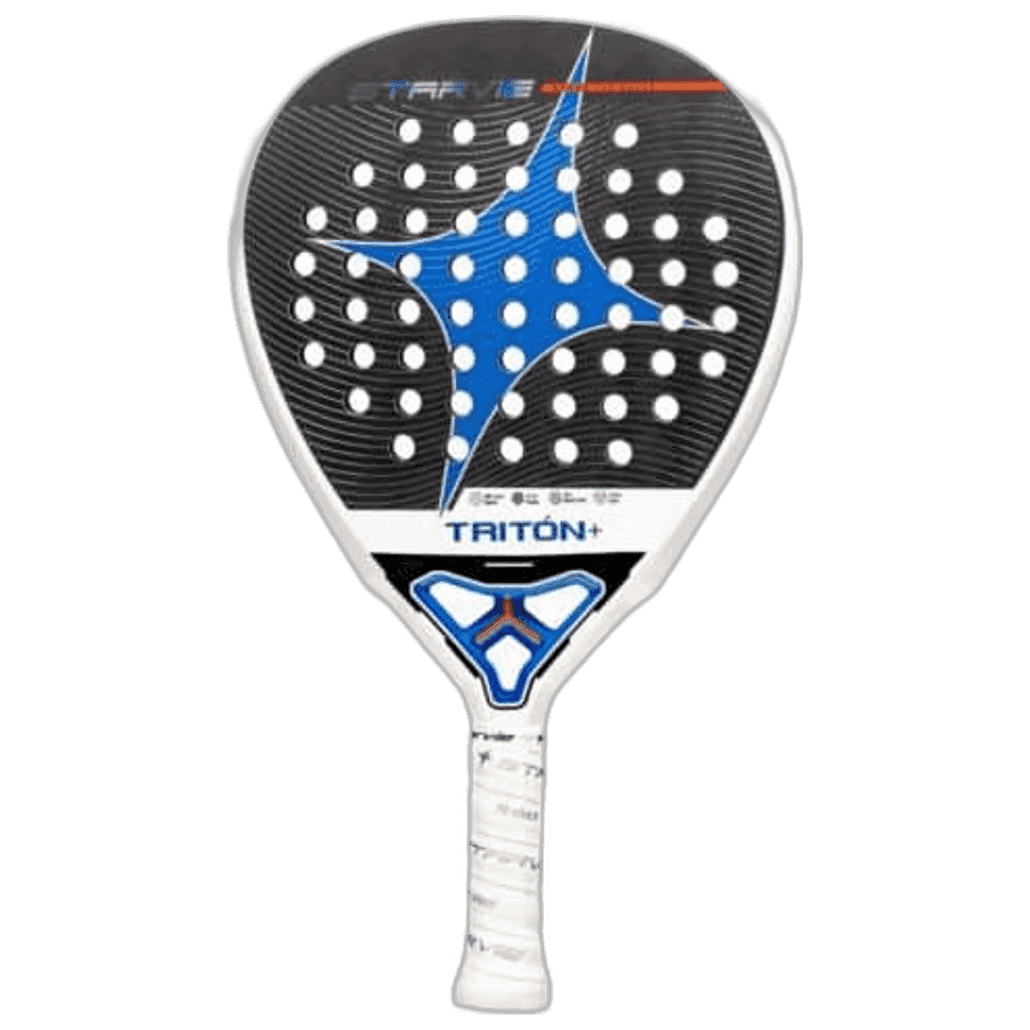
Star Vie Triton Power 2026 Plus
A hard-feeling diamond racket with real punch, built to punish clean contact while staying composed enough for the rest of the point.
Shape
Diamond
Weight
350 - 365 gr
Touch
Hard
Core
H-EVA Power
Faces
18K Carbon
Frame
Carbon fiber
What we like
- Firm, accurate volleys
- Excellent *bandeja* and *víbora*
- Stable on aggressive overheads
What we don't
- Defense demands timing
- Less agile in quick exchanges
- Not forgiving on late contact
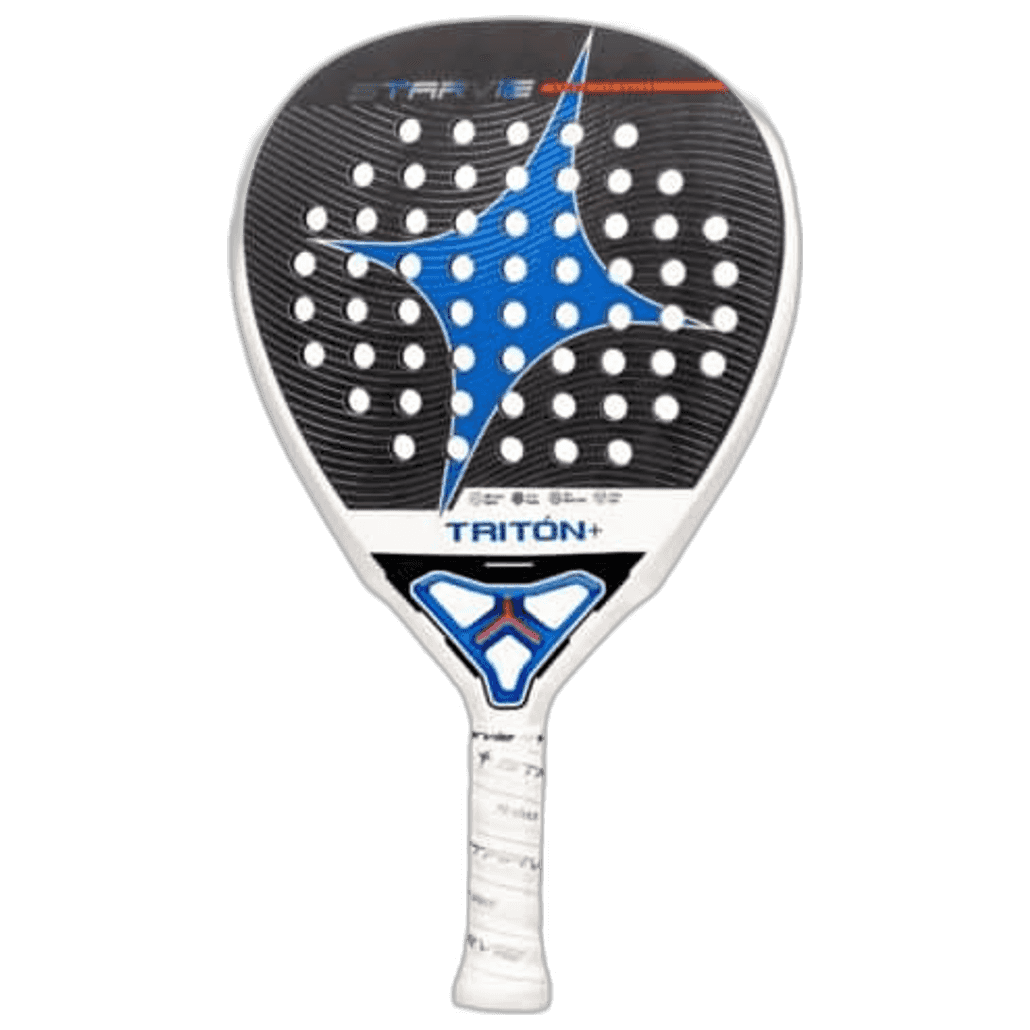
Star Vie Triton Power 2026 Plus is a racket with a very clear accent: attack first, with a hard touch and enough structure to keep the ball where you want it. It feels serious from the first few swings. No fluff, no soft landing.
The diamond shape and head-heavy balance tell you what this frame wants to do. It rewards clean contact, especially if you play with intent above shoulder height and like to press at the net.
I don’t read it as a casual option. It asks for timing and a proper preparation, but in return it gives you a lot of bite in offensive situations and more stability than some pure cannon-type rackets.
Technical analysis
Shape & balance
The diamond outline pushes the sweet spot upward, and that changes the whole conversation. This is not a low-effort racket for quick wrist flicks or lazy blocks. It wants a full swing path and a player who can get the ball in front of the body on time.
That same geometry is also what gives it its identity. In my hands, the head weight helps load the ball in attacking shots, but it does make the racket less agile in tight defending exchanges and when you need to reset fast from the back glass.
Materials & construction
The carbon fiber frame and 18K carbon faces give it a firm, direct response. The H-EVA Power core keeps that feel on the hard side, with a crisp impact and very little trampoline effect. You get ball output, but not the easy kind that does the work for you.
That construction is why the racket feels stable when I hit through the ball. It holds up well on aggressive volleys and overheads, and it carries a solid touch for a racket in this category. The trade-off is clear, though: comfort is not its strongest card, and if your technique is loose, the racket will tell you immediately.
On-court feel
Baseline play
From the baseline, I can defend with it, but I have to stay awake. Low defensive lobs come out well enough, and it blocks fast balls with more authority than you’d expect from such an attacking frame. There’s enough control to lift a ball and rebuild the point.
What it doesn’t do is make defense effortless. Quick exchanges feel slower than with lower-balance rackets, and if you’re late, you’ll notice the head weight right away. It’s manageable, not forgiving.
At the net
This is where the racket starts making sense. Volleys come off with a firm, clean response and a lot of accuracy. I like how it lets me press without the face feeling unstable, especially when the rally speeds up.
It also handles chiquitas and aggressive net pressure with confidence. The ball exits fast, but still with a controlled line. You can work angles, keep the opponent pinned, and step forward without losing the racket’s shape.
Bandeja and víbora
These are probably the shots that best explain the racket. The firmness in the faces gives the bandeja a very direct, purposeful contact, and the racket rewards a full, technically clean swing. The víbora has real bite. Not just pace.
I wouldn’t call it easy, though. If your preparation is rushed, the racket won’t hide it. When you time it well, the response is excellent and the ball comes off with enough weight to bother opponents at the net.
Smash
On the smash, the Triton Power 2026 Plus does what you expect from a power-oriented diamond frame: it helps you finish points if your mechanics are sound. It feels stable through contact and has the kind of firm response that lets you go after the ball without the face collapsing.
It is not the most effortless smash racket I’ve used. You have to work for the shot. If you generate your own speed, it pays you back. If you want free power with very little input, this is not that racket.
Conclusion
I’d put this in the hands of an advanced player, or at least someone who plays often and already trusts their overheads. It suits a more offensive game, especially if you spend time at the net and want a racket that responds with firmness and precision.
The compromise is maneuverability and ease of use. Defense takes more work, and fast resets are not its comfort zone. But if you want a hard-feeling racket that rewards clean technique and aggressive intentions, this one speaks that language well.
What other reviewers say
- PadelReviewes
The review frames it as a balanced attacking racket: stable in defense, with enough ease to lift lobs and absorb fast balls without feeling overly demanding. At the net it is described as comfortable and accurate on volleys, but not the most brutal option for all-out smashes.
- Padelfules
Padelful describes it as a very offensive racket, with a diamond shape and hard touch that favor smashes, viboras, and aggressive net play. It also stresses that the racket demands technique and gives up some maneuverability in defense and quick exchanges compared with lower-balance alternatives.
- X3 Padel Zonees
The analysis defines it as a maximum-power, technical racket built to reward clean contact. Its hard feel and head-heavy balance help a lot on smashes and viboras, but it is clearly not a friendly choice for players seeking easy handling or a relaxed feel.
- Padel Chiquitoes
The game metrics place it firmly in attacking territory, with very high power and smash scores and a sweet spot that is solid for its profile. At the same time, maneuverability trails behind its hitting power, suggesting a racket that is serious rather than especially easygoing.
Switch Intelligence
Be the first to share where you switched from.
Community reviews
Real feedback from players who used this racket.
1 review

For my style of play, aggressive right side player, coming for blocks, that's perfect. The feeling is good and the balance isn't that bad at 26/26.5 cm, that helps to have good control. You need to have good Technics if you want to buy this racket, otherwise go with the Balance + that is more forgiving and comfortable.
Add your review
To submit your review, log in first. You can still read all approved community reviews below.
Add review