

Tecnifibre Curva Club 2025
A forgiving, medium-feel teardrop that makes defense and quick net play feel simple, while keeping its attacking ambitions in check.
Our Take
Shape
Tear
Weight
360 gr
Touch
Medium
Core
Soft single-piece foam
Faces
Fiberglass
Frame
Carbon
What we like
- Forgiving off-center volley response
- Easy baseline ball exit
- Quick handling in net exchanges
What we don't
- Limited x3 smash power
- Lacks heavy low-ball response
- Less bite on víbora
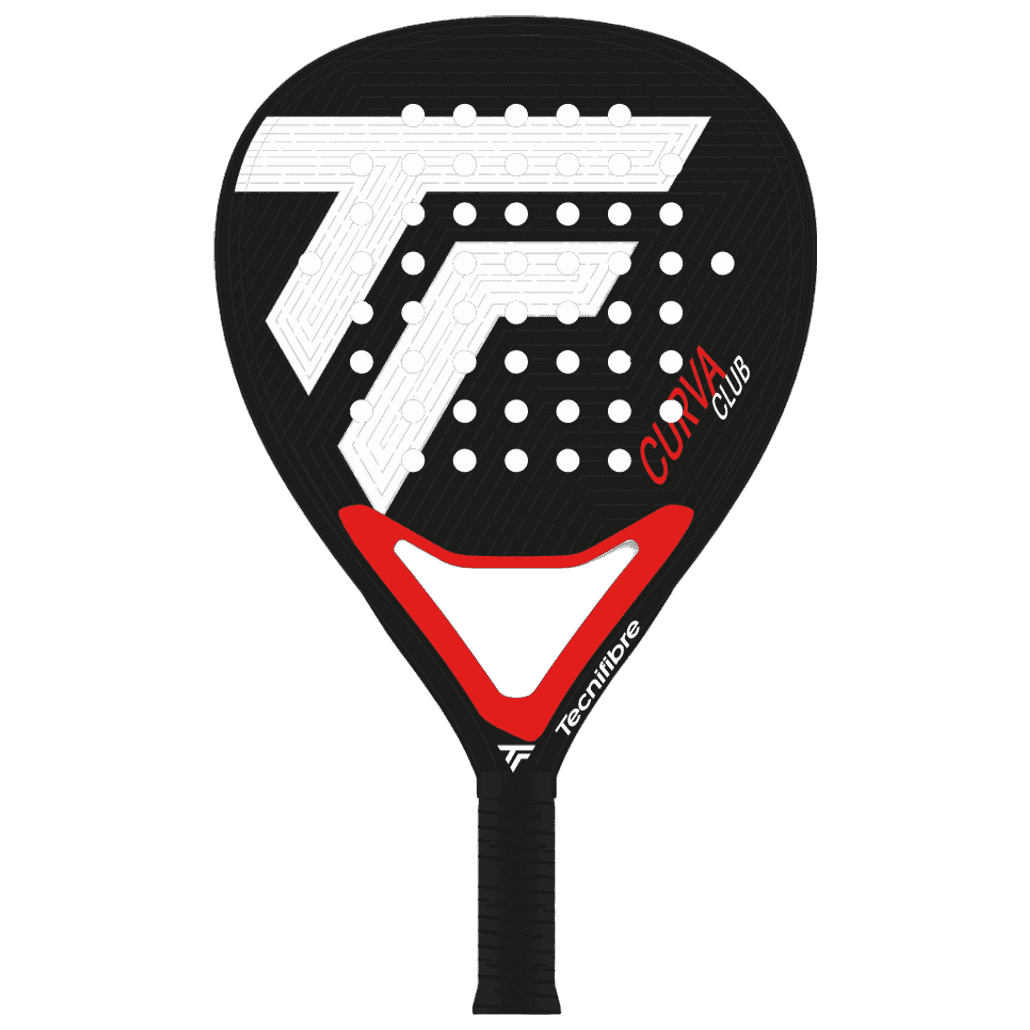
Tecnifibre Curva Club 2025 is a forgiving, quick-handling racket built around easy ball exit rather than brute force. I see it as a sensible step for an intermediate player who wants confidence from the baseline and enough speed at the net to play a more active game.
Its character is comfortable and predictable. It helps when contact is not clean, which matters far more in a real match than a racket that feels great only when you hit the center every time.
The trade-off is clear: this is not a racket for players who expect their smash to finish points on demand.
Technical analysis
Shape & balance
The teardrop shape gives the Curva Club a useful middle ground between maneuverability and attacking reach. It does not feel cumbersome through the air, and the balance appears moderate enough to keep the racket quick during reactive exchanges.
That broad, accessible sweet spot is a major part of its appeal. Off-center volleys, late defensive blocks, and rushed returns still come off the faces with a fairly consistent response. I would not call it a precision instrument for aggressive hitters, but it is much less punishing than a head-heavy racket with a smaller hitting zone.
Materials & construction
Tecnifibre uses a carbon frame, fiberglass faces, and a soft single-piece foam core. That construction explains the racket’s medium feel: cushioned at impact, but not so soft that the ball disappears into the faces.
Fiberglass and soft foam give it a generous rebound effect. The racket supplies pace without requiring a big swing, particularly on slower balls from the back court. The downside is that the response does not have the crisp, firm finish that stronger players often want when accelerating hard through the ball.
On-court feel
Baseline play
From the baseline, the Curva Club is very easy to use. Defensive lobs get height without much effort, and it helps on off-the-wall play when you are arriving late or making contact below waist level. I found that the ball exits the racket cleanly without needing to force the stroke.
That assistance is useful, but it can also make the racket feel less authoritative when I want to drive a low ball with real weight. It will send the ball deep, yet it does not produce the heavy, sharp response of a harder carbon-faced racket.
At the net
This is one of its better areas. The maneuverability makes it easy to adjust the racket face on quick volleys, and the forgiving sweet spot helps when exchanges become messy. Blocks are comfortable, but the lively ball exit asks for a soft hand on a drop volley or chiquita, or the ball carries long.
I also like the predictable response on medium-paced volleys. The Curva Club does not surprise you with a sudden trampoline effect, even though it has plenty of easy rebound. Still, players who like to punch aggressive volleys through the court may want a firmer face and more head weight.
Bandeja and víbora
The racket moves fast enough to make preparation simple on overheads. A bandeja comes naturally because the soft core gives the ball enough depth without overhitting, and the comfortable contact helps maintain direction under pressure.
On the víbora, though, there is a limit to the bite and penetration. I can place the ball well, but I do not get the same sharp, skidding output that a stiffer racket produces when I really cut across it.
Smash
A favorable ball can still be put away, especially with good technique and a clean contact. But regular x3 winners are not this racket’s calling card. The power ceiling is moderate, and players who build their game around aggressive overhead finishing will outgrow it.
Conclusion
I would recommend the Curva Club to intermediate players who value forgiveness, easy depth, and quick handling over maximum attacking force. It suits an all-court player who wants help in defense and reliable behavior during fast net exchanges.
You trade away some top-end power, a firmer attacking response, and the extra punch needed for frequent winning smashes. For players still developing their offensive game, that is a reasonable exchange.
What other reviewers say
- PadelTestLaben
PadelTestLab scores it 74 for power, 77 for control, 84 for agility, 94 for ball exit and 84 for sweet spot. It praises the deep defensive lobs, forgiving volleys and spin on the bandeja, but it says the soft build caps the flat smash and víbora pace, and the lively ball exit sends drop shots long unless the player cushions them.
- AvisPadelfr
AvisPadel highlights easy ball exit from the back court, a broad sweet spot, and effortless handling in quick net exchanges. Smashes work on favorable balls, but it lacks the punch to produce regular x3 winners, leaving it best suited to versatile intermediate players.
Switch Intelligence
Be the first to share where you switched from.
Community reviews
Real feedback from players who used this racket.
Add your review
To submit your review, log in first. You can still read all approved community reviews below.
Add review


