

Akkeron Black Fenix Edition 2025
A hard-hitting tear shape that asks for clean acceleration, rewarding aggressive placement and textured spin over easy depth.
Our Take
Shape
Tear
Weight
350 - 375 gr
Touch
Hard
Core
EVA30K Black
Faces
3K Carbon
Frame
100% Full Carbon
What we like
- Driven smashes carry serious punch
- Rough face bites on *víboras*
- Firm volleys change direction late
What we don't
- Limited rebound under defensive pressure
- Off-center contact sends vibration
- Small sweet spot punishes timing
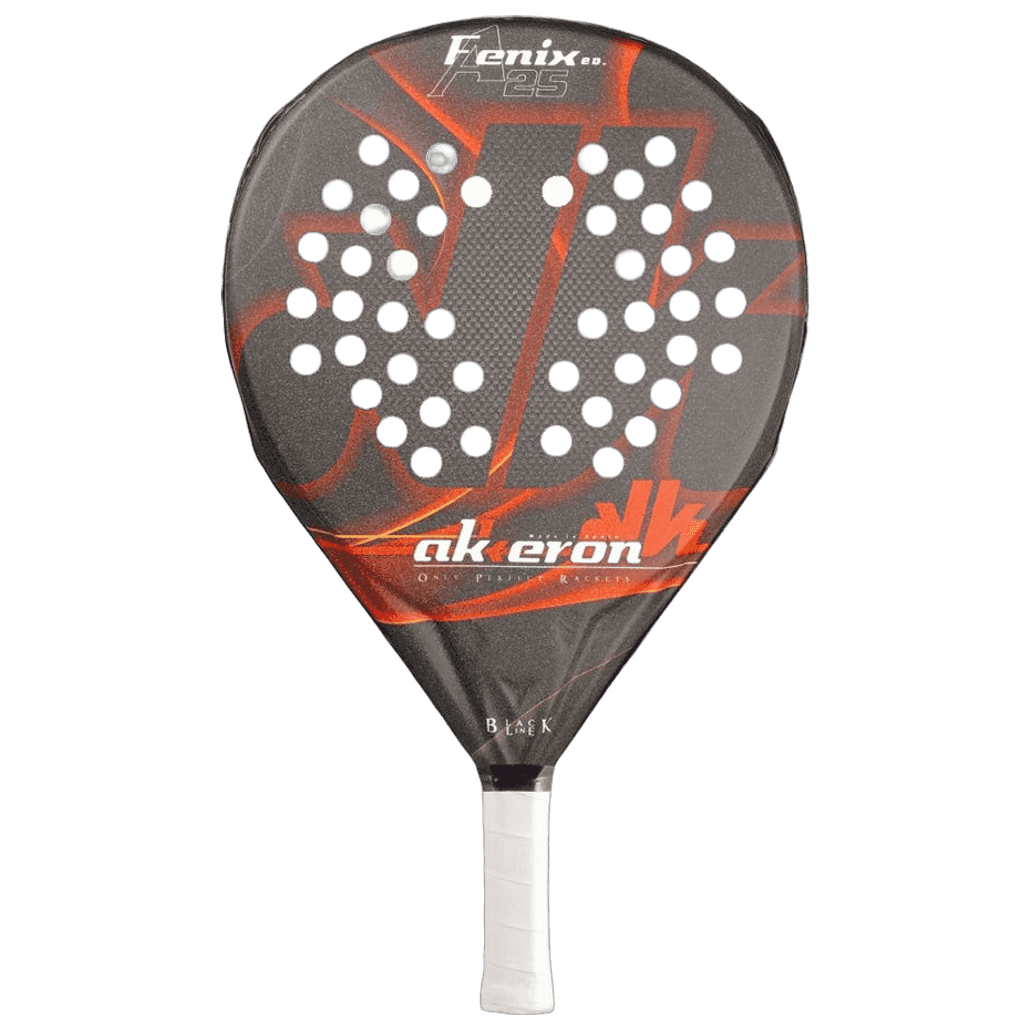
Akkeron Black Fenix Edition 2025 is a demanding attacking racket with a hard, direct response and very little interest in doing the work for you. I see it as a weapon for players who generate their own speed and want the ball to leave the face with purpose.
Its tear shape keeps it more manageable than a full diamond, but the personality is still clearly aggressive. This is not a forgiving racket for passive defense or late, improvised contacts.
Technical analysis
Shape & balance
The tear format places the sweet spot high enough to reward overhead play, without making the racket feel excessively head-heavy in hand. I found that useful when moving quickly at the net: it comes through the ball with authority, yet it is not so slow that every fast volley exchange becomes a fight.
That said, the sweet spot is not especially generous. Contact outside the center loses depth quickly, and off-center hits can send a noticeable vibration into the hand. Players with clean preparation will get much more from it than those who often defend while stretched or hit late after the glass.
Materials & construction
Akkeron uses a 100% Full Carbon frame, 3K carbon faces, and an EVA30K Black core. Together, they produce a distinctly hard feel: firm at impact, low on free ball exit, and very clear about whether I caught the ball cleanly.
The face texture is a meaningful part of the package. It gives the ball good bite on sliced overheads and controlled attacking shots. There is no soft trampoline effect here. I had to accelerate through the ball, especially from the baseline, but the reward was a more precise and penetrating trajectory.
On-court feel
Baseline play
From the back of the court, this racket asks for active defense. Blocks can be accurate because the face is stable, but they do not automatically travel deep. Against pace, I needed to set the racket early and use my legs; a loose block or a late contact tended to die short.
Off-the-wall play follows the same pattern. With time to prepare, I could drive the ball flat and place a low-driven lob well. Under pressure, though, the limited rebound becomes obvious. It is not the racket I would choose for absorbing heavy shots and getting easy length back.
At the net
At the net, the Black Fenix makes more sense. Volleys feel compact and firm, with enough maneuverability to change direction late without the frame wobbling. I liked it most when punching through the middle or taking pace off for a short drop shot.
Its direct response also helps with chiquitas and aggressive blocks, provided I soften my hand. Leave the racket too rigid and the ball can come off faster than intended.
Bandeja and víbora
This is one of its strongest areas. The rough carbon face gives me confidence to cut the ball on a bandeja and put extra side spin on a víbora. The racket rewards a fast, committed swing with a heavy, controlled ball that stays awkward after the bounce.
It is less friendly for players who rely on a slow, guiding overhead. The face does not add much help; I had to supply the speed myself.
Smash
On a clean smash, it has serious punch. The firm construction transfers energy efficiently and favors driven smashes where I want a fast, deep ball rather than a soft, looping finish.
A mistimed smash is less flattering. Miss the sweet spot and the response drops off sharply, so this is not a racket that flatters inconsistent overhead technique.
Conclusion
I would put the Black Fenix Edition 2025 in the hands of an advanced player who attacks with intent, plays a technical overhead game, and prefers a hard carbon response over easy rebound.
It trades comfort for precision. Defense under pressure, late contacts, and forgiving ball exit are not its strengths. But for a player who can generate racket speed, it offers sharp placement, strong bite, and a very convincing attacking ceiling.
What other reviewers say
- PadelTestLabes
The review characterizes it as a medium-hard, advanced-player racket: it rewards arm speed with driven smashes and highly precise placement, but does not provide easy rebound. Its rough face helps on bandejas and viboras, while pressured defense, late contact, and off-center hits cost depth and add vibration.
Switch Intelligence
Be the first to share where you switched from.
Community reviews
Real feedback from players who used this racket.
Add your review
To submit your review, log in first. You can still read all approved community reviews below.
Add review


