

Akkeron Diablo 2025
A firm, precision-led teardrop that rewards clean timing, holding its line from the baseline and staying composed at the net.
Our Take
Shape
Tear
Weight
355 - 375 gr
Touch
Medium-Hard
Core
EV30 Black
Faces
K12IMPACT Carbon
Frame
100% Full Carbon
What we like
- Stable directional blocks and lobs
- Clean, firm volley response
- Controlled *bandeja* and *víbora* placement
What we don't
- Limited easy ball exit
- Off-center hits lose depth
- Demanding on late defense
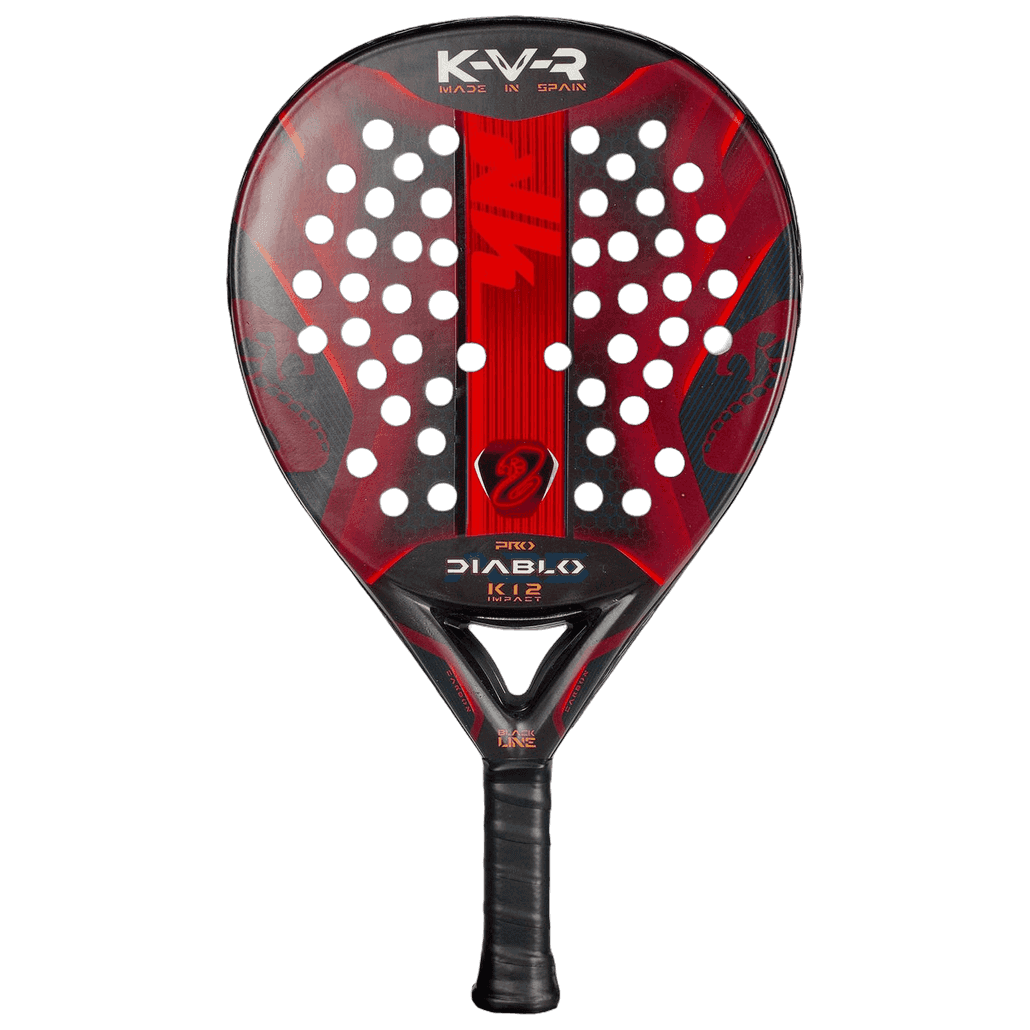
The Akkeron Diablo 2025 is a precision-first racket with a firmer, more demanding response than its teardrop shape might suggest. I see it as a control racket for an advanced player who wants to direct the point rather than rely on easy ball exit.
It has enough firmness to play aggressively, but this is not a free-power weapon. Independent player feedback points in the same direction: the Diablo feels accurate and composed, yet it does not produce the effortless finishing power some players expect from its specification.
Technical analysis
Shape & balance
The teardrop shape gives the Diablo a fairly versatile platform, with a sweet spot that sits above center without being pushed all the way toward the top of the frame. Its balance feels medium rather than head-heavy, so I can accelerate it through víboras, attacking volleys, and low-driven lobs without feeling like the head is dragging behind me.
That said, it is not a particularly forgiving racket. The sweet spot is respectable, but off-center contact loses some depth and feels noticeably firmer in the hand. Players with clean preparation will appreciate the direct response; players who often defend late or strike while stretched may find it less cooperative than a softer, more elastic racket.
Materials & construction
Akkeron builds it with a 100% Full Carbon frame, K12IMPACT Carbon faces, and an EV30 Black core. The result is a medium-hard feel with a crisp, controlled impact. I get clear feedback from the ball, especially on compact blocks and flat volleys, without the overly dry sensation that some hard carbon rackets produce.
The faces favor precision over trampoline effect. I can place the ball well, vary pace, and keep a chiquita low, but I need to supply my own acceleration when I want extra depth. That matches the outside feedback on this model: its response rewards intentional hitting, while passive shots do not gain much help from the racket.
On-court feel
Baseline play
From the baseline, the Diablo is strongest when I am organized. It gives me confidence on defensive lobs because the face stays stable through contact, and I can block hard balls with good direction rather than merely sending them back. Off-the-wall play also feels predictable once I find the center.
What it does not do well is rescue slow or late swings. Against heavy pace, the racket asks me to get behind the ball and use my legs. Its ball exit is adequate, not explosive, so it will not cover poor timing in the way a softer EVA or fiberglass face can.
At the net
At the net, I like the Diablo most in controlled aggression. Volleys come off clean and firm, with enough maneuverability to react quickly in fast exchanges. The stable frame helps me punch through the middle or hold the face open for a short angled ball.
The touch is less natural for players who want a soft, cushioned drop shot. It can execute one, but the contact is direct and requires a relaxed hand. This is a racket that prefers decisive volleys over delicate improvisation.
Bandeja and víbora
The teardrop format and firm response suit my bandeja well. I can keep the ball deep with a compact swing and control the direction without overhitting. On the víbora, the carbon face provides a clean release and enough bite to make the ball skid after the glass.
A full smash is more conditional. With solid technique and good acceleration, it responds cleanly, but it does not generate easy finishing power on its own. Players chasing effortless overhead winners will likely want a more head-heavy, more explosive racket.
Conclusion
I would choose the Diablo for advanced players who value placement, stable contact, and a medium-hard response. It makes particular sense for someone who builds points through volleys, bandejas, and controlled pressure rather than trying to end every overhead ball.
The trade-off is clear: precision comes before easy output. It is not especially forgiving in defense, and it does not provide the automatic power its aggressive construction may imply. For a player with sound technique, that honesty in the response can be a real strength.
What other reviewers say
- Racketguideen
An advanced player describes it as precision-focused, but says it lacks power.
Switch Intelligence
Be the first to share where you switched from.
Community reviews
Real feedback from players who used this racket.
Add your review
To submit your review, log in first. You can still read all approved community reviews below.
Add review


