

Babolat Technical Origin Plus 2027
A forgiving diamond that brings easy ball exit and a generous sweet spot, keeping defensive work calm while leaving enough punch at the net.
Our Take
Shape
Diamond
Weight
345 - 365 gr
Touch
Medium
Core
Soft EVA
Faces
Soft Fiber (fiberglass)
Frame
Hybrid Frame (carbon and fiberglass)
What we like
- Easy defensive lob depth
- Broad sweet spot on blocks
- Quick handling in net exchanges
What we don't
- Limited smash finishing power
- Soft face lacks crispness
- Víboras lack biting finish
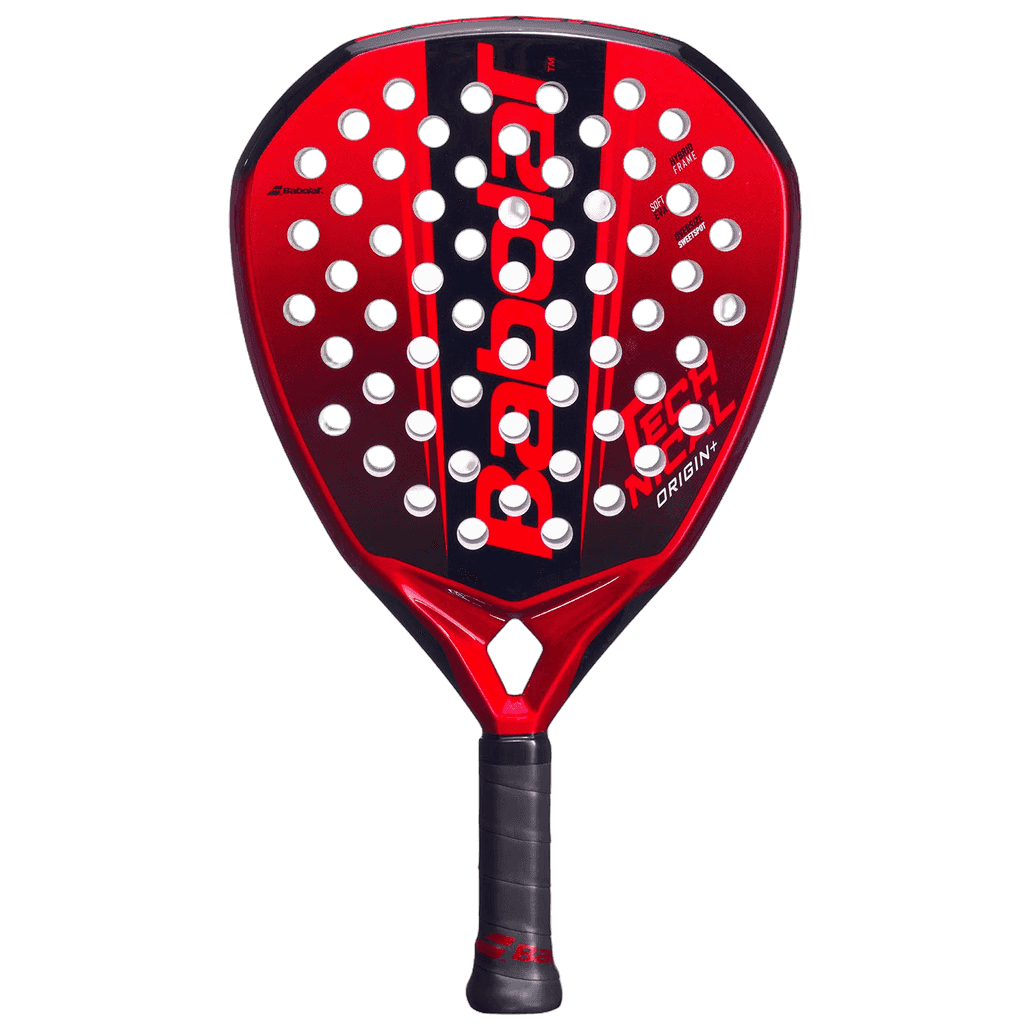
The Babolat Technical Origin Plus 2027 is a forgiving diamond racket that plays softer and quicker than its shape suggests. I see it as a control-oriented attacking racket: enough punch to finish a short ball, but built more around easy depth, clean placement, and confidence in fast exchanges.
It does not demand a big swing to get the ball moving. That makes it approachable for intermediate players who want a more attacking profile without stepping into a hard, demanding racket that punishes late contact.
Technical analysis
Shape & balance
The diamond shape gives the Technical Origin Plus an attacking outline, yet the balance does not feel excessively high in play. I found it maneuverable through compact volleys and overhead preparation, with less of that slow, tip-heavy sensation some diamond rackets bring at the net.
Its generous sweet spot is a real part of the experience. Based on court feedback, contact remains fairly stable outside the center, which matters when I am blocking hard volleys or defending a fast ball after the glass. It will not hide every mistimed shot, but it is more tolerant than its diamond silhouette implies.
Materials & construction
Babolat uses a Hybrid Frame, Soft Fiber fiberglass faces, and a Soft EVA core. The result is a medium feel with noticeable flex at impact. The faces do not give the sharp, dry response I expect from a stiff carbon racket; instead, they hold the ball briefly and release it easily.
That softer construction brings very accessible ball exit. At the baseline, I can send a defensive lob deep without forcing my arm, and blocks travel with useful length from a short preparation. The trade-off is clear: players who hit hard and want a crisp, explosive response may find the face too soft when trying to flatten the ball.
On-court feel
Baseline play
From the baseline, this racket is comfortable. The easy rebound helps on off-the-wall play, especially when I am stretched or arriving late to a low ball. It also gives me confidence to play a controlled chiquita after the bounce rather than simply lifting the ball back.
Direction is dependable, and the broad sweet spot reduces the punishment on defensive contacts. Still, I would not call it a precision instrument for aggressive counterattacking. When I want to drive a low ball hard through the middle, it gives depth more readily than penetrating speed.
At the net
At the net, the manageable handling is one of its better traits. Quick blocks, reaction volleys, and soft drop shots feel natural because the racket gets into position without much effort. The softer face also helps me take pace off the ball rather than accidentally overhitting.
Punch volleys are competent, not crushing. I can accelerate the ball when the opportunity is there, but this is not the racket I would choose solely to overwhelm opponents with heavy, dead volleys. Its strength is keeping the ball low and placing it accurately.
Bandeja and víbora
The racket works well for controlled overheads. My bandeja comes off with easy depth and a predictable trajectory, while the moderate handling helps me adjust under a defensive lob. A víbora can be placed well, although the softer face does not produce the most biting, aggressive finish.
On the smash, power is adequate rather than exceptional. Good technique still produces a useful finish, but the racket does not add the extra violence that a harder carbon face can provide.
Conclusion
I would point intermediate players toward the Technical Origin Plus if they want a forgiving diamond racket with easy ball exit, a broad sweet spot, and enough mobility for quick net exchanges.
Its trade-off is power. The softer fiberglass and EVA setup favors comfort, rebound, and control over a brutal smash or sharply direct attack. For players who construct points, defend actively, and finish with placement, that is a sensible compromise.
What other reviewers say
- SweetSpot Pádeles
The review characterizes it as a medium-soft, highly manoeuvrable racket with easy ball output. It highlights a broad sweet spot and solid control, while power is described as adequate rather than exceptional.
Switch Intelligence
Be the first to share where you switched from.
Community reviews
Real feedback from players who used this racket.
Add your review
To submit your review, log in first. You can still read all approved community reviews below.
Add review


