

Nox AT10 Pro Cup Soft 2027 Agustin Tapia
A soft, forgiving tear shape that makes defending and shaping the ball feel easy, while asking for patience on the flat finish.
Our Take
Shape
Tear
Weight
360 - 375 gr
Touch
Soft
Core
HR3 Soft EVA
Faces
Silver Fiberglass
Frame
Carbon
What we like
- Easy depth from baseline
- Forgiving off-the-wall ball exit
- Bite on *bandeja* and *víbora*
What we don't
- Limited flat-smash finishing force
- Passive blocks can launch long
- Muted feedback on off-center hits
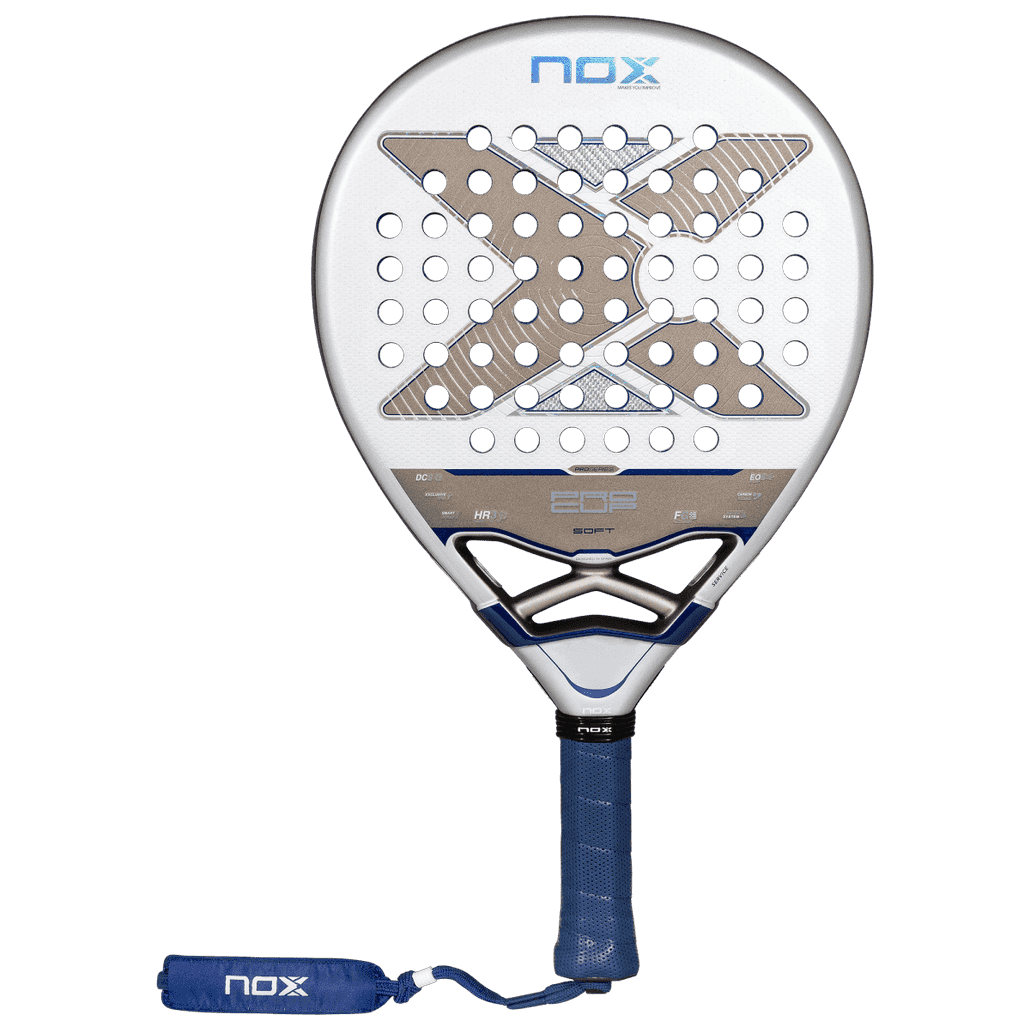
Nox AT10 Pro Cup Soft 2027 Agustin Tapia is a lively, forgiving racket built around easy depth rather than brute-force finishing. Its tear shape and soft feel give it a fast, accessible response that helps during long defensive exchanges.
I see it fitting intermediate players who want a racket that works with them from the baseline, particularly if they rely on placement, spin, and consistent overheads more than flat power.
Technical analysis
Shape & balance
The tear profile gives this racket a useful middle ground between a round control racket and a more demanding diamond. The balance feels manageable rather than aggressively head-heavy, which keeps it quick enough in hand during fast exchanges and helps me prepare late without feeling punished.
Its sweet spot is broad for this shape. That matters most when defending low balls or catching a volley slightly outside the center: the racket still sends the ball deep without a harsh drop in response. It is not a precision instrument for players who want a very firm, compact contact, though. The softer construction smooths out feedback, so I get less information from off-center hits than I would with a harder carbon-faced racket.
Materials & construction
The carbon frame keeps the structure stable, while the Silver Fiberglass faces are responsible for much of the racket’s elastic ball exit. Paired with the HR3 Soft EVA core, the contact is comfortable and springy rather than dry or rigid.
That combination makes defensive work easier, especially when I am under pressure and cannot generate much swing speed. The trade-off is clear: the racket can add more rebound than I want on passive blocks. If I leave the face open or follow through too much at the net, the ball can sit up or travel long. Clean technique and a softer hand are needed.
On-court feel
Baseline play
From the baseline, this is where the Pro Cup Soft makes the strongest case for itself. I found it easy to send the ball deep from off-the-wall play, even with a compact swing. Defensive lobs come off the face with little effort, and low-driven lobs are available without having to force the stroke.
The wide sweet spot also makes it forgiving on rushed returns. Still, players who prefer to absorb pace with a dead, low-output racket may find the rebound too active. This one wants to help the ball travel.
At the net
Quick volleys feel uncomplicated because the racket moves easily and gives the ball a useful push. I like it for directing volleys into the feet or playing a controlled chiquita after drawing an opponent back.
Against hard volleys, though, I need to shorten my motion. The soft core can launch the ball if I try to punch through everything. It rewards touch more than brute force.
Bandeja and víbora
The racket’s easy depth carries over well to the bandeja and víbora. I can generate length without overhitting, and the fiberglass face gives enough bite to work slice into the shot. That makes it a comfortable option for players who build pressure through repeatable overheads rather than one huge winner.
Smash
A flat smash is not its main event. There is enough output for a controlled finish, but it does not deliver the stiff, explosive response that makes a ball jump off the court with minimal effort. Players who finish points through raw overhead power will notice that limit quickly.
Conclusion
I would choose this racket for a player who values easy defense, generous ball exit, and dependable spin on controlled overheads. It is particularly convincing for players who want help creating depth when stretched or late to the ball.
The compromise is finishing force and passive stability at the net. The Nox AT10 Pro Cup Soft 2027 Agustin Tapia is more about keeping the point organized and applying steady pressure than ending it with one flat smash.
What other reviewers say
- PadelTestLabfr
The review finds it especially easy to generate depth on defensive shots, lobs, bandejas and víboras, with a broad sweet spot and strong bite on sliced shots. The trade-off is lower finishing force on flat smashes, while blocking volleys can launch too much if the player follows through excessively.
Switch Intelligence
Be the first to share where you switched from.
Community reviews
Real feedback from players who used this racket.
Add your review
To submit your review, log in first. You can still read all approved community reviews below.
Add review


