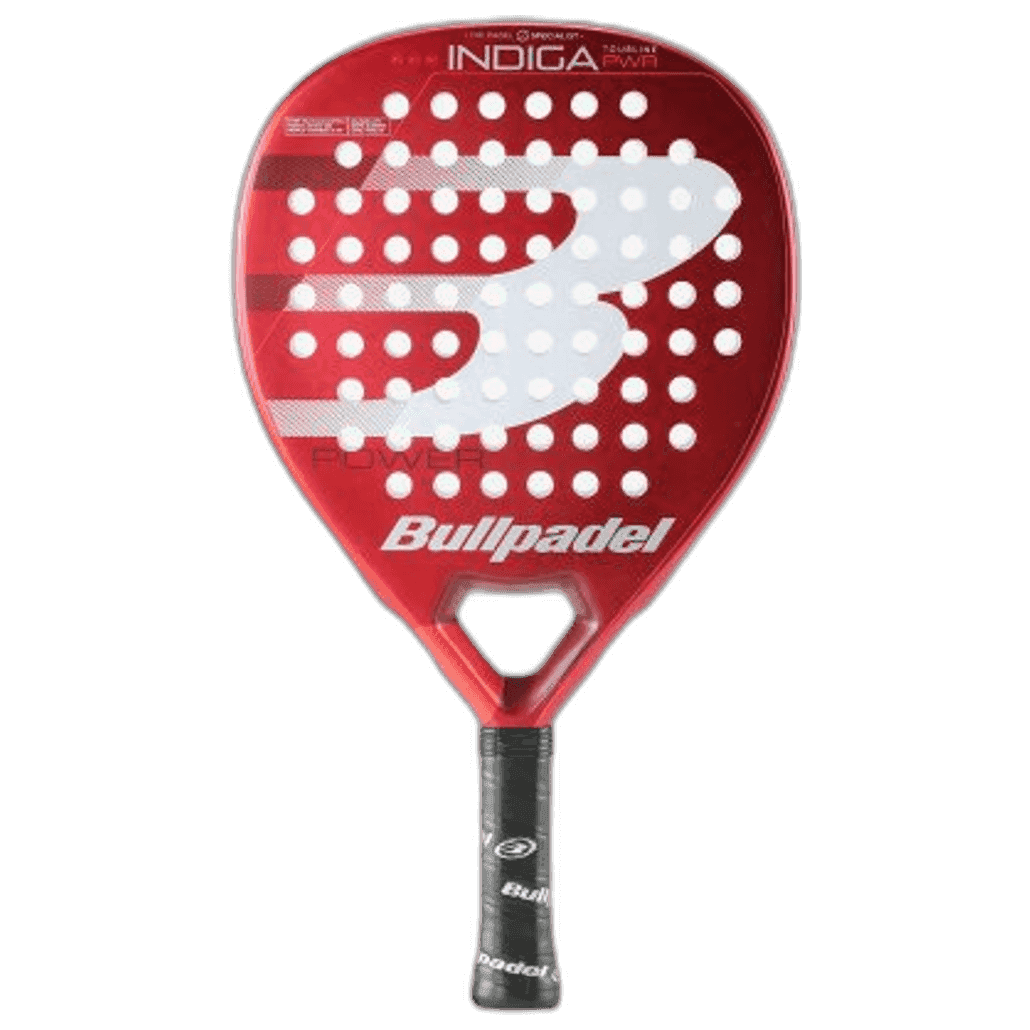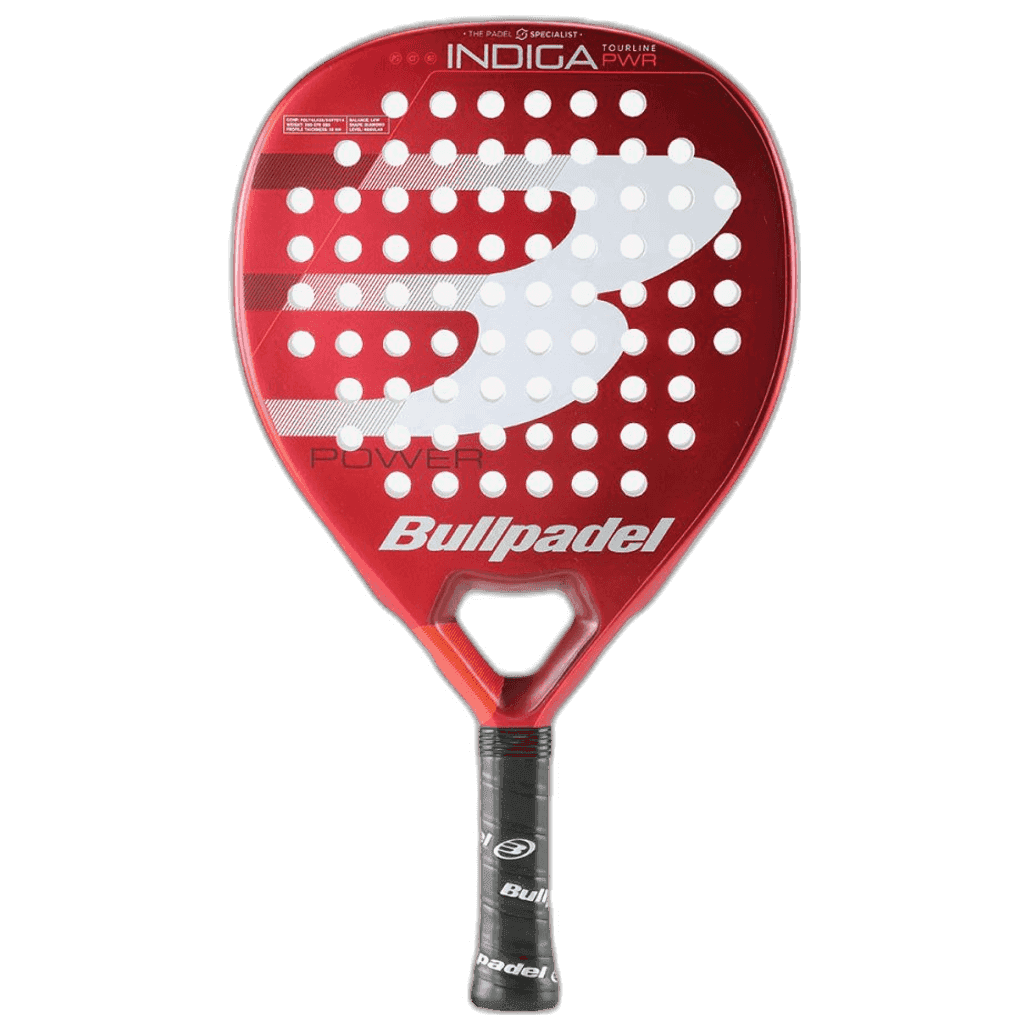
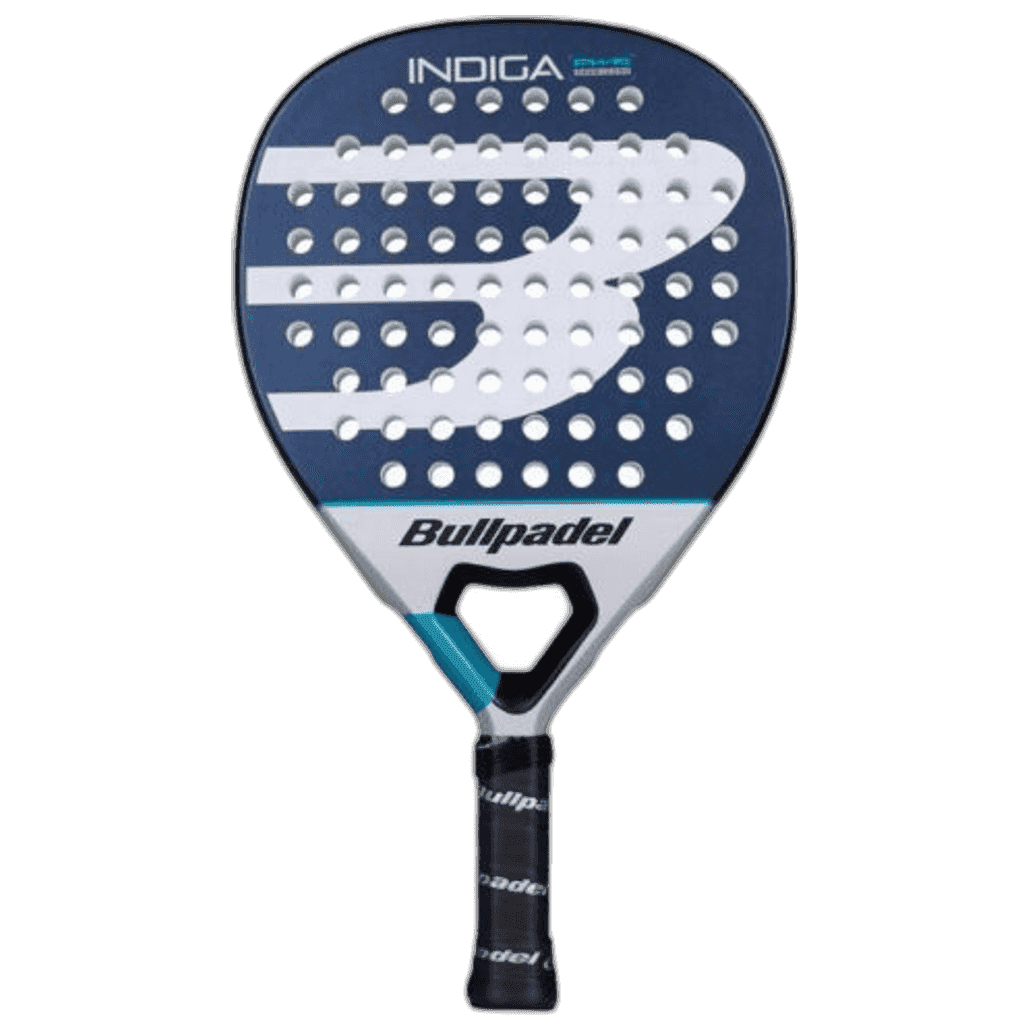
Bullpadel Indiga PWR 2026
A soft-feeling diamond racket that gives beginners easy ball output and extra punch without asking for clean, polished technique.
Shape
Diamond
Weight
360 - 370 gr
Touch
Medium-Soft
Core
SoftEVA
Faces
Polyglass
Frame
Polyglass
What we like
- Easy ball output
- Comfortable off-center contact
- Helpful on *bandeja*
What we don't
- Limited maneuverability in exchanges
- Less precision on defense
- Muted bite on overheads



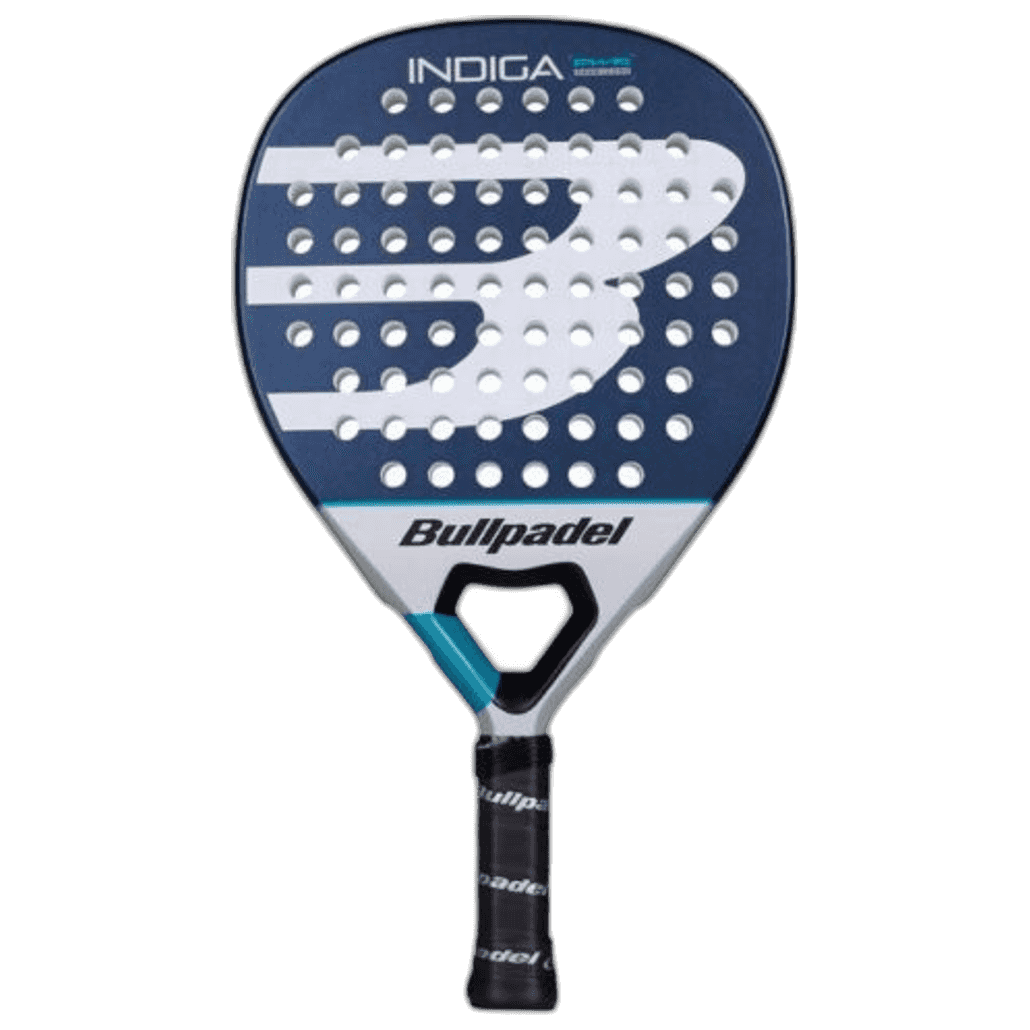
The Bullpadel Indiga PWR 2026 is an entry-level attacking racket with a pretty clear personality: easy ball output, a comfortable impact, and enough help in the offensive game to let you swing with intent. It doesn’t try to be surgical. It tries to make your shots come off with a bit more pace and a bit less fuss.
I see it as a sensible first step if you want something more aggressive than a pure control round racket. The trade-off is obvious from the first few points: it gives you punch and forgiveness, but not a lot of fine-tuned precision or quick handling.
Technical analysis
Shape & balance
The diamond shape and medium-high balance push the racket toward offense from the start. That setup helps when you’re finishing points or looking to add weight to the ball above shoulder height. It also explains why the racket feels more assertive than a round beginner option.
What I don’t get here is easy maneuverability. In fast exchanges, especially when you’re late on the ball, it can feel a bit less nimble in the hand. If your priority is quick reactions and super clean placement, this shape asks for more from your technique.
Materials & construction
Bullpadel uses Polyglass on the frame and faces, paired with SoftEVA and a medium-soft feel. That combination is a big part of the racket’s character. The response is friendly, the ball exit is lively, and the impact doesn’t punish you much when contact is a little off-center.
The downside is that this construction sacrifices some sharpness. You don’t get the same bite or precision you’d expect from a stiffer racket with more advanced carbon layup. It’s not the most surgical option on the market, but for its price range it feels coherent and easy to live with.
On-court feel
Baseline play
From the baseline, this is a forgiving racket that helps the ball travel without you having to force every swing. Defensive lobs come off well, and blocks feel comfortable because the core does a lot of the work for you. That easy rebound is probably its biggest weapon.
At the same time, I wouldn’t call it a racket for total defensive control. When I’m trying to hold the line under pressure, I notice the softer response can blur placement a little. It helps more with getting the ball back than with painting exact targets.
At the net
At the net, the Indiga PWR feels more convincing than you’d expect from a beginner-oriented racket. Volleys have decent depth, and the racket makes it simple to add pace without having to swing hard. That’s the main theme again: accessible offense.
It’s not especially explosive, though, and that matters if you like to speed up the point with a lot of intent. The racket is comfortable and easy, but it doesn’t give me the sharp, immediate response I’d want for very aggressive net exchanges.
Bandeja and víbora
This is where the racket makes the most sense. Both the bandeja and víbora benefit from the soft core and the easy ball output. You can guide the shot with less effort, and the racket helps keep the ball alive with decent depth.
What it doesn’t do as well is give you that extra bite on more demanding overheads. If you like to hit with heavy spin and really knife the ball, there are stronger options. Here, the feel is more comfortable than incisive.
Conclusion
I’d point this racket toward newer players who want an attacking bias without stepping into something too demanding. It makes sense if you want help with power, comfort, and a forgiving sweet spot, especially if you’re still building confidence on overheads and at the net.
The compromise is clear: less maneuverability, less precision, and not much bite on the most technical shots. I’d use it as a friendly offensive starter, not as a racket for players who already want sharper control or a more explosive, connected response.
What other reviewers say
- Dropcourten
The review frames it as an entry-level offensive racket that rewards aggressive shots without punishing technical imperfections too harshly. It leans more toward helping players add punch than toward delivering ultimate precision.
- Tomapadeles
Tomapadel presents it as a beginner-friendly racket with an attacking bias, comfortable feel, and good ball output thanks to its soft core and material mix. The overall message is that it helps players hit with intent without demanding highly refined technique.
- Reddit r/Padelracketen
In the discussion, users position the Indiga PWR as a sensible starter option if you want something a bit more attacking than the CTRL, while acknowledging it may feel slightly heavier. The thread suggests it fits best when basic power and looks matter more than maximum maneuverability.
Switch Intelligence
Be the first to share where you switched from.
Community reviews
Real feedback from players who used this racket.
1 review

Add your review
To submit your review, log in first. You can still read all approved community reviews below.
Add review