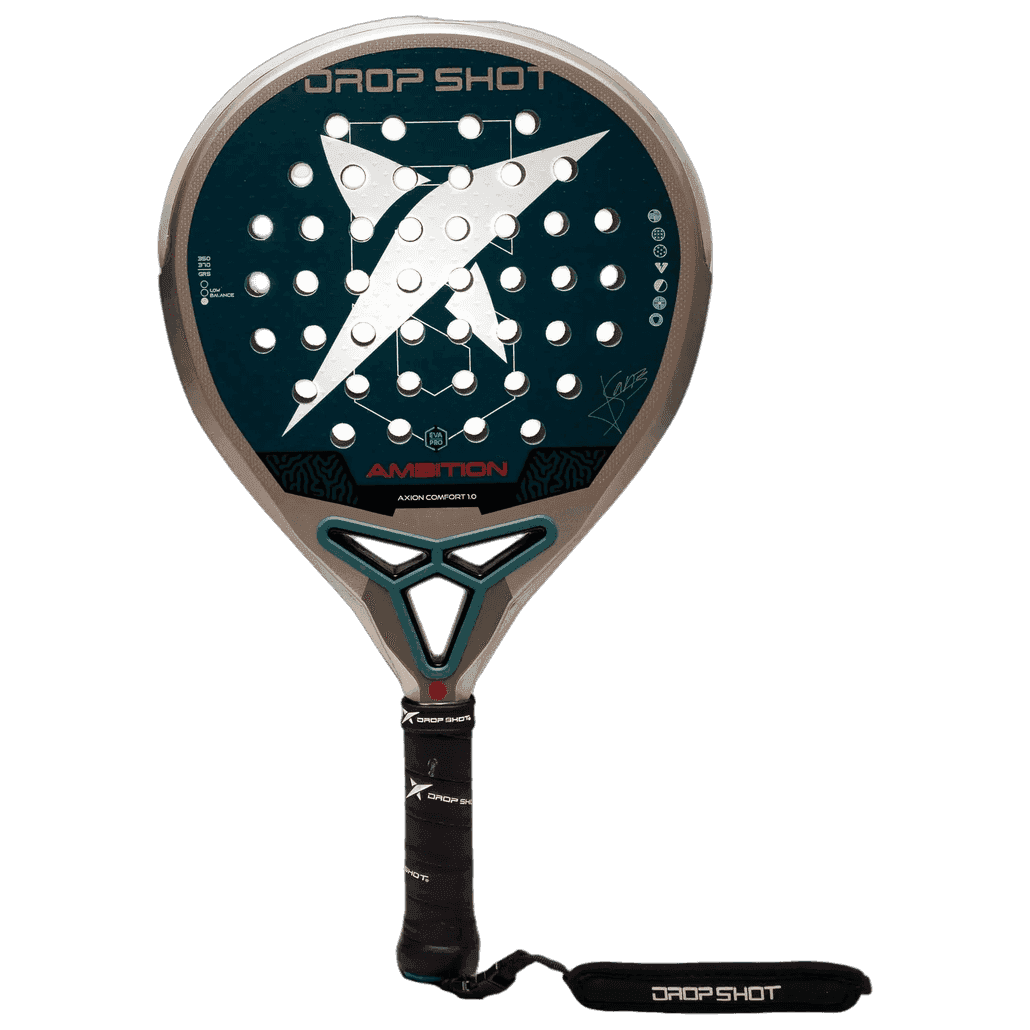
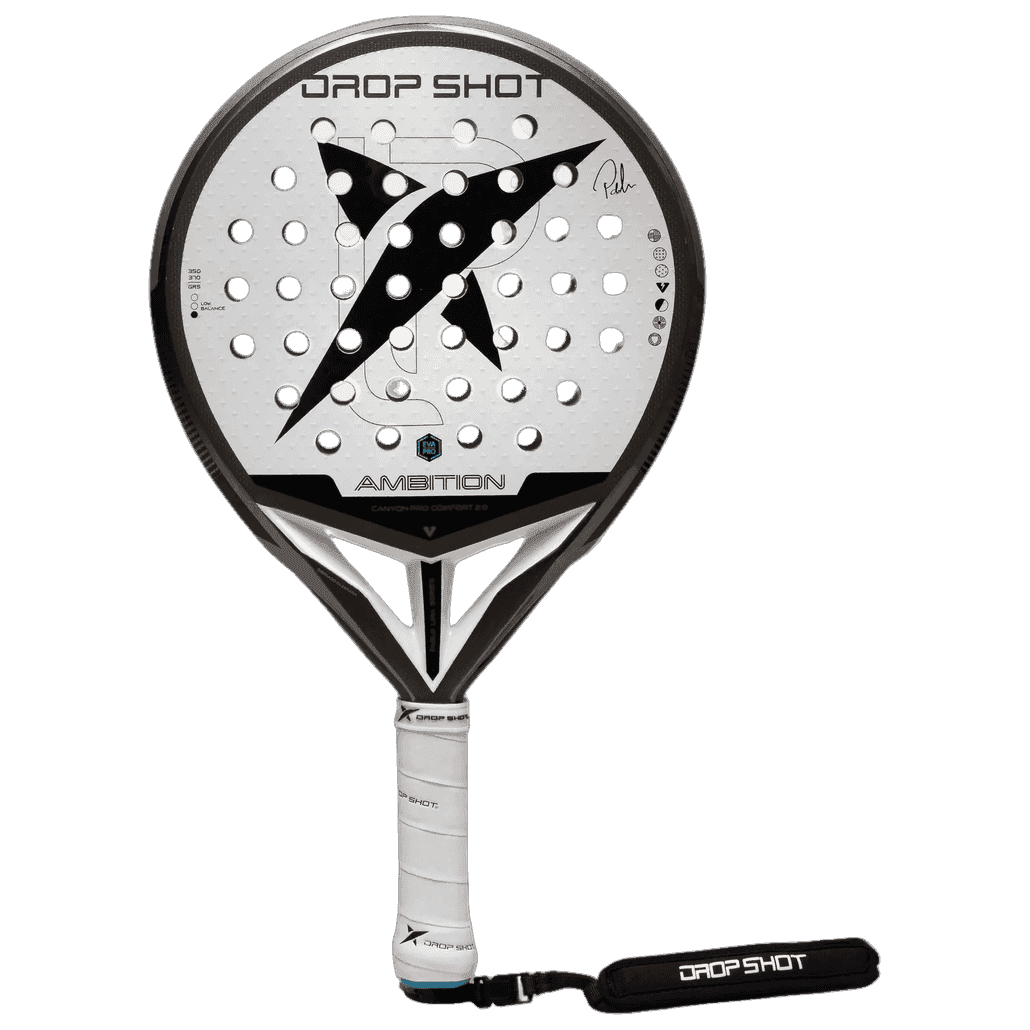
Drop Shot Canyon Pro Comfort 2.0 2026
A composed control racket with a forgiving sweet spot, steady defense, and clean response that rewards placement over force.
Our Take
Shape
Round
Weight
350 - 370 gr
Touch
Medium
Core
High Density EVA Pro
Faces
3K carbon fiber
Frame
Carbon fiber
What we like
- Very stable in defense
- Generous, forgiving sweet spot
- Easy maneuverability at net
What we don't
- No easy power output
- Needs clean technique to accelerate
- Not explosive on attack
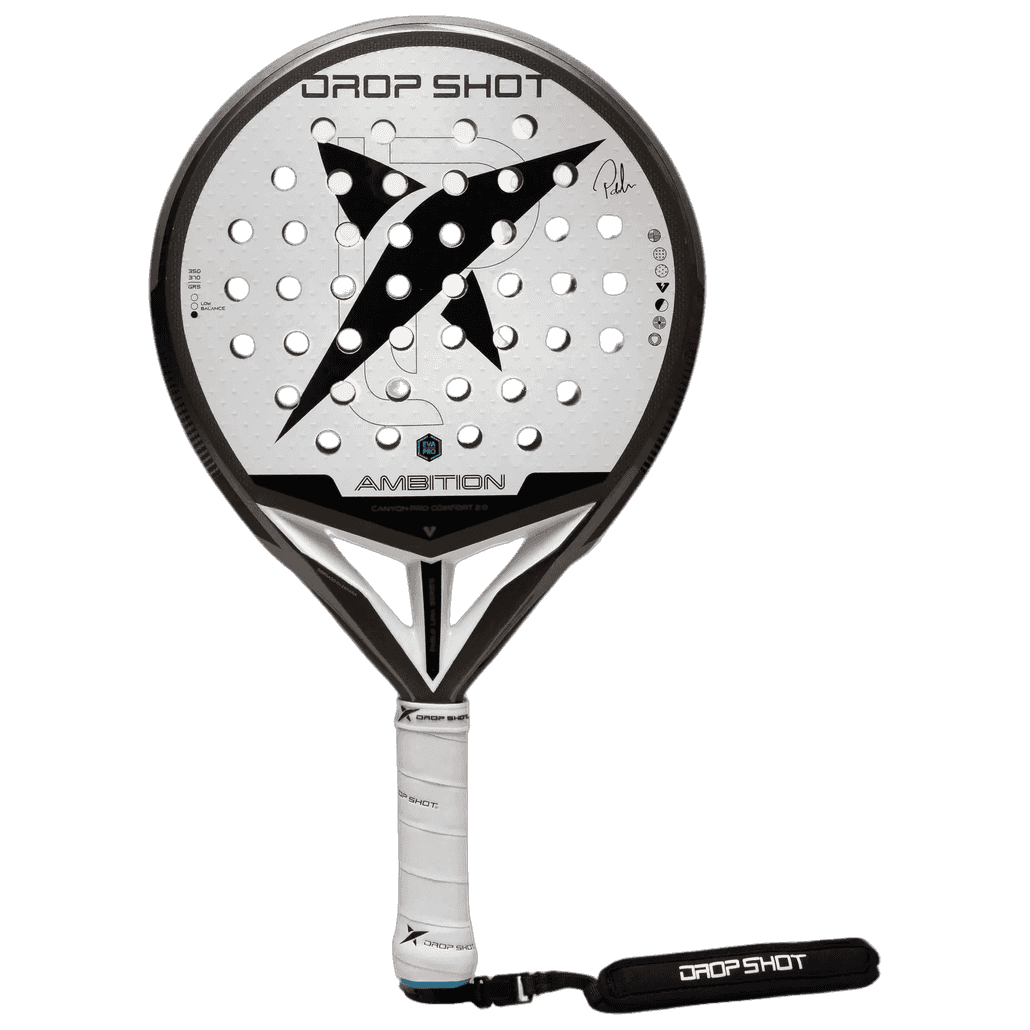
Drop Shot Canyon Pro Comfort 2.0 2026 is a control-first racket with a calm, ordered response and a lot of security from the back of the court. It feels more about placement and stability than raw punch.
I read it as a round-format option for players who want a big margin for error, especially in defense and in tight exchanges at the net. The face response is measured, the sweet spot is generous, and the whole racket gives me the feeling of having time to build the point instead of rushing it.
Technical analysis
Shape & balance
The Round shape is doing a lot of the work here. It pulls the sweet spot into a very friendly zone and keeps the racket predictable when contact is not perfect. That matters a lot in blocks, low balls, and off-the-wall play, where a racket can either rescue you or punish you. This one rescues you more often than not.
Balance feels restrained rather than aggressive. I never get the impression that the head is fighting me or asking for huge swings. Instead, it stays easy to move and easy to set, which fits the review data around maneuverability. The trade-off is simple: it doesn’t load up easy power. If you want a racket that helps the ball explode off the face, this is not that.
Materials & construction
The frame in carbon fiber and the 3K carbon faces give the racket a clean, orderly response. It is not a mushy feel, and it is not a harsh one either. The sensation is more medium than lively, with enough structure to keep the ball from flying on you and enough feedback to place the ball with confidence.
The EVA Pro High Density core supports that character well. I get controlled output, good rebound without excess, and a firm enough touch that blocks feel stable. There is a nice sense of communication through the face, but it never becomes explosive. That is the story of the whole racket: composed, accurate, a little restrained.
On-court feel
Baseline play
From the baseline, I like how this racket settles into defense. It makes returning hard balls and rebuilding points feel straightforward because the response is so clean. The ball doesn’t jump unexpectedly, so I can absorb pace and send it back with depth or angle.
It also helps on defensive lobs. Not because it launches the ball for you, but because the face is trustworthy and the sweet spot is forgiving enough to keep the stroke tidy. If your technique is clean, the racket rewards that. If you try to force pace, it starts to feel more limited.
At the net
Up at the net, the racket stays solid rather than electric. Volleys come out controlled and accurate, which is useful when I want to keep pressure without overhitting. It feels stable on contact, and that stability makes placement easy.
What it does not do is hand out free winners. Fast exchanges are manageable, but there is no extra surge waiting in the frame. You earn the speed yourself. That is fine for players who value order, but attacking hitters may miss a sharper response.
Bandeja and víbora
This is probably where the racket makes the most sense in attack. The medium feel and controlled rebound give me good command on the bandeja and víbora, especially when I want to keep the ball low and place it rather than flattening everything.
The racket rewards clean contact. If the gesture is compact and well timed, the ball comes out with good bite and direction. If I try to accelerate too much, the racket reminds me that it prefers precision over violence.
Conclusion
I’d point this racket toward players who value control, defensive stability, and easy maneuverability more than pure attacking output. If your game is built around blocks, placement, and patient construction, it makes a lot of sense.
The compromise is obvious. It is not an easy power racket, and it won’t hide sloppy acceleration. For me, that is exactly its identity: calm, secure, and very usable, but never trying to be something it isn’t.
What other reviewers say
- Padelfulen
The racket is described as very stable and secure on defense, with a forgiving sweet spot and controlled output that makes blocking, placement, and rebuilding points easier. At the net it behaves solidly for a control racket, but it is not built to hand out easy power.
- Padelfules
The racket gives a lot of confidence from the back thanks to its round shape, medium feel, and orderly carbon response. It stands out for maneuverability and a measured ball output that helps with precision, but it asks for clean technique if you want to accelerate with authority.
Switch Intelligence
Be the first to share where you switched from.
Community reviews
Real feedback from players who used this racket.
Add your review
To submit your review, log in first. You can still read all approved community reviews below.
Add review