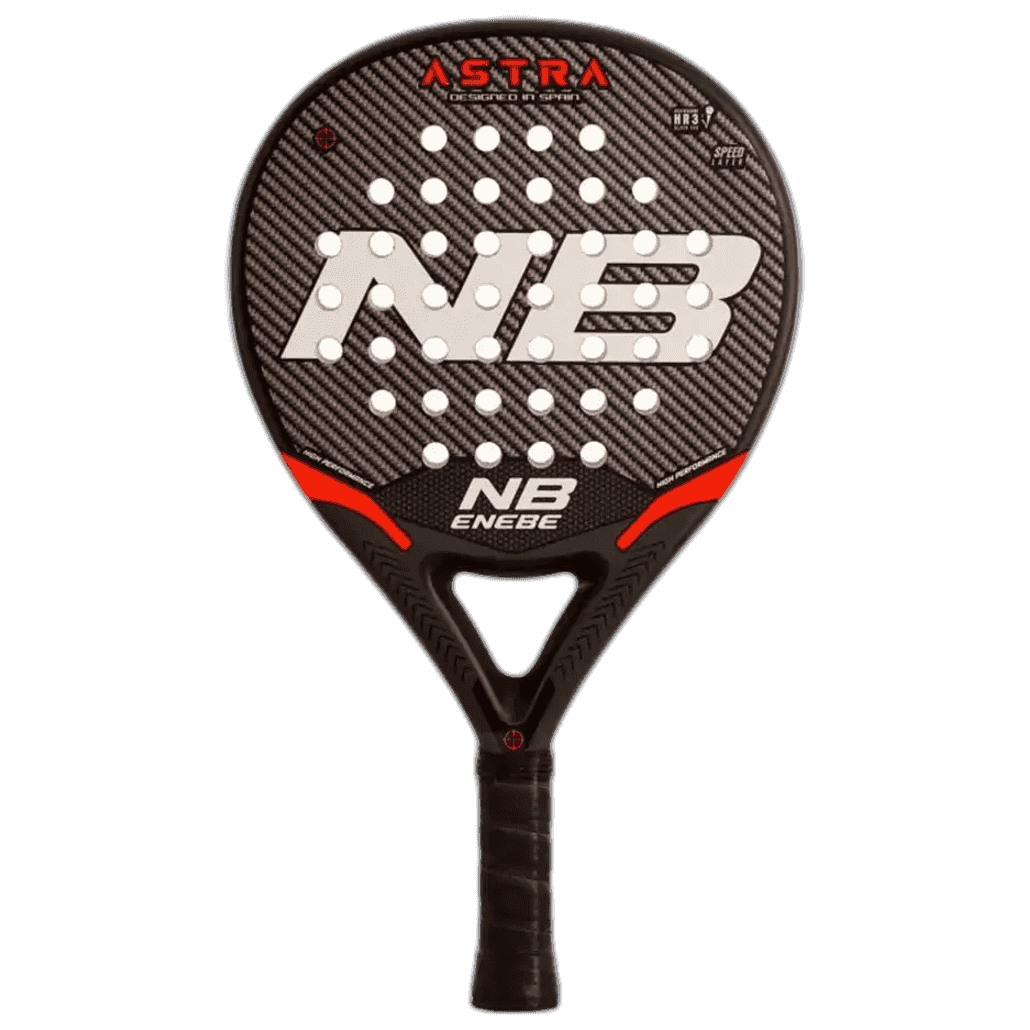
Enebe Astra 2026
A comfortable round racket with easy ball output, soft touch, and enough control to build points without demanding extra force.
Our Take
Shape
Round
Weight
355 - 370 gr
Touch
Medium-Soft
Core
Soft EVA
Faces
Fiberglass
Frame
Carbon fiber
What we like
- Comfortable low-vibration impact
- Forgiving, generous sweet spot
- Easy defense and ball output
What we don't
- Limited raw power on overheads
- Needs technique in fast exchanges
- Volleys lack crisp bite
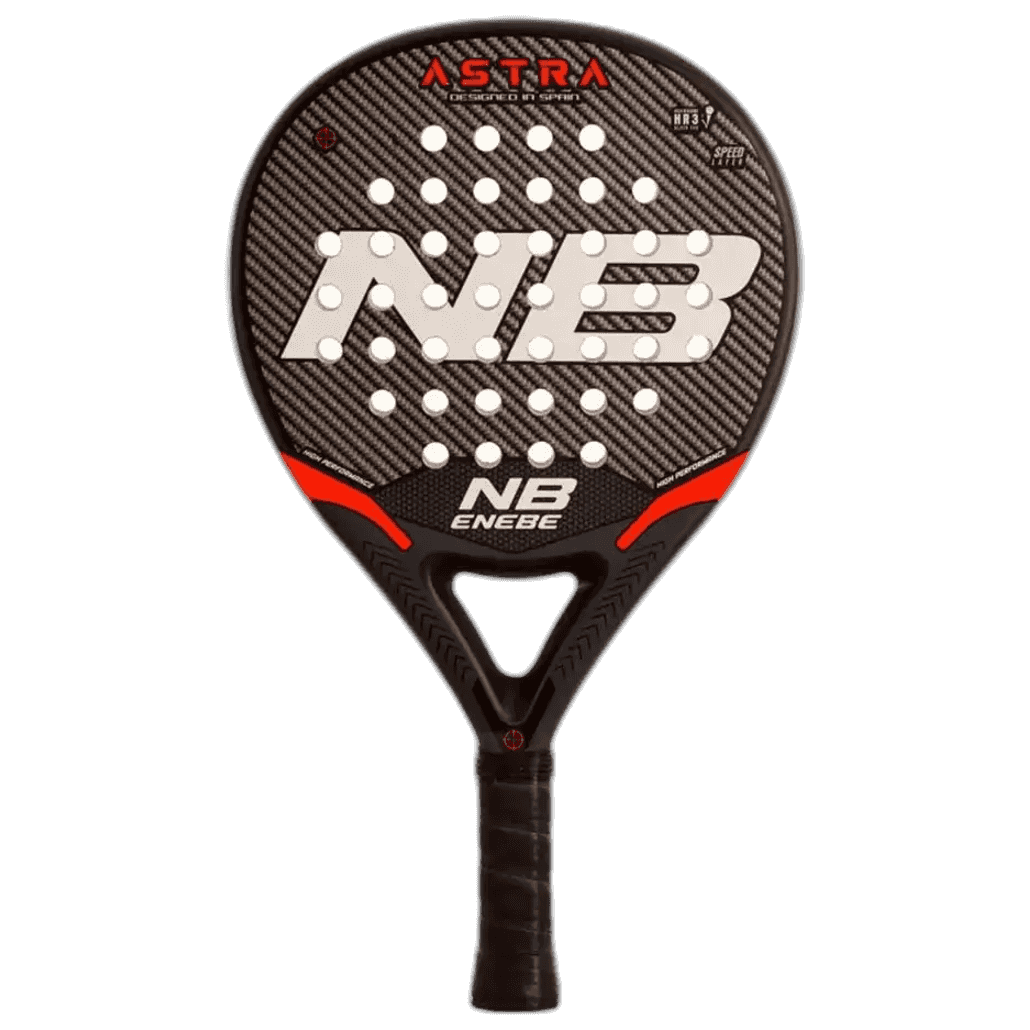
The Enebe Astra 2026 is a round racket with a friendly personality and a clearly control-first identity. I’d put it in the category of rackets that make life easier from the back of the court without asking for perfect timing every time.
Its main appeal is comfort. The fiberglass faces, fibra de carbono frame, and EVA Soft core give it a medium-soft feel that keeps the impact easy on the arm and the ball output lively enough to help in defense. It is not trying to win points through raw aggression. It wants to help you build them.
Technical analysis
Shape & balance
The round shape is doing a lot of the work here. The sweet spot feels generous, and the racket sits in the hand in a way that makes it easy to place under pressure. I never felt like I had to force the swing to keep the ball in play.
Balance is on the manageable side, which suits the Astra’s character. It moves cleanly for a control racket and won’t punish you in long rallies. That said, it does not have the sharp, explosive response you get from more attack-minded models. If you want the racket to do the heavy lifting in overheads, this is not that kind of frame.
Materials & construction
The mix of fiberglass faces and fibra de carbono frame gives the racket a soft, forgiving response with enough structure to stay stable on contact. The EVA Soft core adds comfort and helps the ball come off the faces with ease, especially when you’re blocking pace or guiding the ball deep from the baseline.
That construction makes sense for the racket’s personality. It absorbs well, it feels low-vibration, and it keeps the impact pleasant over a long session. The trade-off is clear: it does not load the ball with much extra pace. You have to create the acceleration yourself.
On-court feel
Baseline play
From the back of the court, this is where the Astra feels most natural. Defensive lobs come out with little fuss, and I liked how easy it was to reset points with controlled, deep balls. The racket gives you a clean, predictable response on slow and medium-paced exchanges.
It also helps in off-the-wall play because the ball exit is straightforward and the sweet spot is forgiving. When the rally speeds up, though, it asks for proper technique. Fast hands and rushed contacts are not where it shines.
At the net
Up at the net, the Astra stays easy to handle, but it doesn’t suddenly turn aggressive. Volleys are comfortable and guided more than punched. That makes it useful for building pressure rather than finishing points outright.
I liked it for patient net work. What I missed was a stronger, crisper bite when trying to accelerate through the ball. In very quick exchanges, it can feel a bit tame compared with stiffer, more reactive rackets.
Bandeja and víbora
This is probably its best attacking zone. The racket is not a smash-first tool, but for placed bandejas and víboras it behaves well. It gives you enough control to keep the ball low and controlled, with a comfortable response that doesn’t fight your arm.
What it does not give you is free pace. If you want the ball to jump off the glass with aggression, you’ll need to supply that yourself. Technique matters here more than with more powerful options.
Conclusion
I see the Enebe Astra 2026 as a comfortable control racket for players who value easy handling, a forgiving sweet spot, and dependable ball output from defense. It fits best in the hands of someone who builds points calmly and likes the racket to feel friendly on every contact.
What you give up is obvious: raw power, heavy smashes, and that extra burst in very fast exchanges. It’s not the racket I’d grab if I wanted to dominate with overheads.
What I do like is its honesty. It plays exactly like its specs suggest. Smooth, comfortable, and controlled, with enough liveliness to keep the ball moving without turning into a weapon for easy pace.
What other reviewers say
- Padelfules
The racket is presented as round, comfortable, and easy to swing, with lively ball output and a medium-soft feel that helps control from the back of the court. In attack, it works better for placed bandejas and víboras than for power smashes, where it does not give free pace.
- Padelfulen
The racket is portrayed as a friendly round model built for control, comfort, and easy handling, with strong ball output for defense and point construction. When the pace rises, it asks for proper technique and arm commitment; it is not an easy-power racket.
Switch Intelligence
Be the first to share where you switched from.
Community reviews
Real feedback from players who used this racket.
Add your review
To submit your review, log in first. You can still read all approved community reviews below.
Add review