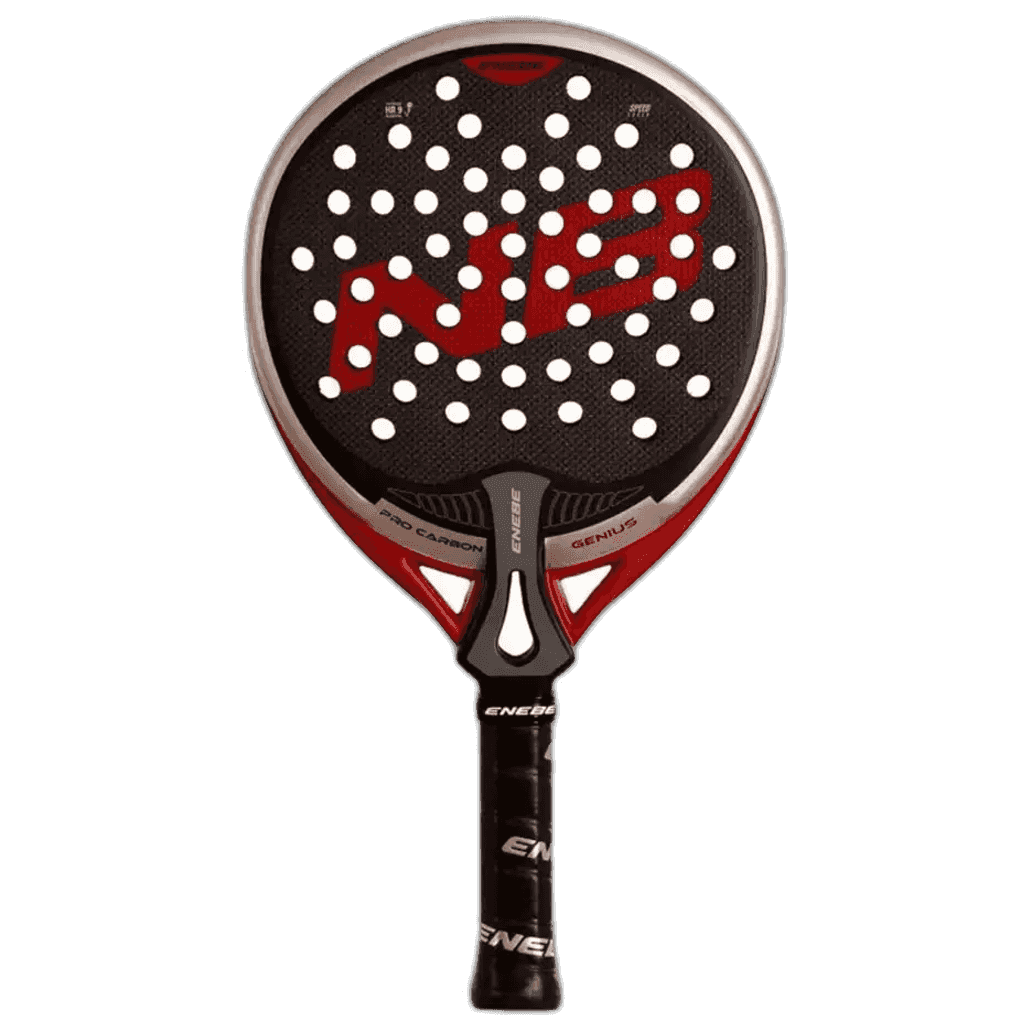
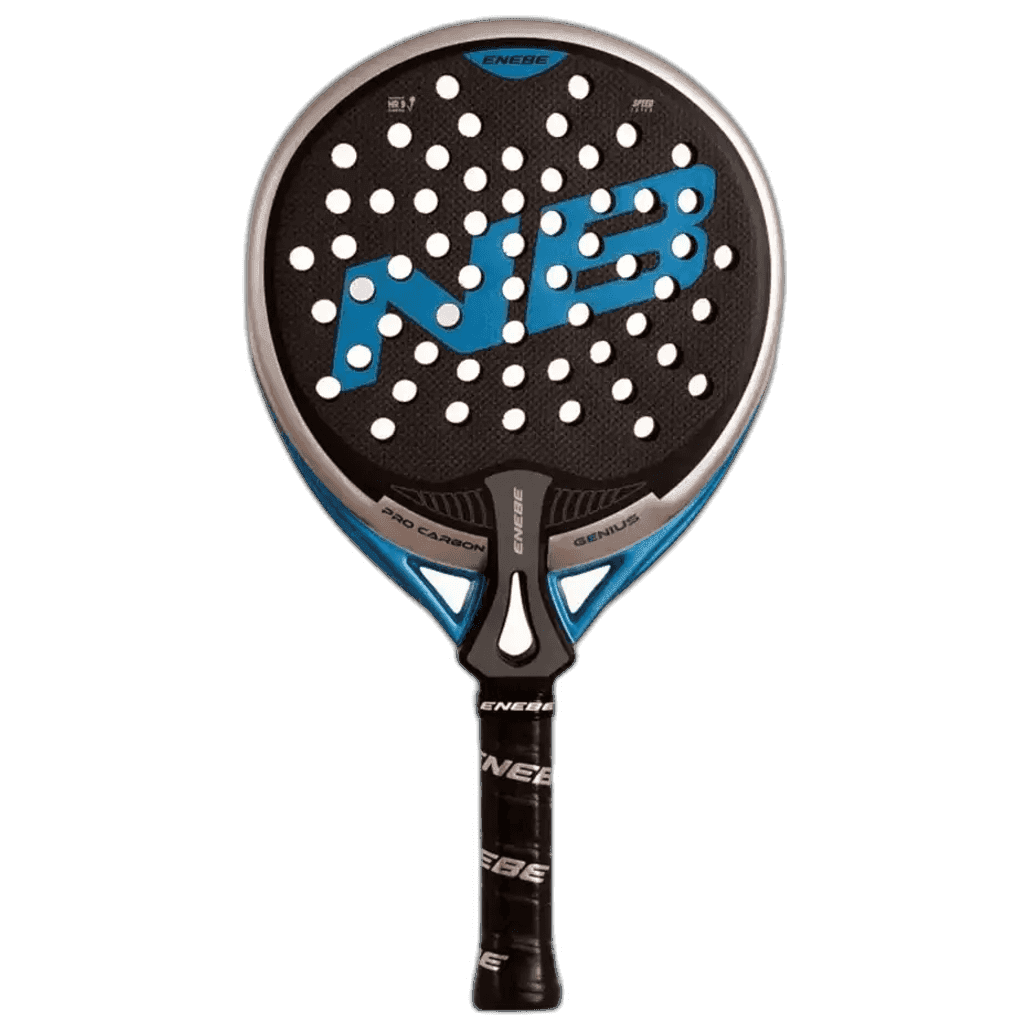
Enebe Genius Blue 2026
A round control racket with a firm, precise feel, built to place lobs and volleys cleanly while still offering honest help overhead.
Our Take
Shape
Round
Weight
355 - 370 gr
Touch
Medium-Hard
Core
Medium-hard EVA
Faces
3K carbon
Frame
Carbon fiber
What we like
- Stable, precise baseline control
- Quick, accurate net handling
- Secure *bandeja* and *víbora*
What we don't
- Passive defense lacks free ball
- Firm touch can feel unforgiving
- Not a pure power racket
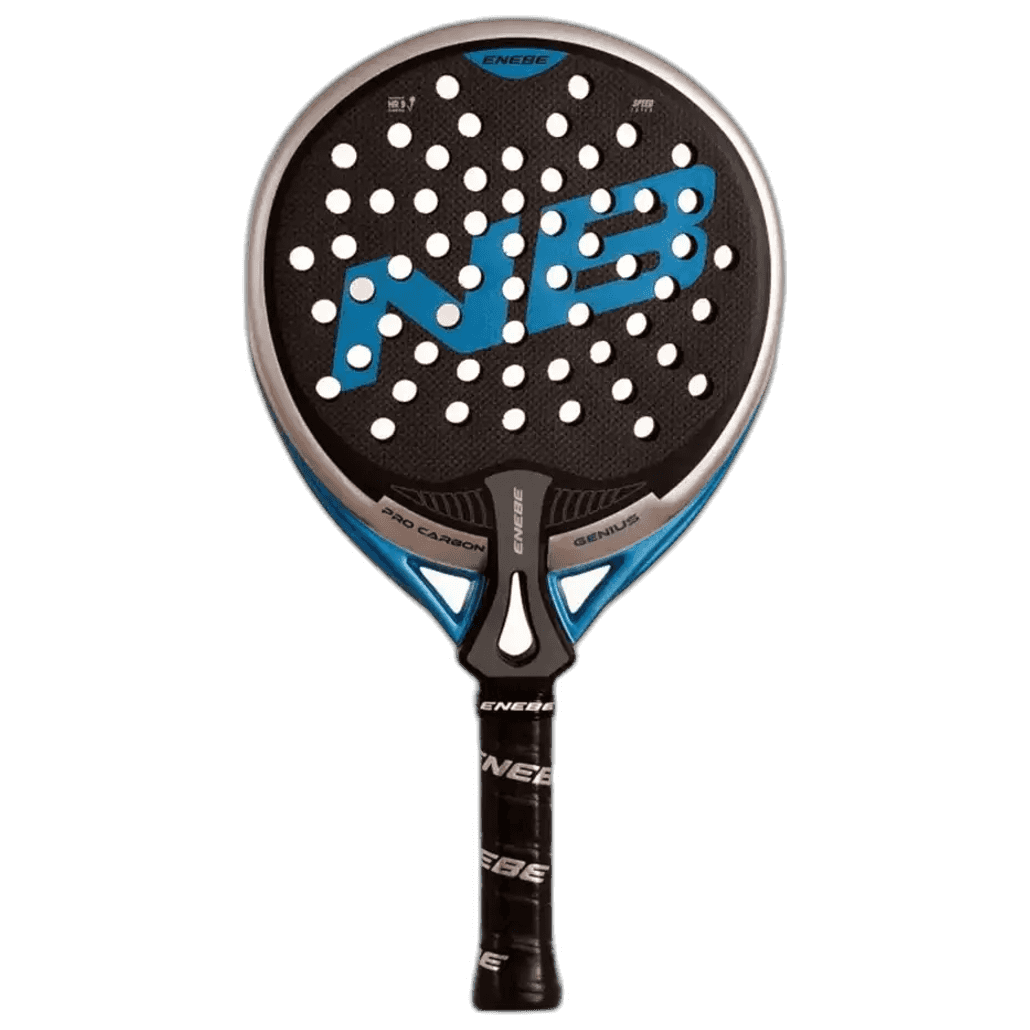
The Enebe Genius Blue 2026 is a control-first round racket with a firm, precise personality. It feels built for players who want the point under control rather than turned into a scramble.
What I notice straight away is the balance between stability and speed. It moves fast enough at the net, but it does not hide its serious side from the back court. You need to swing with intent.
The 3K carbon faces and Medium-Hard EVA core give it a firm, direct response. That is good news if you like clear feedback and structured points. Less so if you want easy depth from passive contact.
Technical analysis
Shape & balance
The round shape is doing a lot of the work here. It keeps the sweet spot generous and makes the racket easy to place, especially when I’m defending or trying to reset a point with a low, controlled ball. The balance sits in a sensible zone for a control racket: not lazy, not overly head-heavy.
That mix is what makes the Genius Blue feel so composed. I can accelerate it without the frame feeling vague, and that matters in quick exchanges. It is not a racket that asks me to gamble on brute force. It asks for clean mechanics and rewards them.
Materials & construction
The fiberglass frame with 3K carbon faces and a Medium-Hard EVA core gives this racket a firm, slightly serious contact. The response is crisp rather than plush, and the ball comes off with clear feedback. I like that in a racket built for placement.
The downside is obvious enough: this is not a soft, forgiving setup. On off-center contact, or on days when my arm is not fresh, that medium-hard touch can feel demanding. Players who prefer a softer, more elastic response may find it a bit unforgiving on defense.
On-court feel
Baseline play
From the baseline, the Genius Blue is at its best when I’m constructing the point. Lobs come out with good height and direction, and blocks feel stable as long as I get the face set early. It gives me the confidence to hold my line and work the rally instead of rushing a low-percentage answer.
What it does not do is give free ball output. If I’m late or passive, the ball doesn’t jump off the racket for me. I have to create my own depth. That makes it a better fit for players who like to be active with their swing, not for those looking for effortless defense.
At the net
At the net, the racket moves quickly and feels more agile than its serious back-court manners suggest. Volleys are easy to place, and I get a clean response when I want to press angles or keep the ball low. It is stable enough that I can really lean into the volley without it feeling loose.
That speed is useful in fast hands exchanges too. I would not call it explosive, but it is sharp and tidy. The racket helps me stay accurate under pressure, which is exactly what I want from a control model.
Bandeja and víbora
On overheads, it gives more help than a round control racket normally does. The bandeja feels secure, with enough bite to keep the ball heavy and well directed. The víbora is similar: not wild power, but enough response to make the shot bite through the court.
Still, I never forget what this racket is. It does not turn me into a finisher by itself. If I want real damage, I need to accelerate properly and choose my contact carefully. The reward is accuracy first, finishing second.
Conclusion
I see this as a strong option for players who value precision, stability, and a firm feel over easy power. If your game is built on lobs, controlled volleys, and staying organized from the baseline, this racket makes a lot of sense.
The trade-off is clear. You give up some defensive free ball and some comfort, especially if you like softer touch or have sensitive elbows. It can finish overheads respectably, but it never pretends to be a pure attacking racket.
For me, that honesty is part of the appeal. The Enebe Genius Blue 2026 knows exactly what it is, and it plays that role well.
What other reviewers say
- Padelfulen
The racket is portrayed as a serious control-first option: round, stable, and precise from the back court, with a medium-hard feel that rewards committed swings and structured point construction. At the net it moves quickly, and in overheads it offers more finishing help than its shape suggests, though it still isn’t a pure power racket.
- Padelfules
The racket is presented as a high-end control round model that feels stable and precise, making lobs, defense, and volleys easier to place accurately. Its medium-hard touch asks for more swing in defense, but in return it gives very clear feedback and respectable finishing ability when accelerated.
Switch Intelligence
Be the first to share where you switched from.
Community reviews
Real feedback from players who used this racket.
Add your review
To submit your review, log in first. You can still read all approved community reviews below.
Add review