

Kombat Vesubio 2.5 by Manu Martin 2026
A diamond racket with lively ball output and a medium-soft feel, giving attacking players easy access to power without losing composure.
Our Take
Shape
Diamond
Weight
360 - 370 gr
Touch
Medium-Soft
Core
Double-density EVA
Faces
18K carbon
Frame
Carbon fiber
What we like
- Lively ball output on controlled hits
- Stable blocks and defensive lobs
- Agile, accurate volleys at net
What we don't
- Sweet spot punishes late preparation
- Awkward defense needs clean timing
- Smash power not explosive
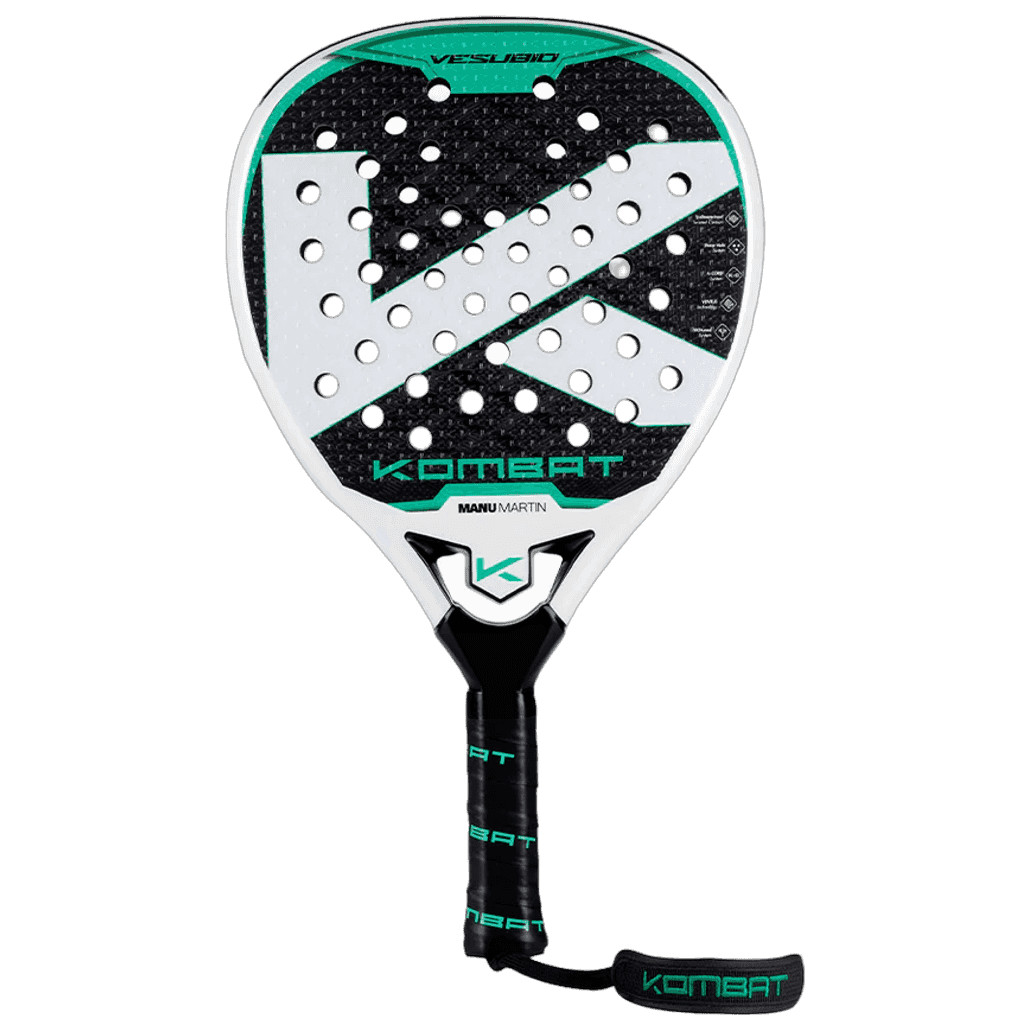
Kombat Vesubio 2.5 by Manu Martin 2026 is an attack-minded racket with enough ball output to keep it from feeling too demanding. I see it as a diamond that still wants to be played with order, not just brute force.
The first thing I notice is the balance between lively response and manageable behavior. It has that offensive character in the hand, but it doesn’t turn into a wild racket when the rally gets messy. For players who spend time at the net and still need help from the back court, that matters.
Technical analysis
Shape & balance
The diamond shape gives it a clear bias toward attacking play, and the balance supports that without pushing it into the extreme zone. It feels ready to work overhead, especially when I’m set up at the net or stepping in on a high ball.
That said, it’s not one of those rackets that hides every mistake. If your preparation is late, you’ll feel it. The sweet spot is usable, but not huge, so the racket rewards cleaner contact more than survival swings.
Materials & construction
The 18K carbon faces give the Vesubio a sharper response than a softer fiberglass build would. Combined with the fibra de carbono frame and the double-density EVA core, the result is a medium-soft feel with a good mix of touch and rebound.
I like how that construction keeps the racket from feeling dead. Ball exit is lively, especially on controlled hits, but it still gives enough structure to block pace and hold the line in exchanges. It is not a plush racket, though. When I really load the ball, I feel the frame and core working in a more direct way than a cushioned one.
On-court feel
Baseline play
From the baseline, this racket behaves better than its attacking shape might suggest. Defensive lobs come off with useful depth, and blocks have enough stability to stay honest against heavy pace. The ball comes out quickly without needing a big swing.
Where I think it asks more from the player is on awkward defense. If the contact is late or off the wall is rushed, the racket doesn’t babysit the shot. It needs decent timing to keep the control clean, especially in low balls and under pressure.
At the net
This is where it feels most natural. Volleys come out fast and accurate, and I can direct the ball without the racket feeling cumbersome. It’s agile enough for fast exchanges, which is not always the case with a diamond frame.
There’s a nice sense of stability on quick hands battles too. I wouldn’t call it ultra-refined, but it does enough to help me keep the point in my hands rather than just survive it.
Bandeja and víbora
These shots suit it very well. The combination of touch and pop makes the bandeja easy to shape, while the víbora gets useful bite when I accelerate through the ball. Clean contact is the key here. When I get that, the racket responds with a very satisfying mix of control and penetration.
What it doesn’t do is turn every overhead into a free point. If I try to force the issue with sloppy mechanics, the racket won’t magically create power. It gives help, not miracles.
Smash
On the smash, the Vesubio 2.5 is capable, but not the most violent option I’ve tested in this mold. It rewards good technique more than raw aggression. With proper timing, I can get a solid, direct finish. With a rushed swing, the output stays respectable but not explosive.
That’s really the story of this racket: it wants clean padel. When the contact is right, it feels sharp and effective. When it isn’t, it reminds you that it’s still a technical racket.
Conclusion
I’d put this in the hands of players who want an attacking racket with real ball output, not just a stiff frame pretending to be powerful. It has enough control to stay useful in all-court play, but the identity is clearly offensive.
The trade-off is simple. You get lively response, good net behavior, and very decent overhead performance. In return, you give up some forgiveness and a bit of raw smash power compared with more extreme attacking models. If your technique is already settled, that’s a fair exchange.
What other reviewers say
- Padel Reviewes
The review presents it as an attack-first racket that is still manageable: it stays stable on blocks and lobs from the back court, and it feels agile and accurate at the net without becoming unwieldy. It shines most on smashes and viboras, as long as the contact is clean.
- Pala Hackes
The editorial page frames it as an intermediate-friendly racket with a clear emphasis on ball output and a soft feel. The overall impression is that it prioritizes control and ease of use over raw power, especially in comfortable striking and buildup play.
- Racketguide.comen
The spec page points to a soft feel, high balance, and a double-density core, translating into a racket meant to blend control with lively ball output. Its pitch is for players who want help in both attack and defense without giving up precision.
Switch Intelligence
Be the first to share where you switched from.
Community reviews
Real feedback from players who used this racket.
Add your review
To submit your review, log in first. You can still read all approved community reviews below.
Add review


