

Kuikma Power Pro 2025
A demanding diamond built for sharp volleys and heavy smashes, rewarding clean contact with direct, lively response.
Our Take
Shape
Diamond
Touch
Medium-Hard
Core
Black Dual-Density EVA
Faces
3 layers of fiberglass + 1 layer of TeXtreme 18K Carbon
Frame
Air Foam Frame double tube with EVA foam (Carbon + Glass Fiber)
What we like
- Explosive smash acceleration
- Punchy, stable attacking volleys
- Direct *víbora* with heavy penetration
What we don't
- Compact, high sweet spot
- Slow in reactive volley exchanges
- Demanding off-the-wall defense
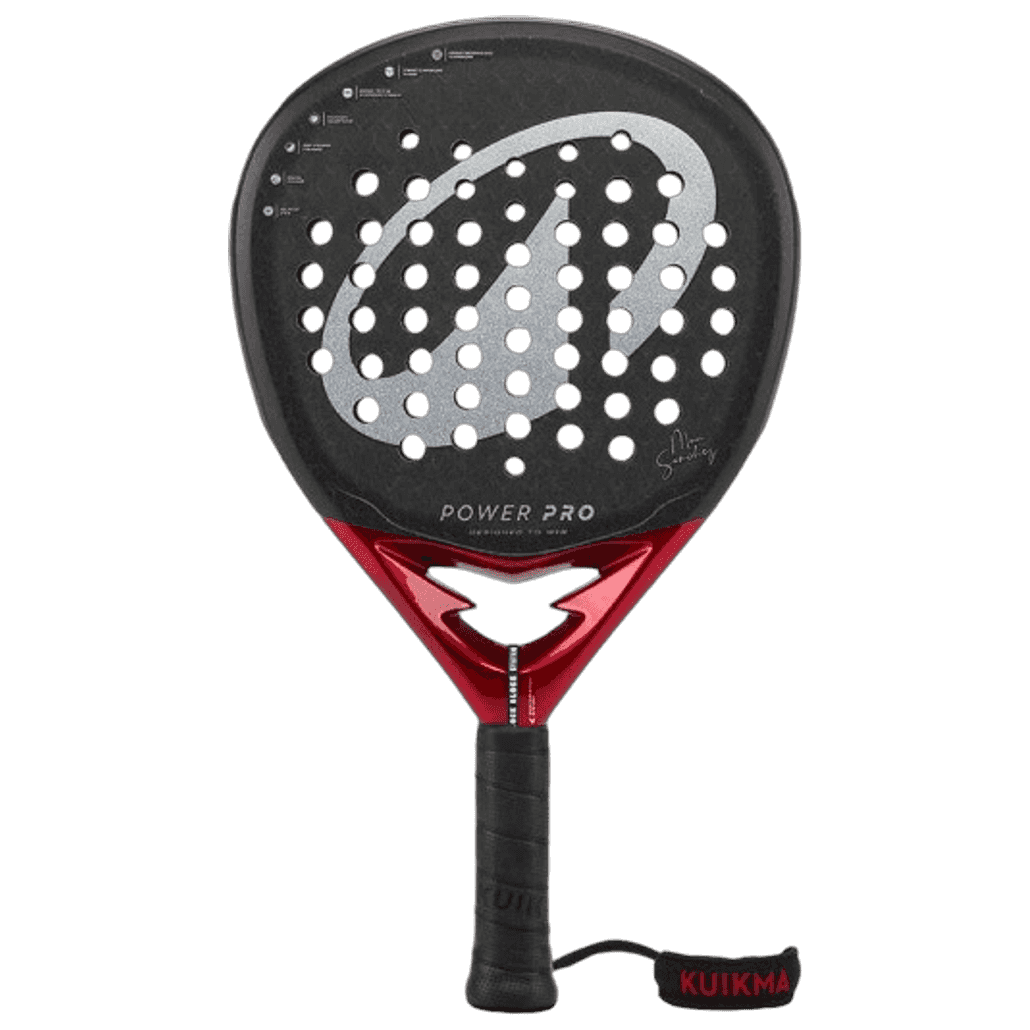
Kuikma Power Pro 2025 is an unapologetically attacking racket. Its diamond shape and medium-hard feel put the emphasis on finishing points, pressing volleys, and hitting through the ball rather than making defense effortless.
I found it most convincing in the hands of a player who already creates clean contact. It rewards that commitment. Miss the center, though, and it reminds you quickly that it is not a forgiving racket.
This is not the Kuikma I would pick for relaxed baseline defense or frantic reaction exchanges at the net. It wants purposeful swings and an offensive mindset.
Technical analysis
Shape & balance
The diamond profile gives the Power Pro 2025 a clearly head-heavy behavior in play. The racket carries momentum well through overheads and aggressive volleys, but that same momentum makes it slower to reset than a round or lower-balance racket.
Its sweet spot feels relatively compact and sits higher in the face. Centered contact is very rewarding: I can direct the ball accurately and hit with real penetration. Contact toward the edges is less kind, especially when blocking a fast ball or improvising off the wall. Players with loose preparation or inconsistent timing will feel that limitation more often than they would with a softer control-focused racket.
Materials & construction
Kuikma uses an Air Foam Frame double-tube structure, combining carbon and fiberglass around EVA foam. The faces combine three fiberglass layers with TeXtreme Carbon 18K, while the Black EVA Dual Density core gives the racket its firm, springy response.
That construction explains the direct hit and lively ball exit. It does not feel excessively hard or dead; there is enough rebound to help the ball travel without a huge swing. Still, the response is more immediate than cushioned. I get clear feedback from the face, but players who rely on a soft racket to absorb pace may find it demanding on defensive contacts.
On-court feel
Baseline play
From the baseline, the Power Pro can produce deep defensive lobs and solid blocks if I get behind the ball early. The firm face keeps the response predictable when contact is clean, and the rebound helps on slower balls that need extra depth.
The trade-off is maneuverability. In rushed defense, particularly on low balls after the glass, it is less fluid than softer, more head-light rackets. I need a firmer hand and better preparation to keep the ball under control. It does not rescue poor positioning.
At the net
At the net, this racket makes much more sense. Punch volleys come off fast, and the face stays stable when I want to drive through the middle or attack the opponent’s feet. There is enough bite to place the ball, provided I do not try to guide it with a loose wrist.
Fast volley exchanges are its weaker attacking scenario. The racket can feel a step slow when the point becomes a series of short, reactive blocks. I prefer it when I can set my body, take the ball in front, and hit with intention rather than flick at it.
Bandeja and víbora
The Power Pro gives me a direct, forceful response on a bandeja and especially on a víbora. The higher balance helps carry the racket through the ball, producing a heavier shot without needing to overhit.
Control remains good through the central sweet spot, but this is not a racket that makes late overhead contact comfortable. Timing matters.
Smash
The smash is its natural territory. The lively rebound and firm face produce explosive acceleration, and the racket transfers energy well when I commit to the swing. Flat smashes and aggressive kick smashes both benefit from the assertive response.
Conclusion
I would put the Kuikma Power Pro 2025 in the hands of an upper-intermediate or advanced player who plays proactively and has reliable centered contact. It is built for the net, overhead pressure, and finishing opportunities.
In exchange, you accept a smaller sweet spot, slower handling in rapid exchanges, and less automatic defense. For players who want a softer feel, easier off-the-wall play, or more help on mis-hits, this will feel demanding.
What other reviewers say
- Padel Magazinees
This test frames it as a distinctly attacking racket: smashes and volleys come off fast, with lively rebound and accurate placement when contact is centered. Its relatively small sweet spot demands precision, and defense is workable for skilled players but less fluid than with softer rackets.
- Padel Connectfr
The tester highlights a medium-hard feel, explosive punch, and strong net performance, especially on aggressive volleys and smashes. In return, it requires clean central contact, sound technique, and comfort with a substantial weight; defending is possible but less easy than with a softer racket.
- PalaHack — Consultorio de Padeles
An upper-intermediate owner likes its medium-hard feel and strong power. Their main complaint is reduced agility in fast volley exchanges, where the racket feels harder to move.
Switch Intelligence
Be the first to share where you switched from.
Community reviews
Real feedback from players who used this racket.
Add your review
To submit your review, log in first. You can still read all approved community reviews below.
Add review


