

Kuikma PR Control Metal 2024
A soft, low-balance round racket that rewards patient defense, easy depth, and measured placement before the point opens up.
Our Take
Shape
Round
Core
Soft EVA
Faces
Metal Biaxial Core + Glass Fiber
Frame
Carbon Twin Tube
What we like
- Forgiving central sweet spot
- Easy defensive depth from baseline
- Quick handling on reaction blocks
What we don't
- Twists on hard off-center blocks
- Limited punch on attacking volleys
- Lacks smash and víbora power
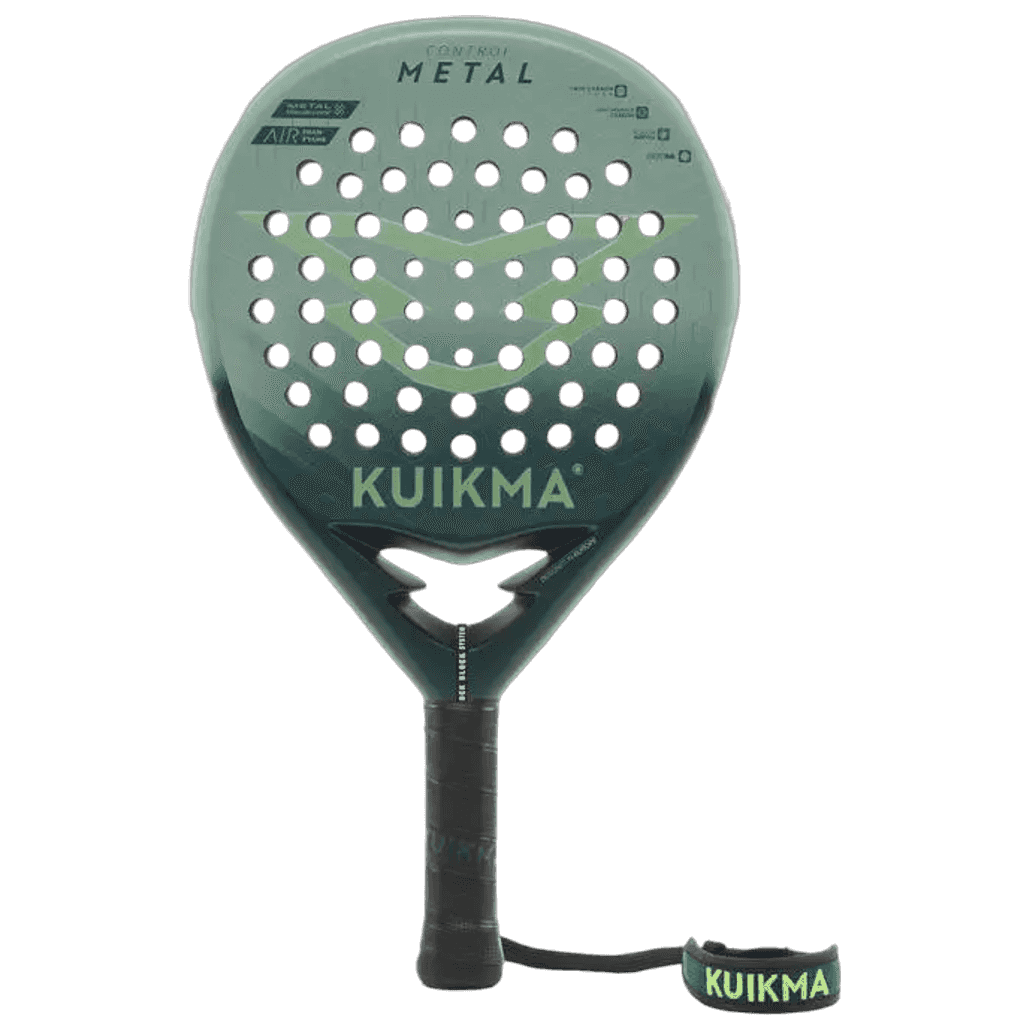
Kuikma PR Control Metal 2024 is a defensive-minded racket that wants to keep the point organized rather than end it early. I see it as a sensible choice for players who build from placement, use the lob well, and prefer a comfortable response over a hard, demanding face.
Its character is clear: round shape, accessible ball exit, and a low-balance handling profile that stays easy to move through long defensive exchanges.
Technical analysis
Shape & balance
The round mold puts the sweet spot in a forgiving central area, and that shows up most when I am late on a block or playing a controlled ball after the glass. The usable hitting zone is broad enough that I do not feel punished by every slightly off-center contact.
That said, it is not a particularly stable racket against heavy pace. On rushed volleys or hard blocks near the frame, it can twist more than a firmer carbon-faced option. The maneuverability is welcome, but there is a limit to how much incoming speed the structure absorbs for you.
Materials & construction
Kuikma uses a Carbon Twin Tube frame, Metal Biaxial Core + Glass Fiber faces, and an EVA Soft core. The result is a soft feel with easy rebound rather than a dry, sharp response. I found that useful from the baseline, where a compact swing can still send the ball deep without forcing the arm through every shot.
The fiberglass component keeps contact comfortable and gives the racket a more forgiving release than a stiff 12K or 18K carbon face. The trade-off is that it does not produce the same decisive punch when I try to flatten a volley or accelerate through an overhead. The textured face is also meant to help with bite, and it does give me enough grip to work slice into a lob or a slower bandeja.
On-court feel
Baseline play
This is where the racket makes most sense. From the back of the court, I can place defensive lobs with confidence and use the rebound to find length without overhitting. Off-the-wall play feels uncomplicated: the ball comes off the face easily, and the racket helps me reset the point rather than forcing me to generate all the depth myself.
Directional control is its stronger suit. I particularly liked it for controlled returns, low-driven lobs, and balls played through the middle. Players who defend patiently and wait for the right ball to move forward will get more from it than players who want to turn every recovery shot into an attack.
At the net
At the net, the quick handling helps on reaction volleys and short blocks. I can get the racket in position fast, and the softer response makes it easier to keep the ball low when I am not trying to force the pace.
Authority is the missing piece. Volleys do not carry the same weight as they do with a firmer, more head-heavy racket, especially against opponents who are already pressing forward. It can place the ball well, but it will not consistently win the exchange through sheer penetration.
Conclusion
I would put this racket in the hands of an intermediate player who values control, comfort, and defensive depth. It suits someone who constructs points from the baseline and wants a cooperative racket for lobs, blocks, and measured transitions to the net.
The trade-off is clear: you gain accessible rebound and forgiveness, but give up some stability and finishing power. A player whose game depends on aggressive volleys, hard víboras, and outright smash winners will likely want a firmer face and more head weight.
What other reviewers say
- padel.howen
This review frames it as a comfortable control racket for constructing points, providing dependable placement and defensive depth with usable rebound. The trade-off is less authority on volleys and finishing shots, plus less stability on rushed blocks and hard off-centre contact.
- Padel Énergiefr
Padel Énergie describes the PR Control Metal as the defensive option in the Metal range: its round, low-balance format suits baseline play and patient point construction. The article also highlights comfortable response and a rough face intended to help generate spin.
Switch Intelligence
Be the first to share where you switched from.
Community reviews
Real feedback from players who used this racket.
Add your review
To submit your review, log in first. You can still read all approved community reviews below.
Add review


