

Kuikma PR Power Metal 2024
A soft-feeling diamond that rewards clean, high contact with heavy overheads, while asking more care from low balls and passive defense.
Our Take
Shape
Diamond
Touch
Soft
Core
Soft EVA
Faces
Metal Biaxial Core + Glass Fiber
Frame
Carbon Twin Tube
What we like
- Heavy, deep attacking volleys
- Penetrating *víboras* and *bandejas*
- Soft feel on clean smashes
What we don't
- High sweet spot punishes low balls
- Passive blocks often land short
- Slower resets in quick exchanges
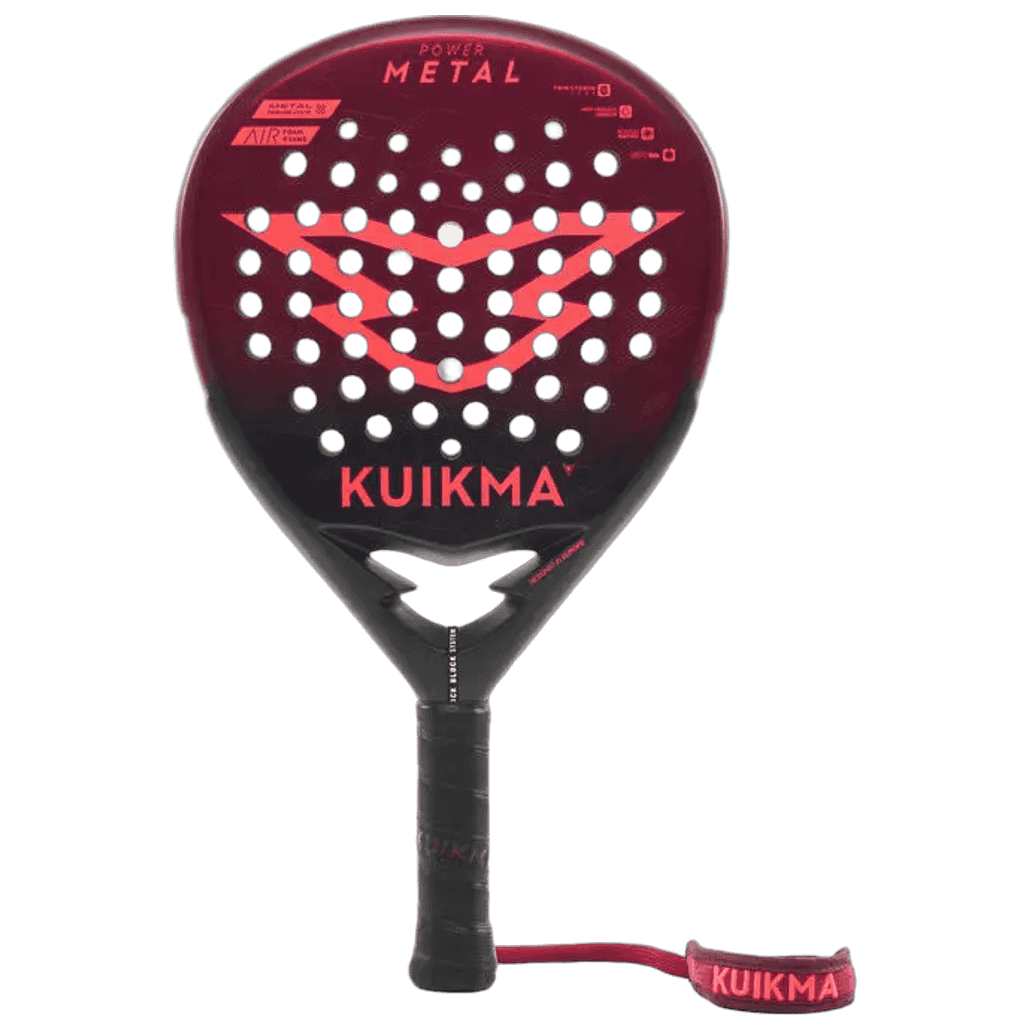
Kuikma PR Power Metal 2024 is an attacking racket with a soft touch underneath a demanding, high-balance character. It wants clean contact and proactive play; give it that, and it produces a notably heavy ball at the net.
I see it as a racket for the intermediate player who is already comfortable taking space forward, rather than someone looking for easy depth from a passive defensive position. Its Diamond shape and relatively high sweet spot define the experience.
Technical analysis
Shape & balance
The Diamond shape puts the hitting zone high and shifts the balance toward the head. That setup gives my volleys and overheads more momentum, particularly when I accelerate through the ball instead of just placing the racket behind it.
There is a cost. The sweet spot is not especially broad, and it sits high enough that low contact can feel unforgiving. On rushed balls near my feet, I need to prepare early and use my legs. A lazy block does not get much help from the racket.
Materials & construction
Kuikma uses a Carbon Twin Tube frame, Metal Biaxial Core + Glass Fiber faces, and an EVA Soft core. That combination explains why the Power Metal does not feel brutally stiff despite its attacking profile. Contact has some cushioning, especially compared with harder carbon-faced diamond rackets.
Still, this is not a trampoline-style soft racket. Ball exit is controlled rather than explosive from a compact swing. The softer core adds comfort, but the head-heavy build means I still have to generate a clean, committed strike to access the racket’s power.
On-court feel
Baseline play
From the baseline, I found it more capable at handling fast balls than its power-focused design suggests. When I meet the ball in front and guide it with purpose, I can send a firm defensive lob or play a low-driven lob without the face feeling erratic.
Passive defense is where it loses ground. Off-the-wall play on lower balls demands accurate centering, and blocks without enough push can land short. Players who rely on the racket to provide easy depth will find it more work than a round, lower-balance model.
At the net
At the net, the Power Metal makes much more sense. Clean volleys come off with weight, and the head-heavy feel helps me drive through the ball rather than just redirect it. It is particularly effective when I want to press the middle or keep a volley deep through the opposing player’s feet.
The trade-off is maneuverability during quick exchanges. It is usable in fast hands battles, but not especially quick to reset after an off-center volley. Its stability is decent rather than exceptional, so I would not choose it for a purely reactive blocking game.
Bandeja and víbora
This is one of its strongest areas. A committed bandeja carries depth without needing an overly violent swing, while a properly struck víbora has enough penetration to keep opponents pinned back. The racket rewards technical contact and a full follow-through.
Smashes are its headline shot. With centered impact, it delivers serious acceleration and a convincing sense of power without an excessively harsh impact. Miss the upper sweet spot, though, and that confidence drops quickly.
Conclusion
I would recommend this racket to an intermediate player with established overhead technique who wants more authority in volleys, bandejas, víboras, and smashes. It has a comfortable Soft feel, but its behavior is still attack-first.
The trade-off is forgiveness. Low balls, passive blocks, and off-center contact are not its strengths, and the high balance asks for better timing than the soft core might initially suggest.
What other reviewers say
- Practica Padelen
Within the Metal range, the Power is the firmer, more demanding option: its smaller, high sweet spot rewards centered contact with heavier volleys and the strongest power. It stays controlled when defending at pace, but is less forgiving on low balls and passive blocks can come up short.
- padel.howen
This review positions the Power Metal as an attacking racket with a very high ceiling for smashes, víboras, and hard bandejas without an excessively harsh impact. Its head-heavy setup remains usable, but off-center tolerance and stability are more ordinary, so it benefits from repeatable technique and contact.
Switch Intelligence
Be the first to share where you switched from.
Community reviews
Real feedback from players who used this racket.
Add your review
To submit your review, log in first. You can still read all approved community reviews below.
Add review


