

Level Eternal Pro 2026
A diamond built for decisive overheads, with a firm carbon response and enough rebound to keep the baseline from feeling like survival.
Our Take
Shape
Diamond
Weight
353 - 368 gr
Core
Black EVA
Faces
3K Carbon
Frame
100% Carbon
What we like
- Direct punch-volley response
- Strong *bandeja* and *víbora* weight
- Stable carbon frame at net
What we don't
- Demanding defensive lobs under pressure
- Reduced sweet spot on edges
- Limited soft touch on drops
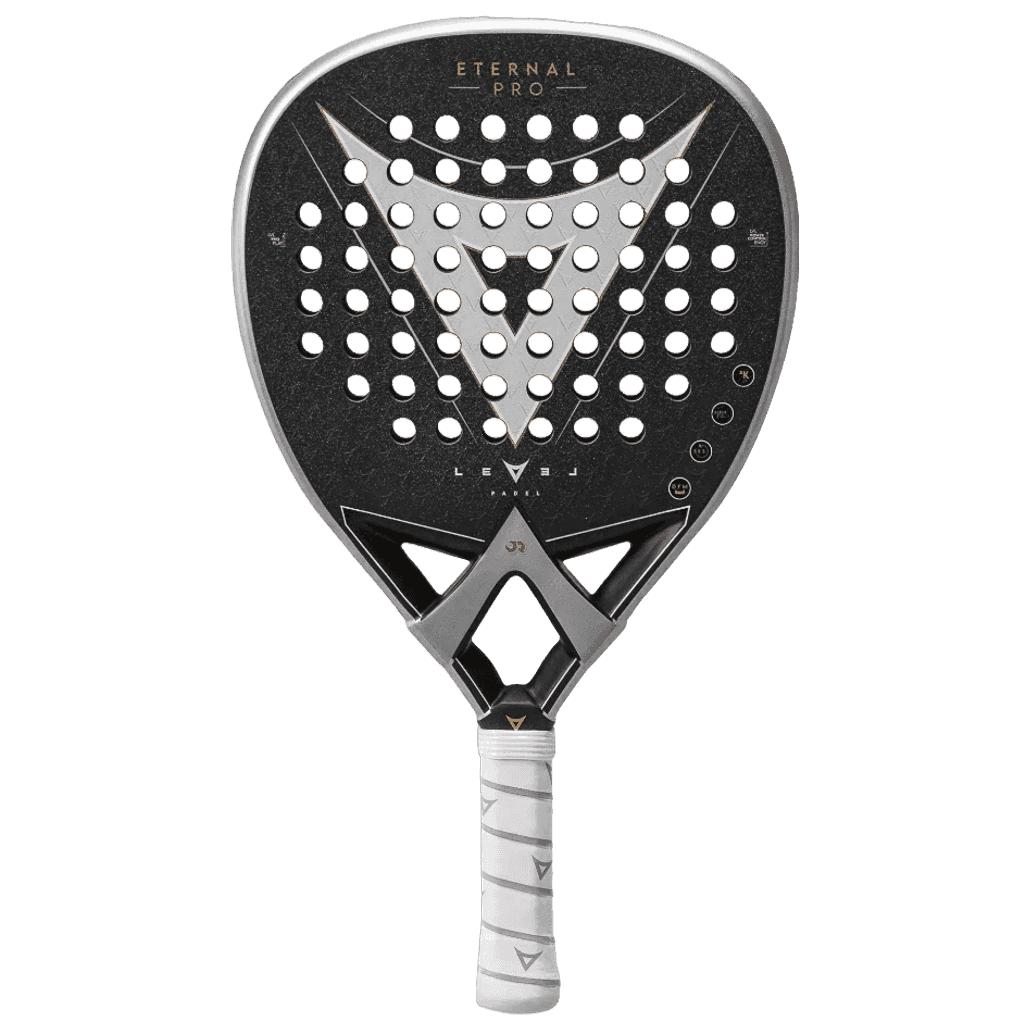
Level Eternal Pro 2026 is an attack-first racket with a clear diamond profile and a firm, direct build. I see it as a racket for players who want to finish points rather than simply keep the rally neutral.
It is not a forgiving, easygoing option from the baseline. The payoff is a more decisive response when I step forward and accelerate through the ball.
Technical analysis
Shape & balance
The diamond shape puts the Eternal Pro in familiar offensive territory: a higher contact point, more leverage above the ball, and a setup that favors aggressive overheads. The published specs list a medium-high balance rather than an extreme head-heavy one, but the geometry alone suggests it will feel more demanding than a round control racket.
That matters in quick exchanges. I expect the racket to reward a compact preparation and clean timing, especially on defensive blocks and hurried volleys. Players who arrive late to the ball or rely on the racket to do the defensive work may find the sweet spot less generous than they would like.
Materials & construction
The 100% Carbon frame should give the structure a stable, more rigid foundation, while the 3K Carbon faces point toward a crisp contact rather than a soft, springy one. Underneath, the Black EVA core is built for a firmer response and efficient energy transfer when the swing has real intent.
On paper, that combination suits players who prefer to feel the ball leave the faces quickly. It should produce a direct response on punch volleys, overheads, and flat attacking shots. The compromise is touch: delicate drop shots and slow defensive lobs may require a softer hand than they do with fiberglass faces or a softer EVA setup.
On-court feel
Baseline play
From the baseline, I would treat the Eternal Pro as a racket that needs active technique. Its carbon construction should help me drive the ball deep after the bounce or through off-the-wall play, but I would not expect much free, cushioned ball exit on a passive block.
The defensive lob is likely the shot that exposes its character most. With time to set my feet and swing through it, I can see it producing a penetrating trajectory. Under pressure, though, the diamond format and firmer build may make length harder to find consistently. This is not the racket I would choose primarily for easy defense.
At the net
Closer to the net, the Eternal Pro makes more sense. The firm faces should make volleys feel clean and compact, with enough stability to redirect pace rather than absorb it. I would use it to play through the middle, press the opponent’s feet, and keep the ball moving with authority.
There is a limit to that confidence. A smaller effective hitting area can punish contact toward the upper edges, particularly in fast hand battles. Players who value maximum maneuverability and effortless recovery between volleys may prefer a lower-balance racket.
Bandeja and víbora
The overhead game is where this shape should earn its place. A committed bandeja can carry good weight without needing an exaggerated swing, while the firmer face should suit a more aggressive víbora with a flatter, faster exit.
For the smash, the construction points toward a hard, direct strike rather than a soft trampoline effect. I would expect strong results from players who generate their own racket-head speed. Those with a shorter smash technique may not get the same easy lift or rebound from it.
Conclusion
I would put the Eternal Pro in the hands of an intermediate-to-advanced player who attacks often, likes a firm carbon response, and wants the racket to feel decisive at the net and overhead.
The trade-off is clear: it asks more in defense and offers less margin on off-center contact than a round or softer racket. If my game depends on comfort from the baseline, soft touch, and easy defensive ball exit, I would look elsewhere.
Switch Intelligence
Be the first to share where you switched from.
Community reviews
Real feedback from players who used this racket.
Add your review
To submit your review, log in first. You can still read all approved community reviews below.
Add review


