

Lok Carbon Hype Fdb 2025
A demanding diamond built to finish points with authority, rewarding clean timing while making no promises on defense.
Our Take
Shape
Diamond
Weight
360 - 375 gr
Frame
Carbon Reinforcement
What we like
- Punchy volleys through the middle
- Stable against fast body balls
- Serious smash penetration on high contact
What we don't
- Small, high sweet spot
- Slow in rapid hand battles
- Demanding defensive off-the-wall play
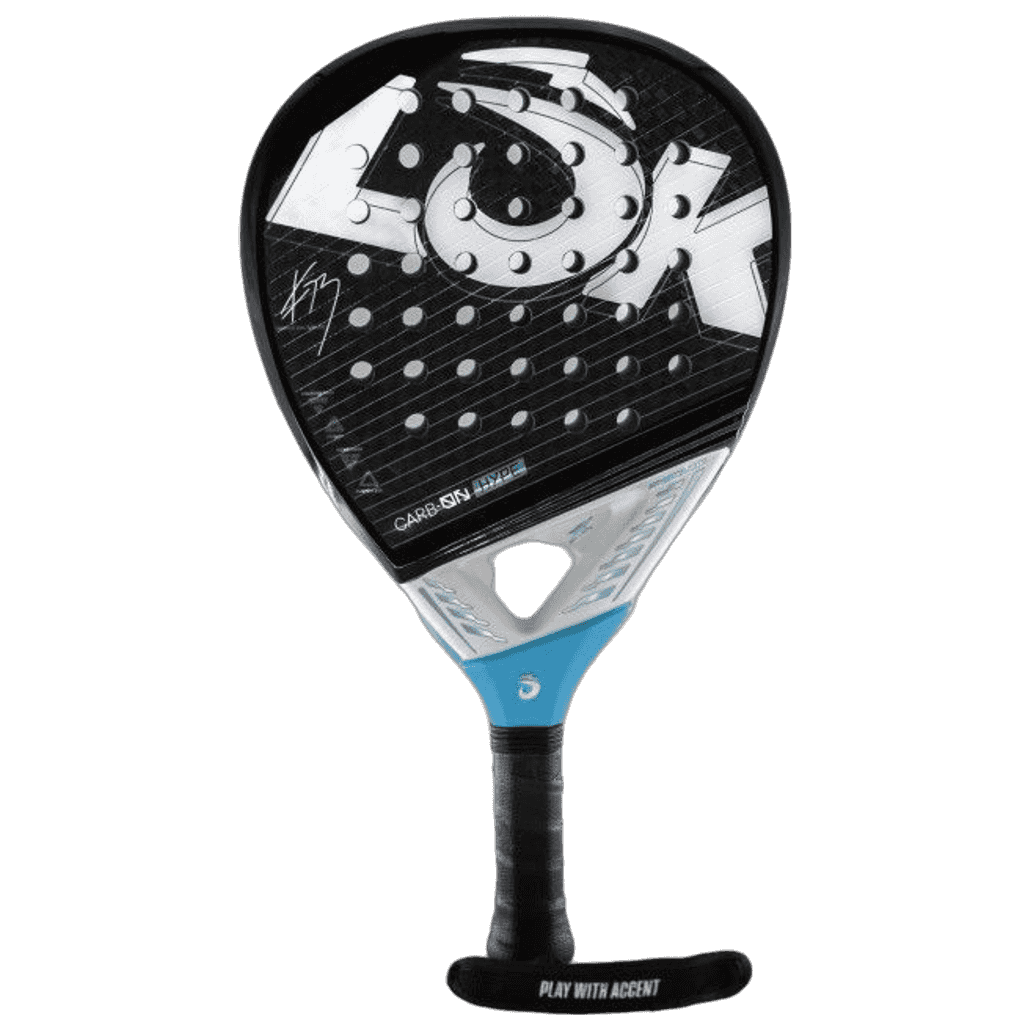
The Lok Carbon Hype Fdb 2025 is an unapologetically attacking racket. Its diamond shape, head-heavy balance, and firm character put the emphasis on finishing points rather than making the defensive phase easy.
I’d put it in experienced hands. It rewards a full swing, clean contact, and the willingness to carry some extra inertia through the ball.
This is not a forgiving racket. Miss the center, especially high on the face, and it lets you know immediately.
Technical analysis
Shape & balance
The diamond mold places the usable hitting area higher up the face, and the balance follows that same aggressive logic. I feel the racket wants to work above shoulder height: volleys with intent, attacking bandejas, víboras, and especially the smash.
That setup also explains the trade-off. The sweet spot is relatively small and sits high, so it asks for accurate preparation. Players who arrive late to the ball or tend to contact toward the edge of the face will find it demanding. The head-heavy setup adds stability when receiving pace, but it does not make fast exchanges effortless.
Materials & construction
Lok lists Carbon Reinforcement in the frame, and the on-court character points toward a structurally firm, stable build. Against a hard volley or a fast body ball, the racket does not flutter much; it stays behind the contact better than a softer, more flexible attacking racket.
The faces and core are not specified, so I would not pretend to know the carbon layup or EVA density. What I can say from the reported play feel is that the firm response is more about direct impact and stability than easy ball exit. You need to put work into the shot. In return, the racket gives a more connected, punchy response when you do.
On-court feel
Baseline play
From the baseline, I found the Carbon Hype Fdb more functional than comfortable. It can absorb a quick ball with a solid block, and the mass in the head helps send a low-driven lob deep if I meet the ball cleanly.
But this is not the racket I’d choose for passive defense or late off-the-wall play. The limited sweet spot makes defensive recovery shots less generous, while the lower rebound means it does not give much free depth on compact swings. A defensive lob needs proper lift and timing rather than a flick of the wrist.
At the net
At the net, its identity makes far more sense. Firm volleys travel with weight, and the head-heavy balance gives me useful stability when I want to punch through the middle or press a volley toward the feet. There is enough control to play a measured chiquita, but it is not a particularly nimble racket for quick changes of direction.
Hand battles are the weak point. Rapid blocks, reflex volleys, and late reactions take more effort because the head does not move quickly. Players used to a head-light racket may initially feel a step behind.
Smash
The smash is where I would expect this racket to earn its place. Clean contact high in the face produces serious penetration, and the firm construction supports an aggressive acceleration rather than soaking it up. It feels built to hit through the ball.
Still, it will not manufacture power for an incomplete technique. The racket rewards a committed swing and good positioning; off-center smashes lose a noticeable amount of efficiency.
Conclusion
I’d recommend the Carbon Hype Fdb to an advanced attacking player who already strikes the ball cleanly and wants a racket that feels stable, forceful, and direct above the net.
The trade-off is clear: less maneuverability, a smaller sweet spot, and less help in defensive situations. It suits a player who wants to impose pace, not someone looking for easy ball exit or a relaxed all-court feel.
What other reviewers say
- Padel-Kompassde
The test positions it as a plainly attack-oriented racket: its high weight, head-heavy balance and firm response add punch and stability against fast balls. The trade-off is a small, high sweet spot that punishes off-centre contact, slows net reactions, and demands both sound technique and arm strength.
Switch Intelligence
Be the first to share where you switched from.
Community reviews
Real feedback from players who used this racket.
Add your review
To submit your review, log in first. You can still read all approved community reviews below.
Add review


