

Nox AT10 Genius 18K Alum London 2026 Agustin Tapia
A firm, quick tear-shape that keeps volleys tidy and *bandejas* repeatable, with enough punch to finish without forcing the swing.
Our Take
Shape
Tear
Weight
360 - 375 gr
Core
MLD Black EVA
Faces
18K Aluminized Carbon Fiber
Frame
Carbon
What we like
- Quick, stable attacking volleys
- Controlled deep bandeja placement
- Predictable firm ball exit
What we don't
- Small sweet spot off-center
- Demanding late defensive blocks
- Limited spin from short swings
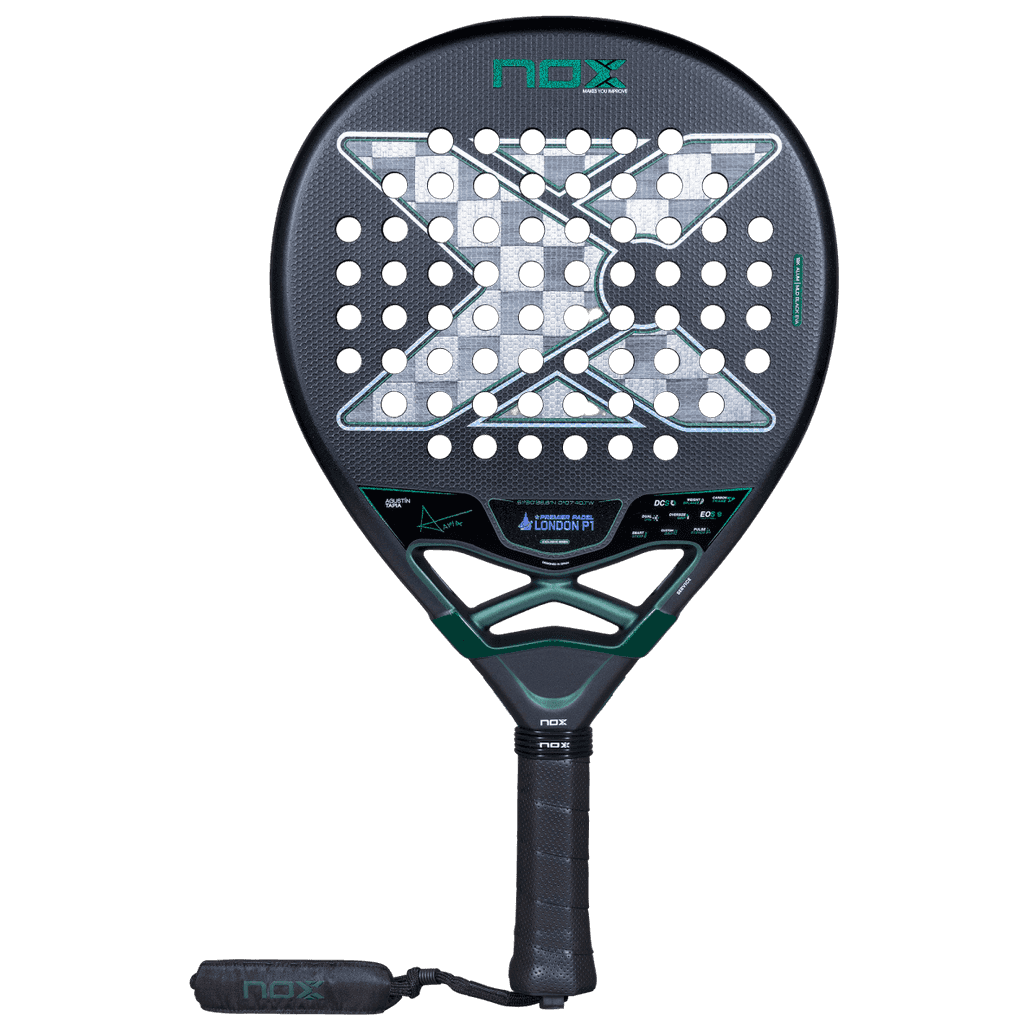
The Nox AT10 Genius 18K Alum London 2026 Agustin Tapia is a firm, fast all-court racket that leans toward precision before brute force. It has enough punch to finish, but I felt its real value in the speed and order it brings to aggressive net play.
This is not a soft, forgiving racket that does the work for you from the baseline. It rewards clean preparation and a player who likes to take the ball early.
Technical analysis
Shape & balance
Its tear shape puts the sweet spot above the center without pushing the balance into a truly head-heavy feel. I found it quick through the air for a racket with this level of firmness, particularly in fast exchanges where I needed to switch from a block to an attacking volley without feeling late.
The balance also gives it a more versatile character than a pure diamond racket. There is enough mass behind the ball to hit with authority, but it does not drag the wrist down on defensive reactions. That said, the sweet spot is not enormous. Miss toward the upper edge and the response loses some of its clean, controlled feel.
Materials & construction
The Carbon frame, 18K Alum carbon fiber faces, and MLD Black EVA core produce a distinctly firm response. Contact feels crisp rather than harsh, with a compact impact that gives good feedback on whether I have caught the ball cleanly.
Ball exit is strong, but it is not a trampoline-style racket. I had to provide acceleration on slower balls, especially from deep in the court. The upside is that it does not overreact on volleys or touch shots. The faces hold their line well, and the response stays predictable when I flatten the ball.
On-court feel
Baseline play
From the baseline, I liked the control on defensive lobs and on shots after the glass. The racket has enough rebound to send the ball deep without a huge swing, but it remains more comfortable when I hit through the ball than when I try to simply absorb pace.
Blocks are stable if my racket face is set early. Late, passive defense is less forgiving. Players who rely on a very soft core to help them lift low balls may find this Nox a little demanding, particularly against heavy volleys aimed at the feet.
At the net
This is where the racket makes the strongest case for itself. External testing consistently points to quick handling and a reliable response on volleys, and that matches how it plays: fast to position, firm at contact, and composed when the point speeds up.
I could press a volley without losing direction, then soften the next ball into a chiquita or drop shot. The firm face helps keep attacking volleys low, although it does not add much extra bite on its own. Players wanting a heavily textured, spin-first response may want more grip from the surface.
Bandeja and víbora
The AT10 feels particularly natural on the bandeja. Its maneuverability makes it easy to prepare early, while the firm response helps send a controlled, deep ball toward the corner. Reviews have also highlighted its consistency on these overheads, and I found that the racket does not wobble or feel vague through contact.
On the víbora, it rewards a clean, accelerated swing. It can produce a heavy, penetrating ball, but it will not disguise poor timing. This is not the easiest racket for generating spin with a short, lazy motion.
Conclusion
I would put this racket in the hands of an intermediate-advanced or advanced player who wants a firm, controlled response without moving into an uncompromising power racket. It suits players who build points with volleys, overhead control, and quick transitions at the net.
The trade-off is forgiveness. It is less friendly on off-center defensive contacts than softer alternatives, and its power is earned through technique rather than handed out freely. For players who like a direct feel and trust their mechanics, that is part of its appeal.
What other reviewers say
- Pádel Análisises
The review characterizes it as a firm-feeling all-round racket with a strong balance of control and power. It particularly highlights quick handling at the net and a consistent response on volleys and bandejas.
Switch Intelligence
Be the first to share where you switched from.
Community reviews
Real feedback from players who used this racket.
Add your review
To submit your review, log in first. You can still read all approved community reviews below.
Add review


