

Nox AT10 Genius 18K Alum Riyadh 2026 Agustin Tapia
A firm, quick-handling tear shape that brings authority to volleys and overheads, but asks you to create the pace from deep.
Our Take
Shape
Tear
Weight
360 - 375 gr
Core
MLD Black EVA
Faces
18K Aluminum Carbon Fiber
Frame
Carbon
What we like
- Quick, stable volley exchanges
- Precise *bandeja* and *víbora* placement
- Punchy smashes with clean contact
What we don't
- Slow defensive balls need acceleration
- Low-face contact lacks forgiveness
- Firm response offers limited rebound
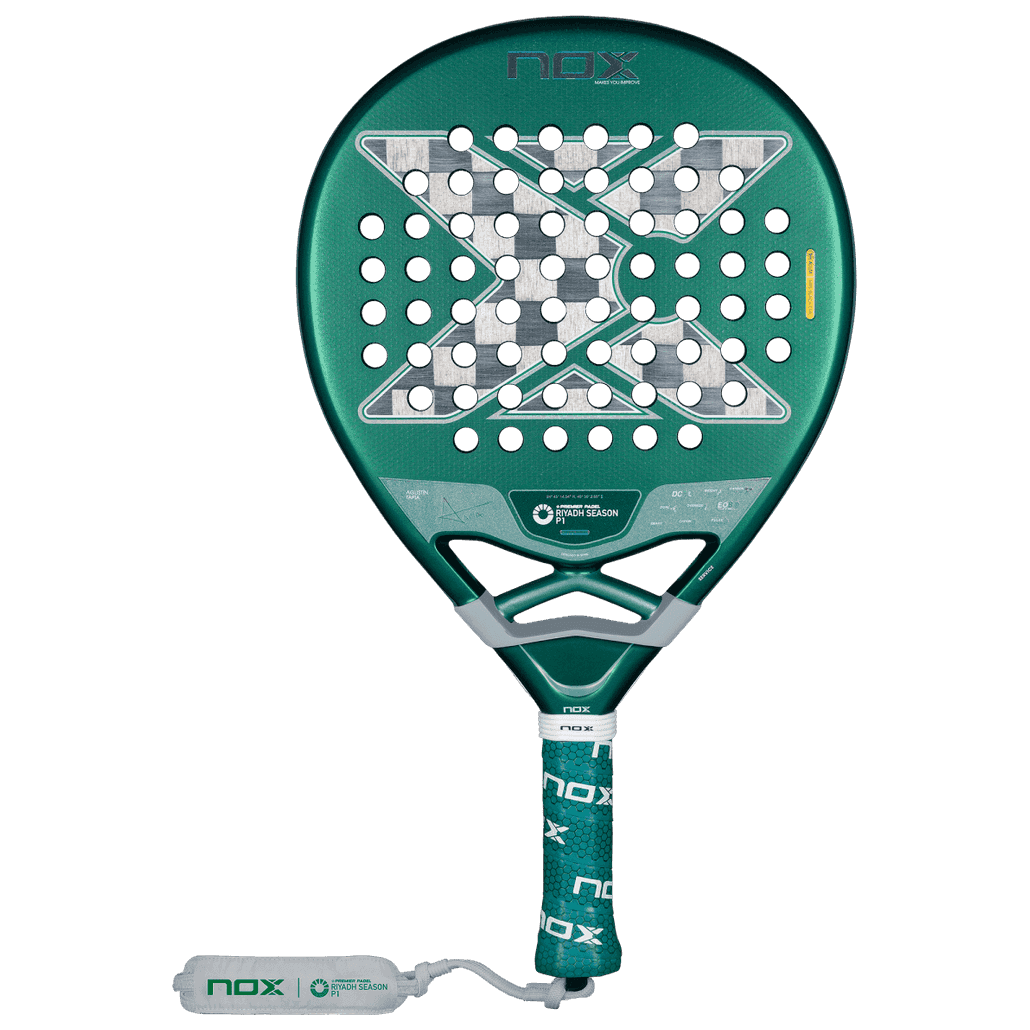
The Nox AT10 Genius 18K Alum Riyadh 2026 Agustin Tapia is a demanding all-court racket with a distinctly firm, direct response. It has real finishing ability, but it does not hand out easy depth or free defense.
I see it as a racket for advanced players who generate their own pace and want a fast tool at the net without moving into an extreme diamond profile. The character is controlled aggression: precise in the air, sharp on contact, and most convincing when you take initiative.
Technical analysis
Shape & balance
Its tear shape gives the AT10 a useful middle ground between maneuverability and offensive reach. The balance feels centered-to-slightly-high rather than aggressively head-heavy, which is why I can move it quickly through volley exchanges and still get enough weight behind an attacking ball.
The sweet spot is generous enough for a performance racket, but it is not especially forgiving when contact drifts low on the face. Clean technique gets rewarded. Late contact, particularly on hurried defensive balls, does not get much help from the racket.
Materials & construction
The Carbon frame, 18K Aluminium Carbon Fibre faces, and MLD Black EVA core create a firm, compact impact. The first sensation is a direct feel: the ball does not linger in the faces, and I get clear feedback on whether I have caught it cleanly.
That construction also explains the racket’s controlled ball exit. On firm volleys and accelerated overheads, the response is crisp and stable. On slower balls from deep in the court, though, it asks me to work more. Players who rely on a soft racket to lift the ball easily off the back wall may find this response a little dry.
On-court feel
Baseline play
From the baseline, I like the accuracy on defensive lobs and controlled blocks. The racket stays quick enough in the hand to adjust when the ball comes off the glass awkwardly, and the firmer response helps me direct the ball rather than simply absorb it.
It is less comfortable when I am under sustained pressure and hitting slow, low balls. I need to prepare early and accelerate through contact to find depth. A softer setup would offer easier rebound here; this Nox favors active defense over passive retrieval.
At the net
This is where the AT10 makes most sense. Fast volley exchanges feel very natural because the racket comes through quickly and remains stable at impact. I can play a compact block volley, then accelerate the next ball without feeling that the head is lagging behind my hand.
There is also good bite for angled volleys, chiquitas, and controlled drop shots. It does not feel overly springy, which helps when I want to keep the ball low rather than accidentally feeding the opponent a comfortable counterattack.
Bandeja and víbora
The firm face gives both overheads a clean, predictable line. My bandeja benefits from the racket’s stability, while the víbora has enough bite to work the side glass and pull the opponent wide. It rewards a committed swing path; a lazy, arm-only overhead feels flat.
Smash
On a properly positioned smash, there is plenty of punch. The racket transfers pace well and feels more capable of finishing than its manageable shape initially suggests. Still, it is not a shortcut to power. If my timing or contact point is off, the firmness exposes it.
Conclusion
I would put this racket in the hands of an advanced player who likes a direct, firmer response and spends plenty of time building points at the net. It is especially convincing for quick volleys, controlled overheads, and smashes struck with good technique.
The trade-off is clear: it does not offer the easy ball exit or forgiving defensive cushion of a softer racket. Beginners and players wanting effortless help from the baseline should look elsewhere.
What other reviewers say
- AvisPadelfr
This review sees it as an even-handed racket with enough finishing power when the ball sits up. It highlights quick volley exchanges, easy wall defence and controllable bandejas, but says its demands make most sense for expert players.
- PadelTestLabfr
PadelTestLab rates the feel as solid and direct, particularly effective on volleys and smashes, with strong handling and spin potential. The trade-off is that slow defensive balls need more player input, and the racket rewards sound technique.
Switch Intelligence
Be the first to share where you switched from.
Community reviews
Real feedback from players who used this racket.
Add your review
To submit your review, log in first. You can still read all approved community reviews below.
Add review


