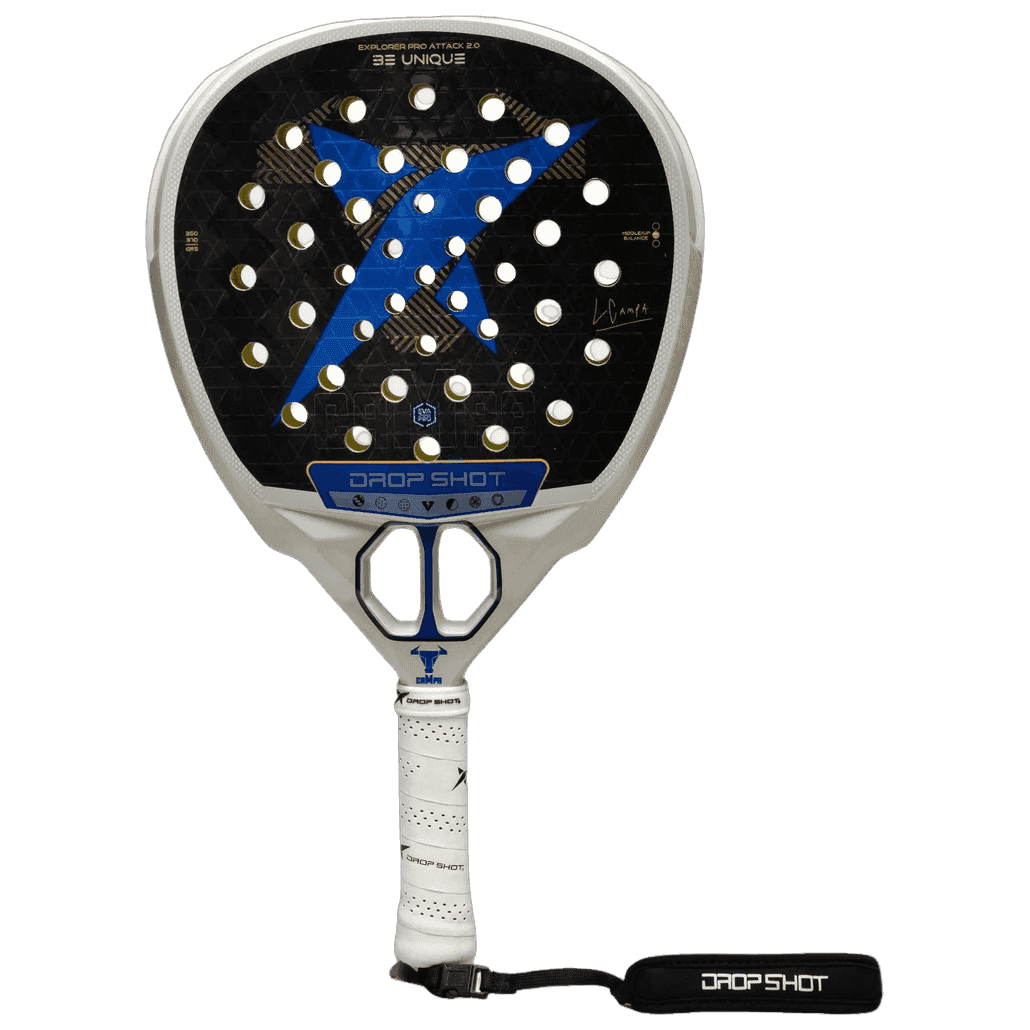
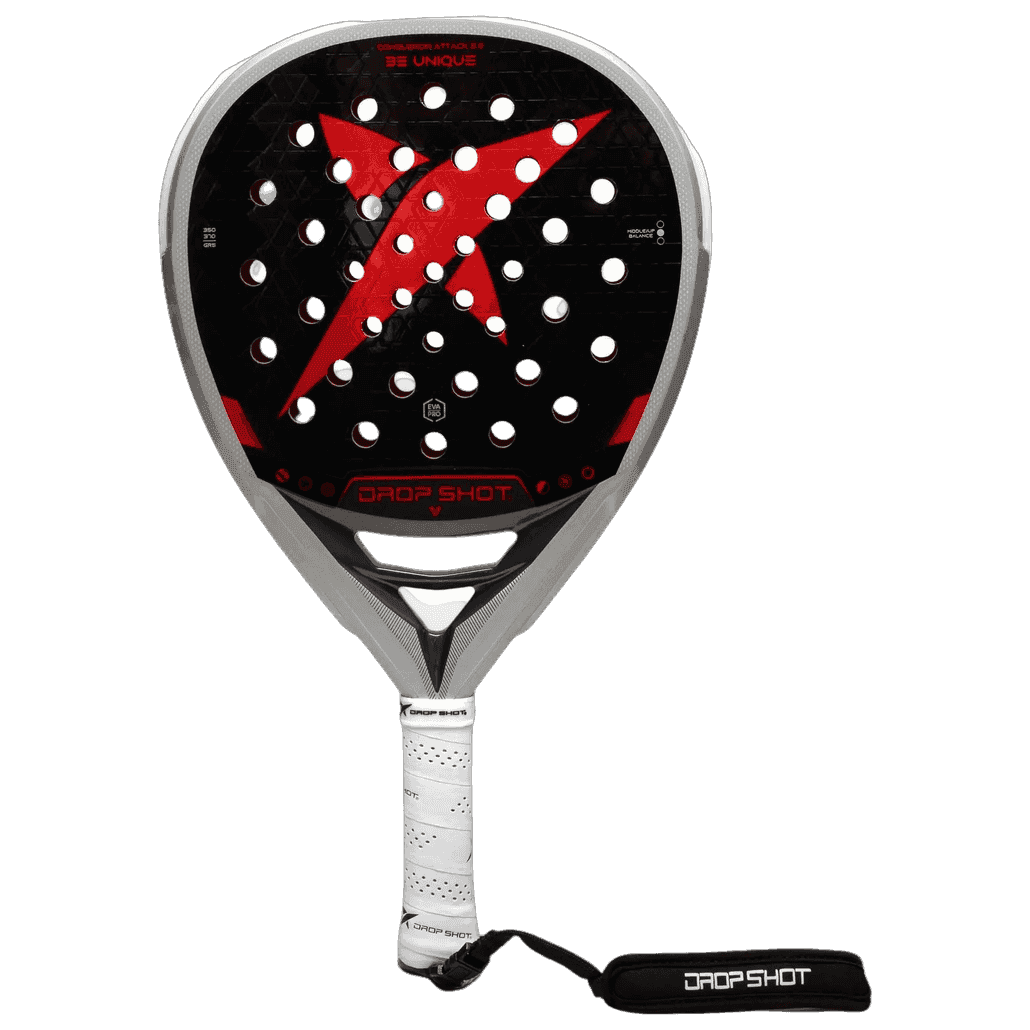
Drop Shot Conqueror Attack 2.0 2026
A diamond-shaped hitter with firm response and surprising composure, giving attacking swings real bite without losing control.
Our Take
Shape
Diamond
Weight
350 - 370 gr
Touch
Medium-Hard
Core
EVA Pro High Density
Faces
24K carbon fiber
Frame
Carbon fiber
What we like
- Stable, controlled attacking response
- Clean *bandeja* and *víbora* output
- Direct, powerful smash transfer
What we don't
- Late contact gets punished
- Not quick in defense
- Rushed blocks feel demanding
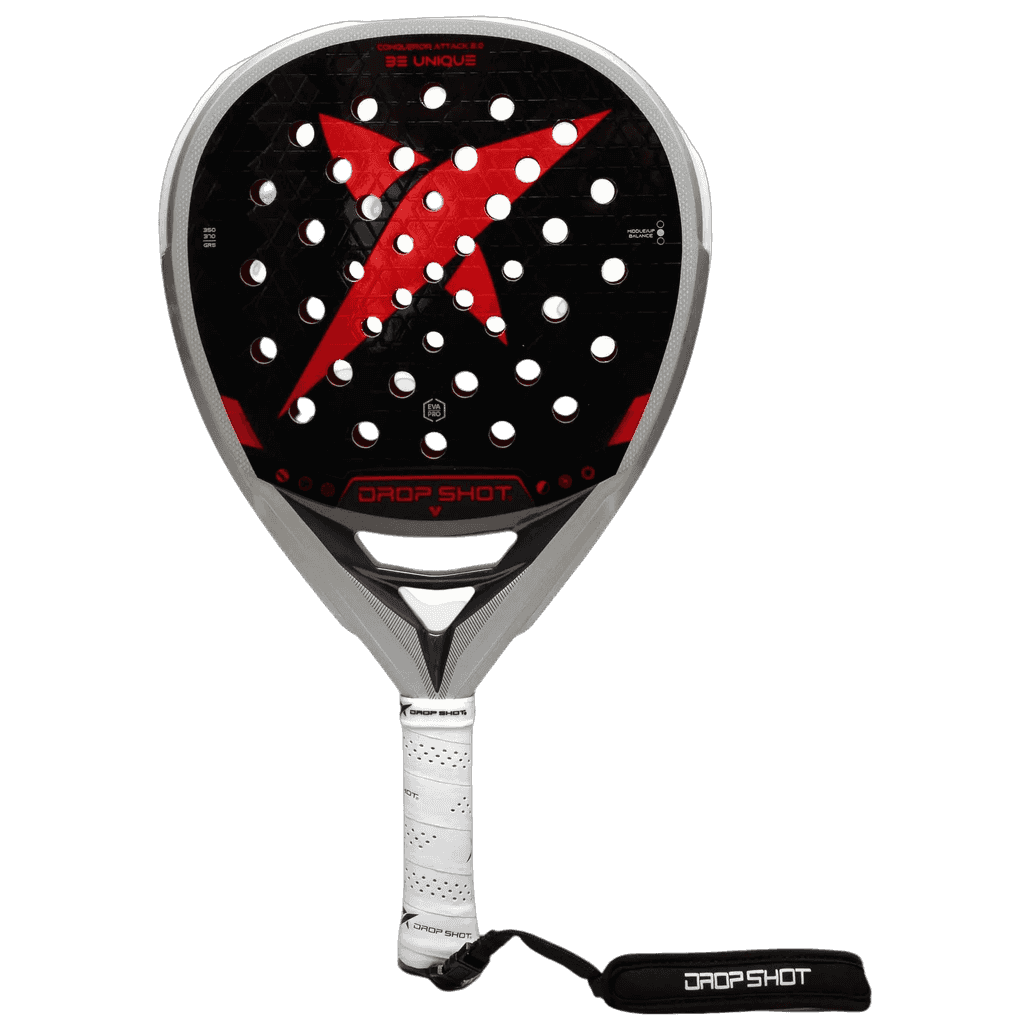
Drop Shot Conqueror Attack 2.0 2026 is a clear attacking racket with a firmer, more demanding personality than the average all-court model. I feel it most when I load the swing: it wants commitment, and it rewards clean contact with a direct, heavy response.
What surprises me is that it does not throw control out of the window just because it leans aggressive. For a diamond-shaped racket, it keeps a fairly disciplined behavior in the game, especially once the ball is set up well. The trade-off is obvious, though: this is not a fast, forgiving frame for lazy defense.
Technical analysis
Shape & balance
The diamond shape and clearly attacking balance set the tone from the first few exchanges. It carries the weight of the head well enough to help overhead work, but it never feels like a casual, easy-handling racket. I need to prepare the shot early and get the face into position; if I’m late, the racket reminds me fast.
That said, the balance is not sloppy. It feels stable and purposeful rather than vague. In the right hands, that gives a nice mix of punch and order. In the wrong hands, it can feel demanding on quick reactions near the body or on rushed blocks.
Materials & construction
The fiberglass frame and 24K carbon faces create a firm, crisp structure, and the EVA Pro High Density core pushes the feel further into the medium-hard zone. The result is a racket with a very direct ball exit, but not one that glosses over poor contact. I get precision when I hit clean; I get a much less pleasant answer when I don’t.
That construction also explains the stability I notice on firm swings. The frame does a good job resisting twisting, so the racket feels planted on accelerated shots. The downside is simple: this is not a soft landing pad for defensive improvisation, and it asks more technique than comfort.
On-court feel
Baseline play
From the baseline, I like it most when I can play with a plan. Defensive lobs come out with good depth if I set the face well, and the block has enough firmness to keep the ball low when I’m not under too much pressure. Off-the-wall play is solid, but only if the preparation is there.
What I do not love is how much it punishes late contact. If I’m stretched or off balance, the racket can feel a bit unforgiving. It is workable in defense, just not effortless.
At the net
Up at the net, the racket comes alive. Volleys leave the face with a clean, sharp response, and I get enough control to direct the point without feeling like the ball is floating. There is real bite here, especially when I’m stepping through the shot rather than just blocking.
The frame stability matters a lot in fast exchanges. It helps the racket stay composed when the pace rises, so I can press with confidence instead of just surviving the rally. Still, it is not especially quick in the hand, so rapid volley-to-volley adjustments take a bit more effort.
Bandeja and víbora
This is where the racket makes the most sense to me. The feel is firm enough to let me drive a solid bandeja without overhitting, and the response stays organized when I accelerate into a víbora. I get that satisfying, direct ball exit that makes overhead control feel intentional rather than passive.
It does ask for decent timing, though. If I rush the prep or strike late, the racket stops helping very quickly. With clean mechanics, these shots feel natural and dangerous.
Smash
On the smash, the racket has no interest in being polite. It gives me a clear attacking window and enough stiffness to transfer energy well when I commit. The combination of shape and feel makes it easy to go after the ball with purpose.
Still, this is not a free points machine for every contact point. I need to meet the ball properly and swing with intention. When I do, it’s very rewarding; when I don’t, the racket gives back less than softer options.
Conclusion
I’d put this in the hands of players who already know what they want from an attacking racket and are happy to live with a firmer, more exacting response. It suits someone who likes to finish points from the air but still wants enough discipline in the touch game to keep rallies under control.
What you trade off is easy handling and forgiveness. This racket is not quick for scrambling defense, and it will not hide late preparation. What you get instead is a stable, serious attacking tool with real quality in the overhead game and more control than its profile first suggests.
What other reviewers say
- PadelVerdicten
This is an overtly attacking racket, but it stands out for keeping control intact on committed swings. The stable frame and firm feel help bandejas and smashes, while late contact and sloppy preparation are punished.
- PadelFulen
It stands out for its power and clean ball output, with a medium-hard feel that gives precision when contact is solid. In exchange, it is not especially quick in the hand and asks for clear preparation on defense and in short blocks.
Switch Intelligence
Be the first to share where you switched from.
Community reviews
Real feedback from players who used this racket.
Add your review
To submit your review, log in first. You can still read all approved community reviews below.
Add review