

Nox AT10 Genius Attack 12K Alum Xtrem 2026
A firm, head-heavy attacking racket with crisp response, big overhead punch, and enough stability to stay composed in fast exchanges.
Our Take
Shape
Diamond
Weight
360 - 375 gr
Touch
Medium-Hard
Core
HR3 BLACK EVA
Faces
12K Carbon Fiber Alum Xtrem
Frame
Carbon Fiber
What we like
- Direct response on contact
- Stable in fast net exchanges
- Serious power on smashes
What we don't
- High sweet spot, less forgiving
- Defense demands clean timing
- Firm feel limits comfort


Updated on 12 Aug (shipping cost not calculated)





Updated on 26 Aug (shipping cost not calculated)
Are you a store owner? Join our platform to be featured here.
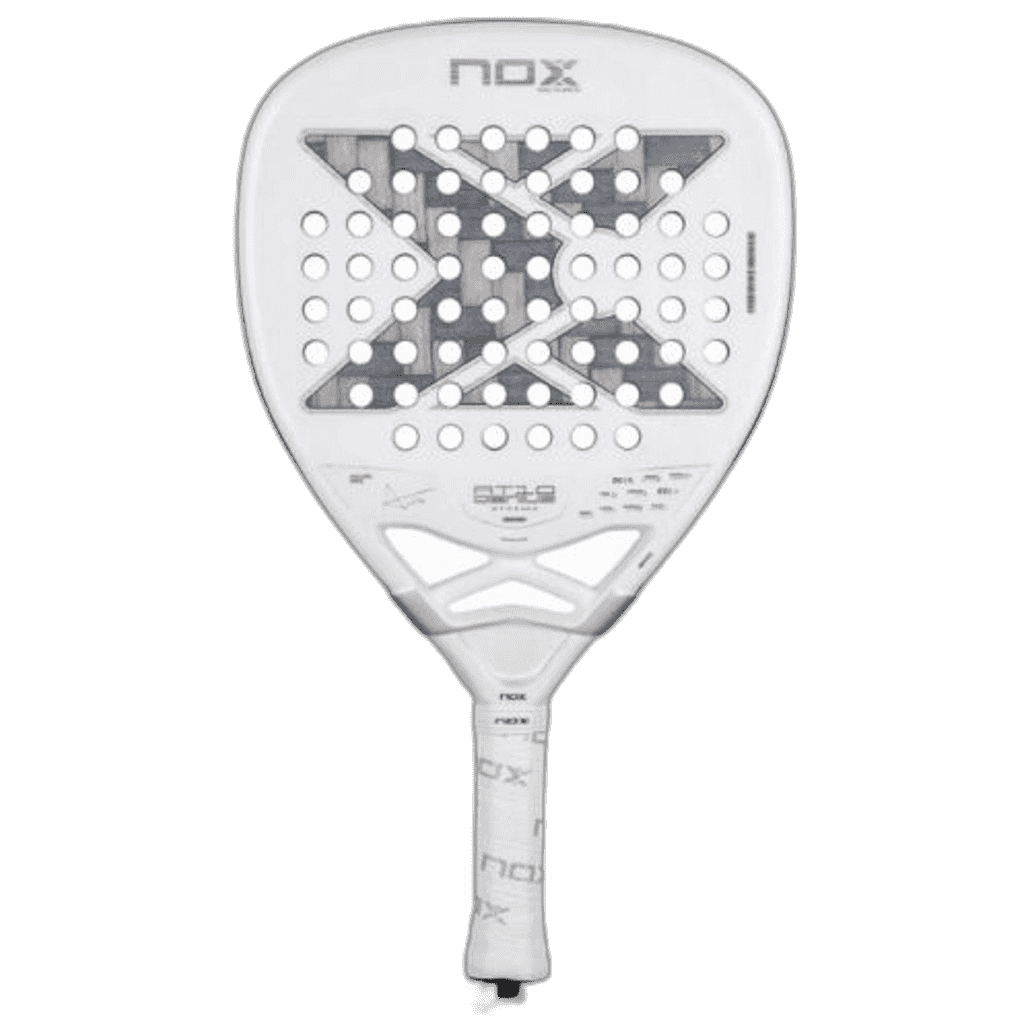
Nox AT10 Genius Attack 12K Alum Xtrem 2026 is a firm, attacking racket with a very clear personality. It gives me direct response, high-speed stability, and a lot of firepower when I step on the ball. It does not try to be soft or universally friendly.
I read it as a racket for advanced players who like to finish points from the net and who already have the timing to handle a more demanding frame. The feel is Medium-Hard, the shape is Diamond, and the whole setup leans toward offense without drifting into chaos.
Technical analysis
Shape & balance
The Diamond shape and noticeable head-heavy bias are doing most of the work here. This is not a neutral racket that happens to hit hard. It is built to load the upper part of the frame and reward aggressive contact, especially on overheads and fast net exchanges.
That comes with a trade-off. The sweet spot sits high and feels relatively compact for a racket of this type, so off-center hits lose more than they do with softer AT10 versions. If your timing is late or your contact point is sloppy, you feel it immediately.
Materials & construction
The fiberglass? No — this one uses a fibra de carbono frame and Carbon Fiber 12K Alum Xtrem faces, with HR3 BLACK EVA inside. In practice, that gives the racket a crisp, dry response and a pretty clean transfer of energy. The face texture also helps the ball grab, so there is real bite on sliced and lifted contact.
What I notice most is the firmness. It feels stable when I accelerate, and it stays composed on hard impacts. But it is not plush. Comfort is decent for an aggressive racket, yet this is still a model that asks for technique and timing.
On-court feel
Baseline play
From the baseline, the racket is accurate rather than forgiving. Blocks come out very predictably if I set the face well, and the response on defensive lobs is solid, but I would not call it easy. It rewards clean preparation and punishes lazy contact.
That firm behavior also makes fast rallies feel tidy. In quick exchanges, I get a direct ball exit and very little trampoline effect. Good for control under pressure. Less good if you rely on the racket to save you.
At the net
This is where it starts making more sense. Volleys feel stable and punchy, with enough firmness to drive the ball through the court without the frame twisting much. I can press on the volley and keep the opponent under stress, especially in fast hands battles.
There is a useful sense of predictability here. The racket does not spring surprises, which matters when exchanges get messy. The downside is that you need clean positioning because the smaller forgiveness window shows up quickly on rushed contact.
Bandeja and víbora
On bandeja and víbora, the racket feels sharp and direct. I get good bite off the textured face, and the firmer response helps me keep the ball low and heavy when I hit with proper technique.
It is not a lazy overhead racket. You have to work for the right shape and contact point. Once you do, the racket gives back a lot: pace, spin, and a very solid feel through the strike.
Smash
This is the shot where the racket opens up. Smashes come off with serious authority, and the frame feels built to punish anything even slightly soft from the other side. If you like to finish with weight, it gives you a lot of confidence.
Still, it is not a magic wand. The high sweet spot and firm core mean you need to hit the ball well to get the full benefit. When you miss the zone, the drop-off is obvious.
Conclusion
I see this as a racket for advanced attackers who want a more aggressive AT10 personality. It brings power, stability, and very good behavior in overhead patterns and fast net play.
What you give up is forgiveness and easy comfort. Defensive work is manageable, but not effortless, and the racket is much happier in the hands of someone with clean mechanics than in the hands of a player still building consistency.
What other reviewers say
- PadelCriticen
The racket is described as firmer and crisper than other AT10s, with a more direct response and very predictable feel in fast exchanges. It keeps some all-court DNA, but it clearly asks for technique and punishes imprecision more than softer versions.
- Padel Passionfr
The test portrays it as a racket with plenty of character and response, especially when you take the initiative and try to finish points. It also highlights stability on hard volleys and smashes, plus decent comfort for such an aggressive model.
- PadelRacketReviews.co.uken
The review sees it as a firm, dry-feeling attacking racket built for advanced players who like to dominate at the net. Its strengths are overhead shots and fast volleys, but it needs adaptation because the sweet spot sits high and it is not forgiving.
Switch Intelligence
Be the first to share where you switched from.
Community reviews
Real feedback from players who used this racket.
Add your review
To submit your review, log in first. You can still read all approved community reviews below.
Add review


