

Nox AT10 Genius Attack 12K Alum Xtrem 2027 Agustin Tapia
A diamond racket with Tapia’s attacking edge, yet enough control and composure to keep the point intact from the baseline.
Our Take
Shape
Diamond
Weight
360 - 375 gr
Touch
Medium-Hard
Core
MLD Black Eva
Faces
12K Alum XTREM Carbon Fiber
Frame
Carbon
What we like
- Heavy, stable net volleys
- Direct *víbora* and *bandeja* response
- Explosive acceleration on clean smashes
What we don't
- Late defensive blocks fall short
- High balance taxes quick reactions
- Limited rebound on slow swings
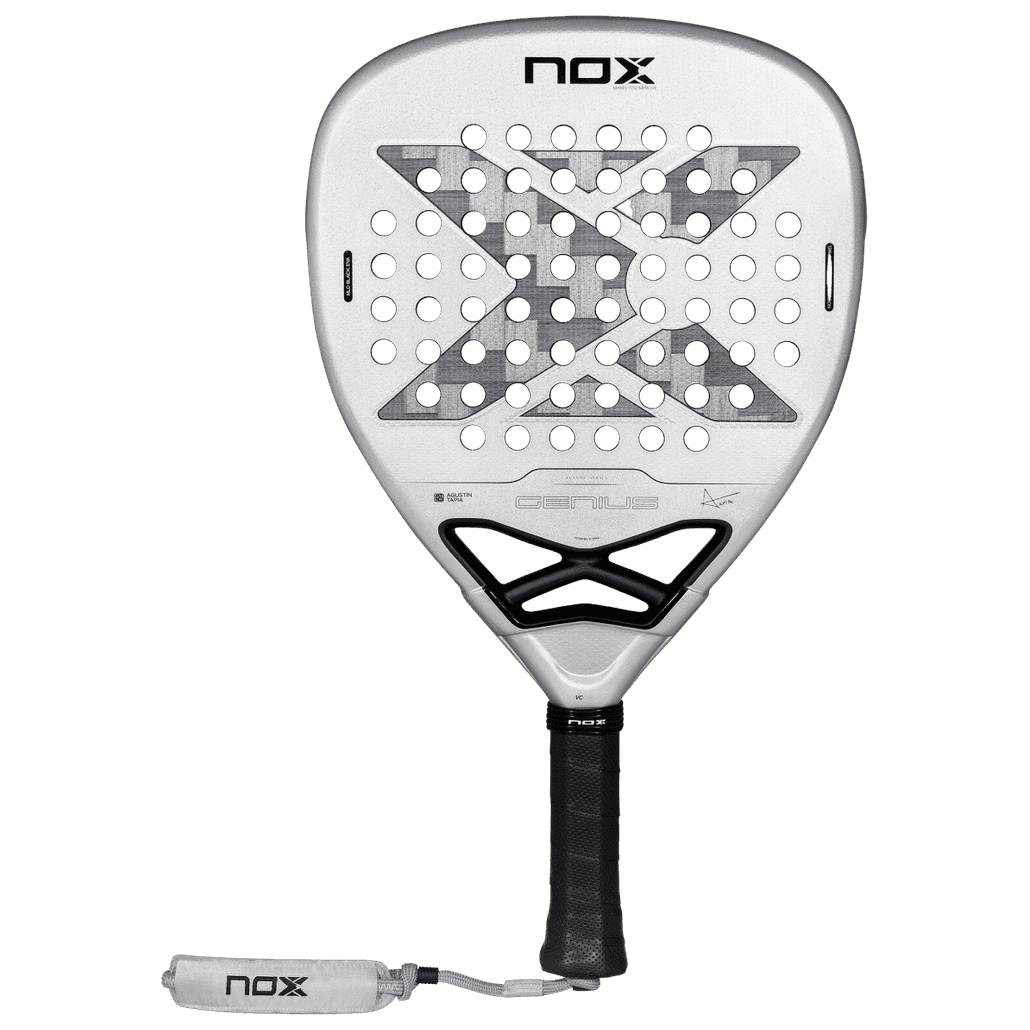
The Nox AT10 Genius Attack 12K Alum Xtrem 2027 Agustin Tapia is an attacking racket with a serious, compact response. It wants to play above the net, finish points, and reward a full swing rather than bail you out with easy ball exit.
Its diamond shape and high balance give it a clear offensive bias. I would put it in the hands of an advanced player who already generates racket speed and wants more weight behind volleys, víboras, and smashes.
This is not a forgiving comfort racket. It can defend well, but only when you prepare early and strike cleanly.
Technical analysis
Shape & balance
The diamond mold pushes the sweet spot upward, so the racket feels most natural when the contact point is high and in front of the body. At the net, that translates into a heavy, direct ball without the head feeling completely uncontrollable.
There is still a trade-off. Quick exchanges close to the body require more wrist and forearm work than with a round or lower-balance racket. Players who rely on late defensive blocks or compact reactions may find the head demanding, especially after a long match.
Materials & construction
Nox uses a Carbon frame, 12K Alum XTREM Carbon Fiber faces, and an MLD Black Eva core. The result is a Medium-Hard feel: firm at impact, but not dead or excessively dry.
The faces give the ball a crisp release when I accelerate through it. There is enough compression to keep touch shots from feeling wooden, yet the racket does not add much free rebound on slow swings. That is good for controlling pace at the net, but less helpful when defending under pressure from the baseline.
On-court feel
Baseline play
From the back, I found the response precise rather than generous. Defensive lobs can come out with good depth when I get underneath the ball, and off-the-wall play has a stable, predictable contact once the racket is set.
What it does not do well is rescue poor timing. A late block tends to sit shorter than I want, and low balls ask for cleaner technique than a softer, lower-balance racket. The sweet spot is usable, but it is not broad enough to make defensive scrambling feel easy.
At the net
This is where the Attack version makes sense. Firm volleys travel with authority, and the face stays stable when I intercept a fast ball. I can flatten a volley through the middle or take pace off for a chiquita without the racket feeling vague.
Touch is present, though it is not its strongest card. A delicate drop shot needs a relaxed hand; if I grip too tightly, the medium-hard response can send the ball deeper than intended.
Bandeja and víbora
The high contact zone works well for aggressive overheads. My bandeja carries good depth without needing to overhit, while the víbora benefits from the firm face and direct response. It feels easier to drive the ball through the court than to manufacture excessive spin.
Smash
On a clean smash, this racket has the punch its name promises. It transfers energy efficiently and encourages committed acceleration. Flat winners and powerful kick smashes are its natural territory, although the head bias means repeated overheads can tire players who do not have a relaxed, efficient motion.
Conclusion
I see this as an attacking racket for advanced players who build points to take control at the net. It suits someone who values a firm response, heavy volleys, and decisive overheads more than soft comfort from the baseline.
The trade-off is clear: it asks more in defense and does not provide much free help on late contacts. Players who prefer a larger sweet spot, easier maneuverability, or a softer ball exit should look toward a less aggressive shape and balance.
Switch Intelligence
Be the first to share where you switched from.
Community reviews
Real feedback from players who used this racket.
Add your review
To submit your review, log in first. You can still read all approved community reviews below.
Add review


