

Nox VK10 Ventus Control 12K 2027 Aranzazu Osoro
A dry, quick-moving control racket that rewards clean preparation with biting spin, steady blocks, and dependable wall play.
Our Take
Shape
Round
Weight
360 - 375 gr
Touch
Medium-Hard
Core
MLD Black EVA
Faces
12K Carbon Fiber
Frame
Carbon
What we like
- Broad sweet spot on blocks
- Quick handling in volley exchanges
- Precise *bandeja* and *víbora* placement
What we don't
- Limited free depth from baseline
- Flat smashes lack finishing power
- Late contact feels unforgiving
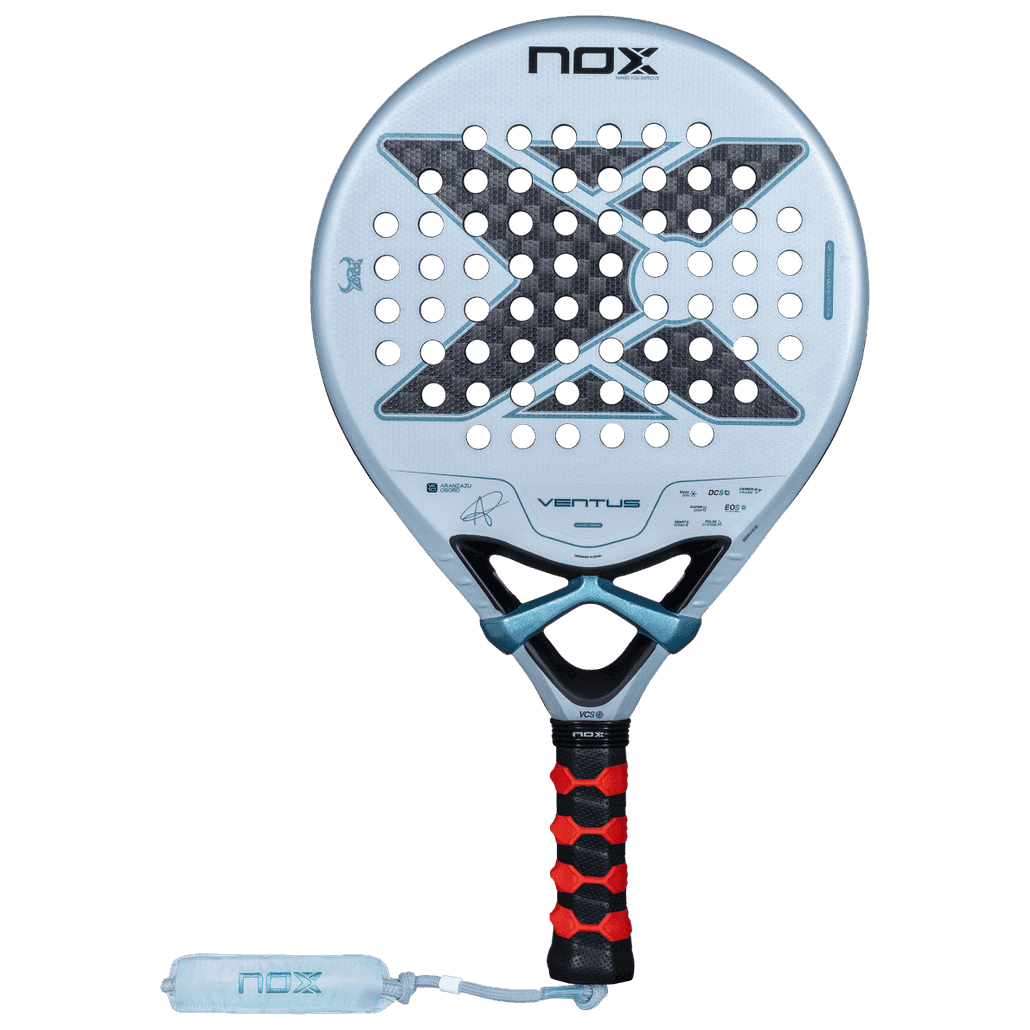
Nox VK10 Ventus Control 12K 2027 Aranzazu Osoro is a point-building racket with a firm, dry response. It wants clean preparation, accurate placement, and a player who prefers to create pressure rather than wait for free power.
I found its character very clear: quick through the air, stable at contact, and more interested in directing the ball than launching it. The trade-off is equally clear. Flat smashes and late defensive shots do not get much help.
This is aimed at advanced players who already generate their own acceleration and want a racket that rewards precision.
Technical analysis
Shape & balance
The round shape puts a generous, usable sweet spot in the central hitting area. That shows up most in defensive blocks, controlled volleys, and off-the-wall shots where I want the racket to stay predictable rather than kick the ball out unexpectedly.
Its balance feels maneuverable rather than head-heavy, which makes it easy to adjust at the net and prepare early for overheads. Despite its solid construction, it does not feel cumbersome in fast exchanges. The low balance keeps the head light in the hand, though players who want head weight on overheads will notice its absence.
The medium-hard feel is important here. Contact is direct and fairly dry, not plush or elastic. Center the ball well and the racket gives a very precise response. Arrive late or catch the ball toward the edge, and it is less forgiving than a softer fiberglass model.
Materials & construction
A Carbon frame, 12K Carbon Fiber faces, and MLD Black EVA core give this racket its crisp, controlled behavior. The faces provide a firm platform for blocking pace, while the core delivers enough ball exit to keep defensive shots moving without turning the racket into a trampoline.
The surface also gives the ball noticeable bite. I could load spin on slower overheads and shape the ball well on sliced volleys. That grip is useful, but it does not replace technique: the racket responds best when the stroke is complete and the contact point is in front.
On-court feel
Baseline play
From the baseline, this is a very composed racket. Defensive lobs, low-driven lobs, and wall exits come off with reliable direction, especially when I prepare early and use the incoming pace. The sweet spot feels broad enough that I can defend with confidence without needing a perfectly pure strike every time.
What it does not offer is effortless depth. On a passive block or a rushed forehand after the glass, the ball will not suddenly travel deep for you. I needed to accelerate through the shot and use my legs. Players who lean on soft ball exit to survive defense may find it demanding.
At the net
The maneuverability is a real asset in quick volley exchanges. I could keep the racket stable on firm blocks, then shorten the swing for a drop volley or chiquita without feeling the head drag behind my hand.
It is more surgical than punishing. Volleys can be placed tightly and with good spin, but they do not carry the heavy, automatic penetration of a more head-heavy attacking racket. You create the pace.
Bandeja and víbora
This is one of its strongest areas. The dry face response makes it easy to feel the ball on a bandeja, while the textured grip helps shape a víbora with controlled slice. I found it particularly dependable for keeping the ball low and directing it toward the fence or the opponent’s feet.
A flat overhead is less convincing. The racket will not bail out a poorly timed smash, and it lacks the easy finishing power players expect from an aggressively balanced model.
Conclusion
I would choose this racket for a player who values placement, spin, and stable defense more than raw finishing power. It suits someone comfortable constructing points from the baseline and taking control at the net through good decisions.
The payoff is excellent control, a large functional sweet spot, and quick handling. In return, you give up free depth and easy flat-smash power. Bring clean technique and early preparation, and the VK10 rewards it.
What other reviewers say
- PadelTestLabfr
The review finds a dry, precise response with strong grip for bandejas and víboras, firm blocking volleys, and predictable wall play. In return, it does not provide free depth or flat-smash power, so players need clean positioning and their own acceleration.
- PadelSapienses
PadelSapiens rates it as a distinctly control- and maneuverability-led racket, scoring particularly highly for sweet spot, wall shots, baseline play, and bandejas. Its substantially lower power score suggests a racket for constructing and placing points rather than finishing through raw force.
Switch Intelligence
Be the first to share where you switched from.
Community reviews
Real feedback from players who used this racket.
Add your review
To submit your review, log in first. You can still read all approved community reviews below.
Add review


