

Osaka Deshi Control 2025
A forgiving round racket with medium balance, a broad sweet spot, and the calm response to build points from the baseline.
Our Take
Shape
Round
Weight
350 - 370 gr
Core
10-13 White Snap EVA Foam
Faces
Glass Fibre
Frame
30% Carbon Frame
What we like
- Broad sweet spot on blocks
- Easy handling speeds net reactions
- Easy baseline depth and lobs
What we don't
- Limited smash finishing power
- Lacks heavy volley penetration
- Muted feedback at high speed
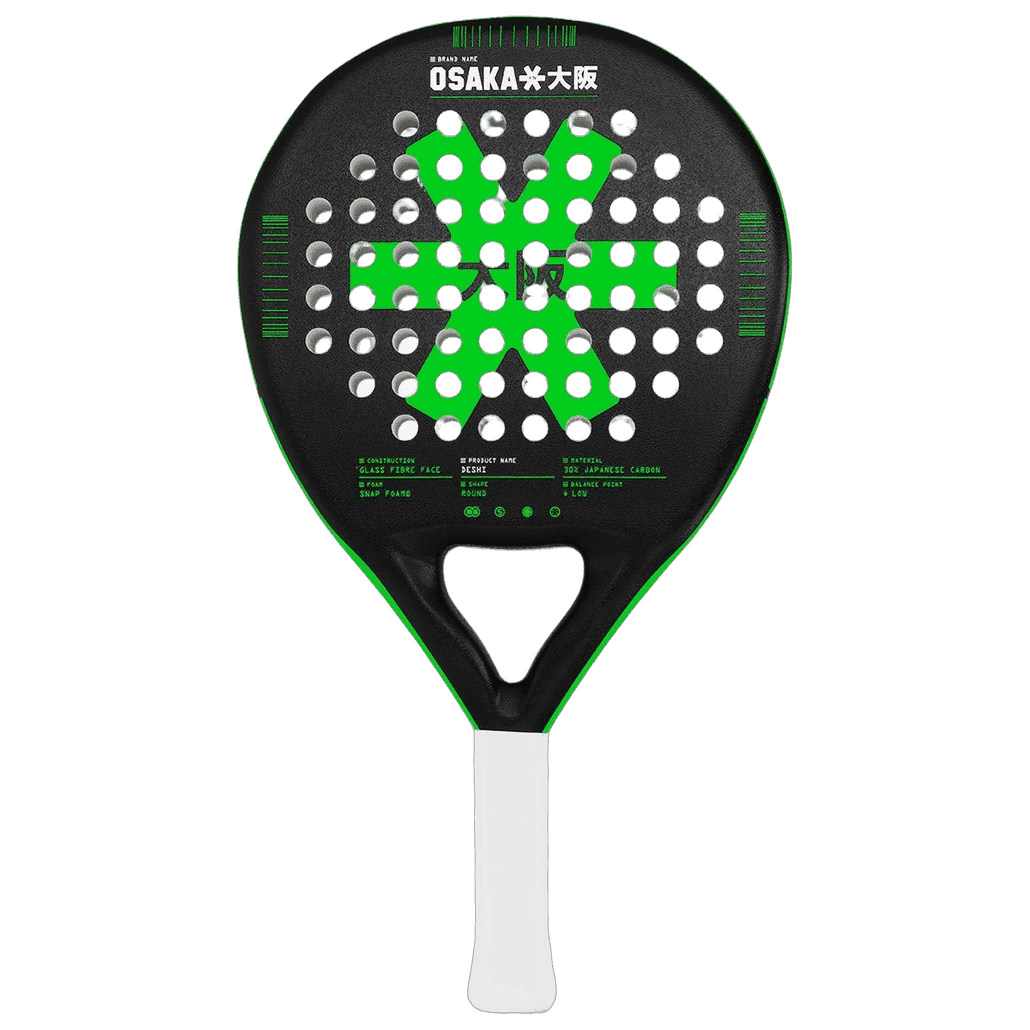
The Osaka Deshi Control 2025 is a forgiving, medium-balance racket built around easy handling rather than brute force. I see it as a sensible choice for developing players who want a racket that helps them stay organized in defense and react quickly at the net.
Its character is clear from the first few exchanges: broad sweet spot, easy repositioning, and plenty of ball exit without a harsh response. It will not turn a late swing into a winning smash, though.
Technical analysis
Shape & balance
The round shape puts a lot of usable hitting area in the center of the face, and that is the main reason this racket feels so accommodating. Off-center blocks and defensive returns still come off the face with reasonable direction and depth instead of dying immediately.
I also noticed the effect of its manageable balance in quick situations. It moves easily through compact volleys, body shots, and fast exchanges where you need to reset the racket quickly. That maneuverability is useful for players who are still refining preparation, but experienced players who like a head-heavy racket may find the Deshi Control a little too tame overhead.
Materials & construction
Osaka uses a 30% Carbon Frame, Glass Fibre faces, and a 10–13 White Snap EVA Foam core. On court, that combination produces a relatively comfortable, accessible response rather than a crisp, high-end carbon feel.
The fiberglass contributes to the racket’s easy ball exit, particularly at slower swing speeds. I could get depth from the baseline without having to force every ball. The trade-off is that the face does not feel especially sharp or explosive when I accelerate hard. Feedback is clear enough to know where I struck the ball, but the construction lacks the firmer, more connected response I expect from more competitive rackets.
On-court feel
Baseline play
From the baseline, this is where the Deshi Control makes most sense. The large sweet spot helps on defensive lobs, blocks after the glass, and off-the-wall play when contact is not clean. I found it easy to guide the ball deep and buy time rather than overhit under pressure.
The soft-to-medium response also helps produce comfortable ball exit. That is useful for players who often leave the ball short when defending. Still, I would not call it especially precise for fast, flat attacking lobs or attacking returns; it gives you forgiveness first, then placement.
At the net
At the net, the manageable balance makes the racket quick and uncomplicated. Volleys are easy to prepare, and I liked it on reflex blocks against hard body shots. The face stays stable enough for controlled redirection, especially considering its accessible construction.
What it does less well is finish the point through the ball. You can place a volley well, add some bite, and use angles, but it does not naturally produce the heavy, penetrating volley that pushes advanced opponents back.
Bandeja and víbora
For a controlled bandeja, the racket is friendly. It is easy to keep the face stable, work the ball toward the corner, and recover position afterward. The same quick handling helps when you need to play a conservative overhead rather than force an attack.
A more aggressive víbora exposes its ceiling. Spin is available, but the ball does not come off with the same speed or weight as it would from a firmer carbon face.
Smash
The smash is not this racket’s calling card. Good technique can still generate a useful flat smash or a placed overhead, but the racket does not offer much free acceleration or finishing power. Players who rely on easy winners from above the head will outgrow it quickly.
Conclusion
I would recommend the Deshi Control to newer and intermediate players who value forgiveness, maneuverability, and dependable defensive help. It suits a player building points with lobs, controlled volleys, and patient placement rather than constant attacking pressure.
The trade-off is straightforward: its broad sweet spot and comfortable response come at the expense of premium feedback and offensive ceiling. For defense and learning the net game, that is a fair exchange. For heavy smashes and aggressive overheads, it is not.
What other reviewers say
- Padelreferencees
Padelreference rates it as a beginner control racket with a round shape and a flexible, comfortable foam. Its expert notes give it high marks for maneuverability and comfort and a low mark for power, and say the round shape and large sweet spot forgive small centering errors.
Switch Intelligence
Be the first to share where you switched from.
Community reviews
Real feedback from players who used this racket.
Add your review
To submit your review, log in first. You can still read all approved community reviews below.
Add review


