

Osaka Pro Tour LTD Power 2026
A firm, attack-minded tear drop that brings fast ball exit and real smash weight, asking for clean contact in return.
Our Take
Shape
Tear
Weight
355 - 375 gr
Core
EV50 Foam
Faces
18K Textreme Carbon
Frame
Twin-tube blown frame, 9 layers of carbon + 1 layer of Kevlar
What we like
- Heavy penetrating volleys
- Serious clean-contact smash pace
- Strong low-driven lob exit
What we don't
- Narrow sweet spot off-center
- Harsh vibration on mishits
- Sluggish in fast exchanges
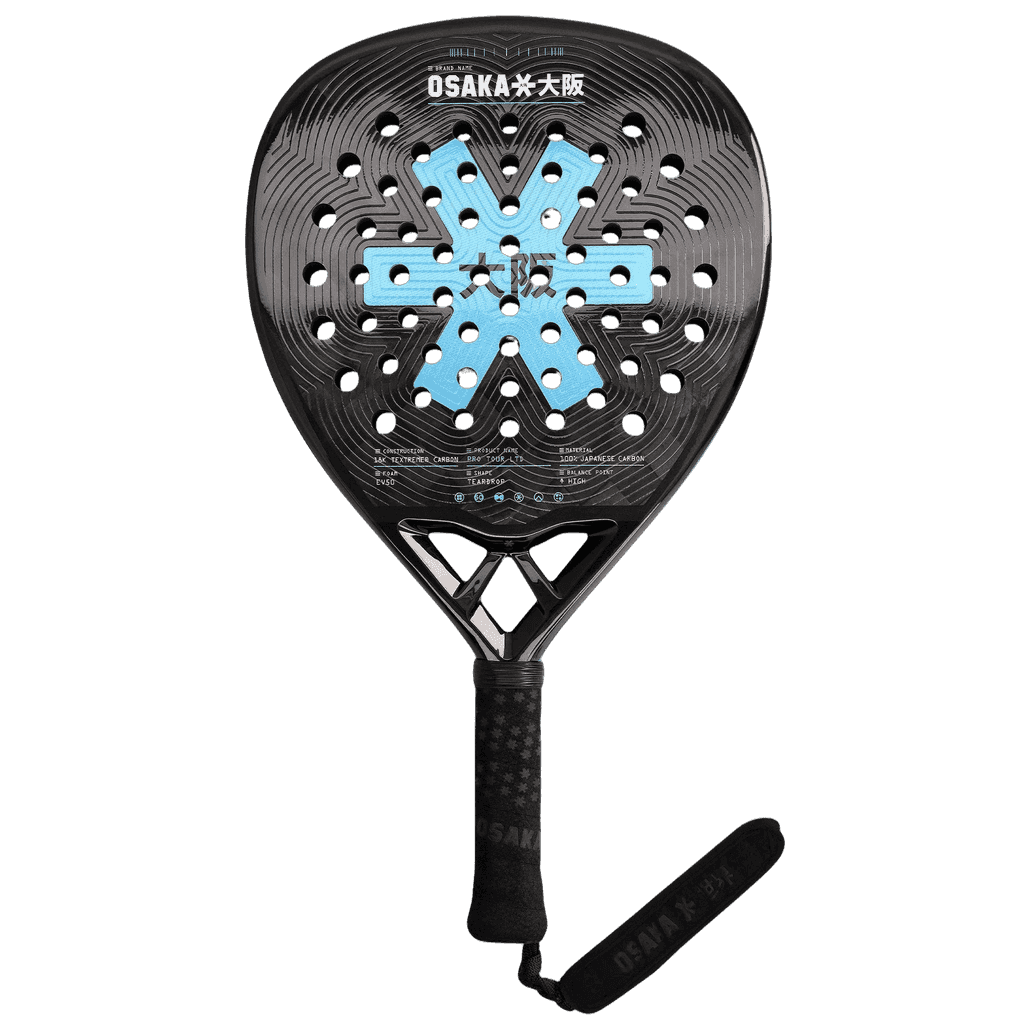
Osaka Pro Tour LTD Power 2026 is built to finish points, not to make defensive padel feel easy. It is an attacking racket with a firm, demanding response and the kind of ball exit that rewards a committed swing.
I see it fitting experienced players who generate their own racket speed and want more authority at the net. It is less convincing for players who rely on a large sweet spot or need a forgiving contact point under pressure.
Technical analysis
Shape & balance
The tear shape puts this Osaka between a round control racket and a full diamond weapon, but its behavior leans clearly toward attack. The balance feels geared toward the upper half of the racket: enough mass through the ball to make volleys and overheads travel heavily, though it is not especially quick through rapid hand exchanges.
That trade-off shows up when the pace rises. I would not call it nimble, particularly when reacting late on the backhand side or changing direction quickly at the net. Prepare early and it feels purposeful; arrive late and the racket can feel like it is pulling the contact away from the center.
Materials & construction
The build is serious: a twin-tube blown frame with nine carbon layers and one Kevlar layer, 18K TEXTREME Carbon faces, and an EV50 Foam core. That recipe produces a firm, stiff response rather than a soft, cushioning feel.
The upside is direct energy transfer. Hit cleanly and the ball leaves fast, especially on flat attacking shots. The downside, supported by independent review feedback, is that off-center contact sends noticeable vibration and feedback into the arm. Players with elbow or wrist sensitivity should not dismiss that point; this is not a racket that smooths out poor contact.
On-court feel
Baseline play
From the baseline, the Pro Tour LTD Power asks for clean preparation. Its ball exit is strong, so low-driven lobs and aggressive returns can gain depth without an exaggerated swing. Blocks also carry well when I get the face behind the ball early.
Still, it is not a relaxed defensive racket. The sweet spot is not particularly broad, and contact outside it loses consistency while the frame feels harsher. In off-the-wall play, I would rather have more forgiveness and a slightly softer response. Defensive lobs need good timing; the racket will not automatically lift the ball for you.
At the net
This is where its character makes sense. Firm volleys come off with penetration, and the stable frame lets me punch through the ball rather than guide it. On a high volley, there is enough response to finish space without overhitting.
Fast exchanges are more demanding. Its maneuverability is only moderate, so compact blocks and reflex volleys require active hands. I would not choose it for a player whose net game depends on constant wristy adjustments and late reactions.
Smash
The smash is the main attraction. Clean contact produces serious pace, and the firm faces make it easy to feel the ball compress and leave. The racket also suits an aggressive bandeja or víbora when I want to keep the opponent pinned rather than simply reset the point.
Power does not arrive for free, though. The racket rewards acceleration and centered contact; it will not turn a loose overhead technique into an easy winner.
Conclusion
This is an attacking racket for intermediate-advanced and advanced players who want a direct, firm hit and prioritize overhead pressure, heavy volleys, and smash pace.
The trade-off is clear: less maneuverability, a smaller margin outside the sweet spot, and a sharper feel on mishits. Players who value defensive comfort, easy ball release, or arm-friendly feedback should look elsewhere.
What other reviewers say
- PadelRacketReviews.comen
The review frames it as an attack-first racket: it produces decent smash pace, but its stiff frame punishes off-centre contact with noticeable feedback into the arm. While it scores well for power, control and manoeuvrability, the reviewer sees it as a poorer fit for arm-sensitive players or anyone who prioritises consistency.
Switch Intelligence
Be the first to share where you switched from.
Community reviews
Real feedback from players who used this racket.
Add your review
To submit your review, log in first. You can still read all approved community reviews below.
Add review


