

Royal Padel 35 Aniversario Light 2025
A soft, quick-moving racket that turns defensive lobs and low volleys into easy work, with enough bite to shape the point.
Our Take
Shape
Tear
Weight
355 - 365 gr
Touch
Soft
Core
High-density polyethylene
Faces
Fiber Tech (double layer of aluminized fiberglass)
Frame
Bi-directional tubular frame reinforced with carbon
What we like
- Effortless defensive lob lift
- Generous sweet spot on blocks
- Quick low-volley reactions
What we don't
- Limited flat-smash punch
- Less stable against heavy drives
- Soft response can overhit depth
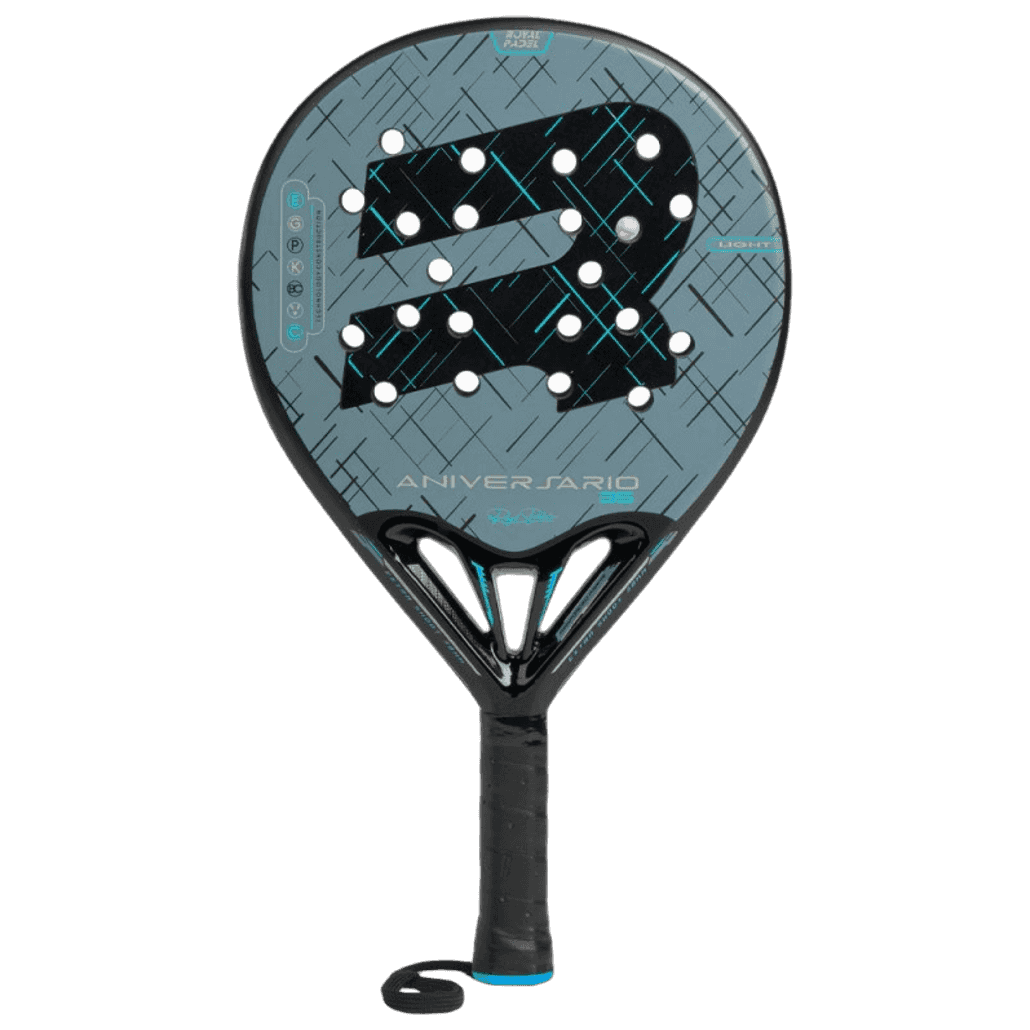
Royal Padel 35 Aniversario Light 2025 is a comfort-first racket with unusually easy ball exit. I see it as a defensive and transition-oriented option: quick through the air, forgiving on contact, and happy to do some of the work when I am under pressure.
It is not built to overwhelm the ball. Players who rely on flat winners and heavy smashes will find its limits early.
The character comes from its tear shape, manageable balance, and distinctly soft feel. It rewards clean placement and patience more than brute force.
Technical analysis
Shape & balance
The tear format gives this racket a broad, accessible hitting area without feeling as slow as some round control models. Its sweet spot feels very generous, which matters on rushed blocks, low volleys, and off-the-wall contacts where I am not striking the center every time.
Balance is kept under control rather than pushed toward the head. That makes the racket easy to reposition at the net and less demanding on the arm during long defensive exchanges. I can get the face behind the ball quickly, particularly when reacting to fast body shots.
The trade-off is stability against a very heavy ball. When opponents really load their viboras or drive volleys hard, the frame can feel less planted than a firmer, more head-heavy racket.
Materials & construction
Royal Padel uses a bi-directional tubular frame reinforced with carbon, Fiber Tech faces made from double-layer aluminized fiberglass, and a high-density polyethylene core. On court, that combination produces a cushioned, elastic response rather than a crisp carbon impact.
The polyethylene core is central to the racket’s behavior. It gives the ball a lively release with relatively little effort, especially from deeper positions. Players managing elbow discomfort may also appreciate the reduced shock and less abrupt contact; feedback from recreational players with arm sensitivity points in that direction.
I would not call it a precise, dry control racket. The soft response can occasionally send the ball deeper than intended if I take a relaxed swing on a short ball. Touch is easy, but depth control still requires a calm hand.
On-court feel
Baseline play
This is where I enjoyed the racket most. It helps me lift defensive lobs from low contact points and gives useful depth after the glass without needing a big swing. That easy rebound is particularly welcome late in a point, when I am stretched wide or arriving behind the ball.
Blocks also come off the face comfortably. Rather than feeling dead, the racket returns enough energy to turn defense into a playable ball. For players who spend a lot of time absorbing pressure from the baseline, that is a meaningful advantage.
At the net
At the net, the quick handling is obvious. Low volleys, reaction blocks, and counter drop shots are easy to prepare because the racket does not drag through the movement. I found it especially useful when closing the net and needing to change direction late.
Still, it does not give a heavy, punishing volley by itself. I can place the ball well and accelerate the pace, but finishing through an opponent with a compact punch requires more input than with a harder carbon face.
Bandeja and víbora
The fiberglass surface gives enough bite to shape a controlled bandeja and add action to a víbora. I could work the ball toward the side fence without feeling that the face was slipping at impact.
Those shots are more about placement and spin than raw penetration. A player who hits aggressive overheads with a very fast arm may want a firmer response.
Conclusion
I would recommend this racket to intermediate players who value comfort, defense, and easy handling over outright power. It suits a player who wants help with lobs, glass exits, blocks, and quick exchanges near the net.
The compromise is clear: it lacks the punch and stability of a more attack-focused racket. If my game depends on finishing points with flat smashes or overpowering volleys, I would look elsewhere.
What other reviewers say
- PadelTestLabes
It stands out for very easy ball output, particularly on defensive lobs and shots after the glass, plus quick handling on low volleys and counter drop shots. The review also finds useful grip for bandejas and víboras, but less punch and stability against heavy balls or flat smashes.
- Racketguide.comen
An amateur player with elbow issues rates it as comfortable, controllable, and easy to use. Her feedback points to a racket that reduces physical strain without making play demanding.
Switch Intelligence
Be the first to share where you switched from.
Community reviews
Real feedback from players who used this racket.
Add your review
To submit your review, log in first. You can still read all approved community reviews below.
Add review


