

Royal Padel JPN Pro Green 2026
A soft-feeling diamond that brings easy lift and bite to attacking play, asking steady hands when the pace turns frantic.
Our Take
Shape
Diamond
Weight
360 - 375 gr
Touch
Soft
Core
Polyethylene foam
Faces
Fiberglass with carbon reinforcements
What we like
- Easy defensive lob ball exit
- Forgiving sweet spot for diamonds
- Textured bite on overhead slices
What we don't
- Slow in rapid net exchanges
- Demanding on low late contacts
- Less terminal than hard carbon
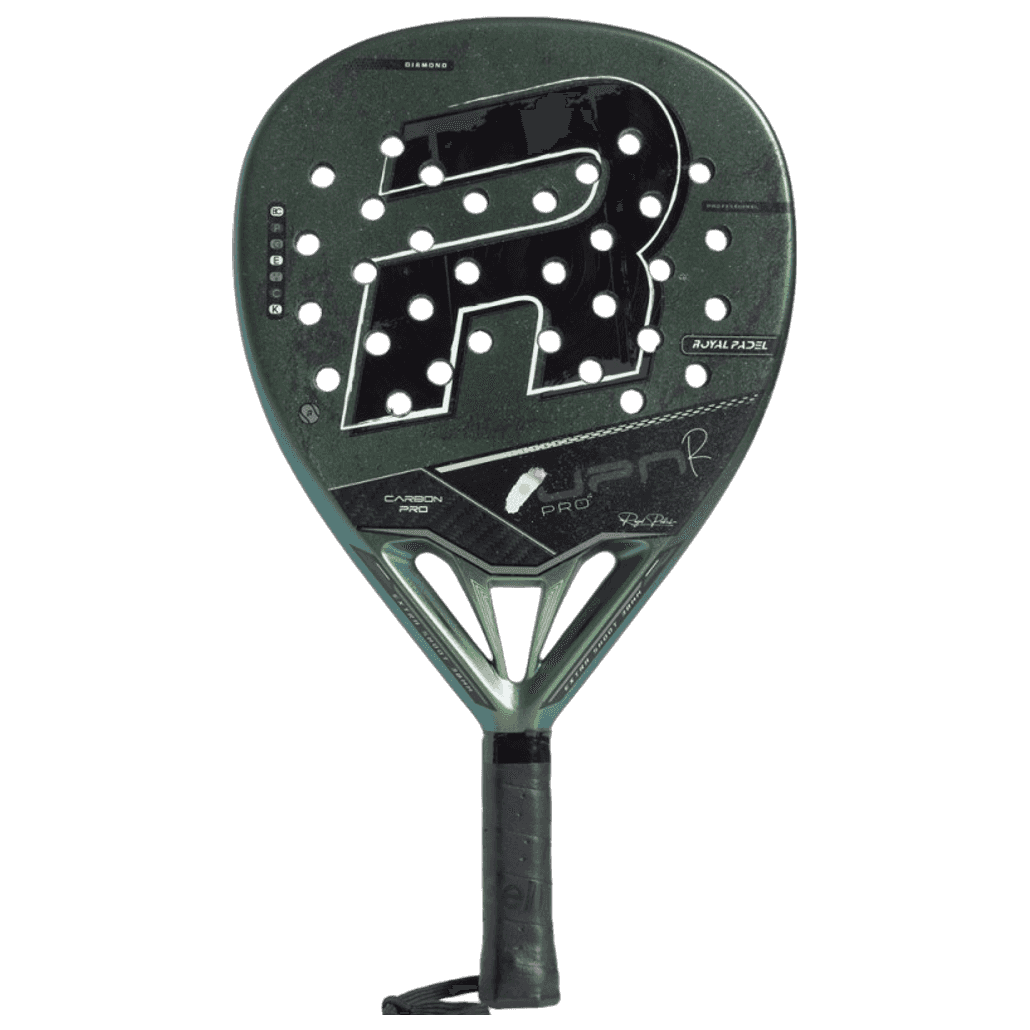
Royal Padel JPN Pro Green 2026 is an attacking racket with an unusually forgiving edge. It carries the leverage of a diamond shape and high balance, yet the contact is softer and more cushioned than I expect from that profile.
It wants to play above the net, but it does not abandon you at the baseline. The soft feel and lively ball exit make it less punishing than many head-heavy diamonds.
Technical analysis
Shape & balance
The high balance is obvious as soon as I accelerate overhead. The racket brings real momentum through the ball, helping flat attacks, aggressive volleys, and smashes without needing an excessively violent swing. Its sweet spot is also more usable than the usual narrow diamond-zone contact.
That balance still has a cost. Fast exchanges at the net require earlier preparation, and the racket does not turn as quickly as a more neutral or head-light model. I would not choose it for reactive, wristy volleying or for players who regularly arrive late to low balls.
Materials & construction
Royal Padel uses fiberglass faces with carbon reinforcements around a polyethylene FOAM core. That construction explains much of the racket’s character: impact is muted, vibrations are well filtered, and the ball leaves the face easily even when my contact is not clean.
The response is comfortable rather than crisp. I get useful depth from blocks and defensive lobs without having to force the shot, but I lose some of the exact feedback that a rigid 12K or 18K carbon face can provide. Players who judge every short volley by a very firm, immediate response may find it a little vague.
On-court feel
Baseline play
From the baseline, this racket is more helpful than its shape suggests. On off-the-wall balls, the soft core gives the ball enough exit to send a defensive lob deep without overhitting. Blocks also come off the face with less effort, which matters when I am under pressure and only have time to present the racket.
Low and late contacts remain its weak point. The head-heavy setup makes it harder to get the face underneath the ball quickly, especially on fast balls at foot level. It rewards good preparation; it does not rescue lazy positioning.
At the net
There is plenty of natural pace in volleys. I can block firmly or punch through the middle without needing to overwork the arm, and the vibration damping keeps repeated exchanges comfortable. The sandy texture also gives the ball decent bite on controlled angled volleys and drop shots.
Quick hand battles are less natural. Against fast countervolleys, I feel the racket’s mass in the head, and changing direction late is not its strongest trait. The JPN Pro Green prefers a committed swing over tiny corrective movements.
Bandeja and víbora
This is one of its better areas. The textured face grips the ball well enough to shape a sliced víbora or a controlled bandeja, while the soft response helps keep those shots deep rather than leaving them short. I can play with margin and still generate enough weight to hold opponents back.
Smash
Flat smashes come easily, and the racket carries good pace through an x3 attempt. Still, it is not a hard-carbon cannon. Players chasing maximum finishing power from every overhead will find more explosive options, though usually with a harsher feel and less help in defense.
Conclusion
I would put the JPN Pro Green 2026 in the hands of an intermediate-to-advanced player who attacks with overheads but does not want a brutally demanding diamond racket. Its ball exit, comfort, and generous sweet spot make it more accessible than its balance suggests.
The trade-off is agility and precision. It is slower in rapid net exchanges, less comfortable on low emergency pickups, and not as terminal on the smash as a rigid carbon power racket. In return, it gives a softer, more forgiving route to aggressive padel.
What other reviewers say
- PadelTestLabes
It stands out for unusually easy ball output for a high-balance diamond racket, helping on defensive lobs and blocked volleys while producing natural pace on flat and x3 smashes. Its sandy texture supports sliced víboras and bandejas, but the head-heavy setup punishes quick reactions, late defense, and low contact points.
- Pádel Análisises
This assessment frames it as an unusual attacking racket because of its comfortable feel, strong vibration damping, easy ball output, and a more forgiving sweet spot than a typical diamond. In return, its high balance and weight can reduce agility at net and in quick defense, while its softer build lacks the absolute finishing power of a rigid carbon racket.
Switch Intelligence
Be the first to share where you switched from.
Community reviews
Real feedback from players who used this racket.
Add your review
To submit your review, log in first. You can still read all approved community reviews below.
Add review


