

Royal Padel JPN Pro Red 2026
A soft-touch diamond that rewards early preparation with heavy overheads, sharp spin, and a surprisingly cushioned response.
Our Take
Shape
Diamond
Weight
360 - 380 gr
Touch
Soft
Core
Polyethylene
Frame
Carbon
What we like
- Progressive overhead depth and power
- Textured face grips *víboras*
- Cushioned blocks with reliable exit
What we don't
- Head-heavy balance slows hand speed
- High sweet spot punishes low balls
- Late defensive reactions feel demanding
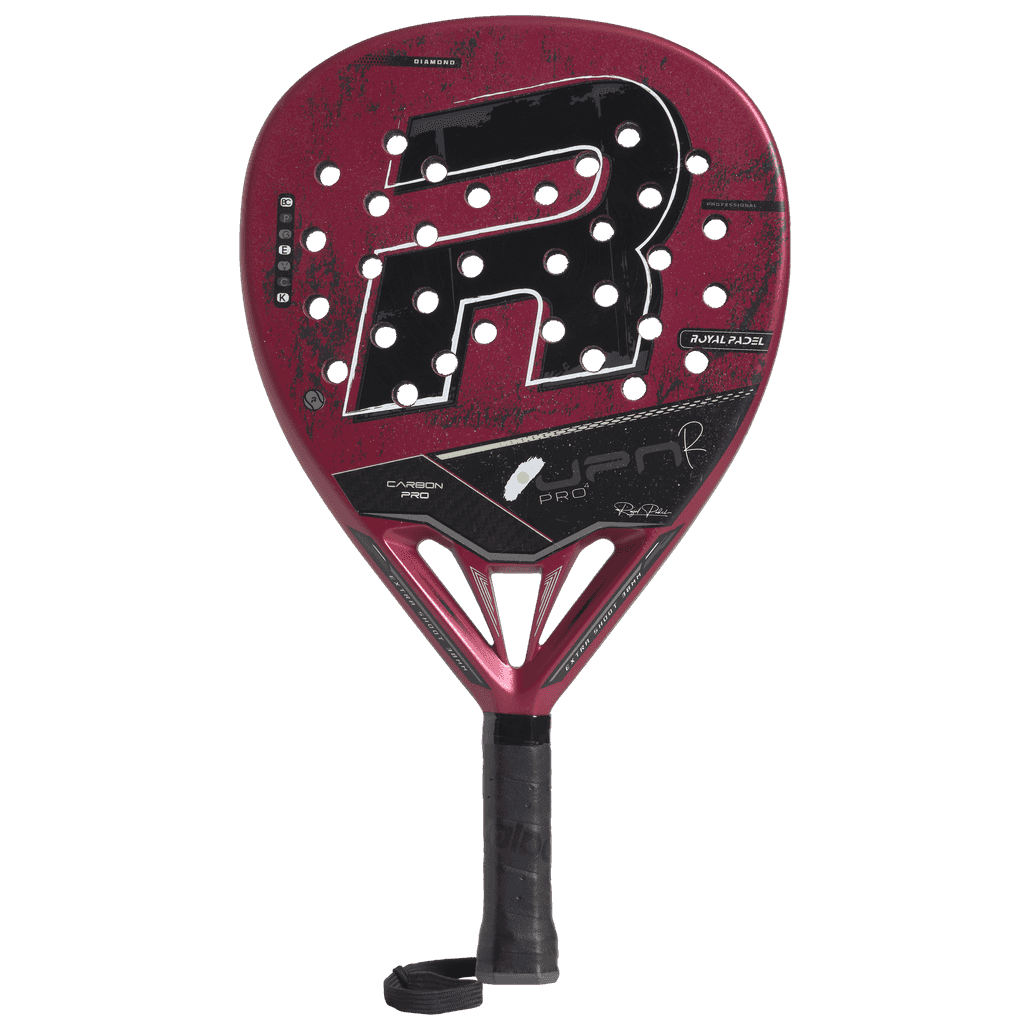
The Royal Padel JPN Pro Red 2026 is a soft-hitting attacking racket that carries more ball than its cushioned touch suggests. It wants to play above the net, load the ball with spin, and build pressure with depth rather than relying on a brutally hard response.
I’d put it in the hands of an experienced player who likes a diamond shape but does not enjoy the dry, jarring feel common in many power-focused rackets.
That comfort comes with a condition: the head-heavy setup needs early preparation. Get lazy in defense or arrive late to the volley, and it will let you know.
Technical analysis
Shape & balance
The diamond mold places the sweet spot high, while the balance pulls the racket toward the head. That combination gives me a lot of leverage on overheads and attacking volleys. When I have time to set the racket behind the ball, it drives through contact well and produces easy depth.
The other side is maneuverability. This is not a quick, wristy racket for frantic exchanges in the middle of the court. Defensive blocks at body height are stable, but low contacts and rushed reactions can feel awkward because the sweet spot is compact and sits above where many defensive balls arrive.
Materials & construction
Royal Padel uses a carbon frame around a polyethylene core, and the result is a distinctly soft feel without turning vague or overly bouncy. The core cushions impact well, which helps on blocked returns and takes some strain out of repeated overheads.
Ball exit is one of its stronger traits. I do not need to overhit to send the ball deep, especially from the baseline or on a controlled attacking volley. Power builds progressively as I accelerate; it does not give the abrupt, explosive kick of a hard-carbon racket. The textured face also adds real bite, particularly when I brush the ball rather than strike it flat.
On-court feel
Baseline play
From the baseline, the JPN Pro Red gives me useful help on defensive lobs and off-the-wall shots. The soft response absorbs pace well, then returns enough energy to get the ball back deep without a huge swing. That is valuable when I am under pressure and need height or length rather than a risky winner.
Still, this is not a forgiving defensive racket. Low, off-center contact loses consistency, and the head-heavy balance makes late preparation costly. Players who rely on quick flicks or short reaction blocks will probably prefer something faster through the air.
At the net
At the net, it feels stable and composed once the racket is in position. Firm volleys carry through the court, while softer placement shots stay controllable because the core does not fire the ball off the face unpredictably.
Fast hand battles are less convincing. I can block and guide the ball well, but changing direction repeatedly or reacting to a hard counter-volley takes more work than with a head-light racket. It rewards a prepared volley, not panic hands.
Bandeja and víbora
This is where the racket makes the most sense to me. The combination of high balance, progressive power, and surface grip gives the bandeja good depth without needing a full smash motion. On the víbora, I can feel the face grab the ball and produce a heavier, lower trajectory.
A flat smash still needs solid technique. The racket helps with acceleration and x3 potential, but it is not a cheat code for players who do not generate racket-head speed themselves.
Conclusion
I’d choose the JPN Pro Red 2026 for an attacking player who values spin, overhead depth, and a softer impact than most diamond rackets provide. It is particularly convincing for players who build points through aggressive volleys, sliced overheads, and controlled smashes.
The trade-off is clear: hand speed and low-contact forgiveness. If your game depends on rapid reaction defense or quick exchanges close to the body, this racket can feel demanding. Give it preparation and centered contact, though, and it returns a comfortable but genuinely attacking response.
What other reviewers say
- PadelTestLabes
It stands out for ball output, x3 smashes, and particularly biting víboras from the rough face, while feeling more elastic and cushioned than a rigid diamond racket. The trade-off is that its high balance and high sweet spot punish late defensive preparation, low contact, and rapid mid-court volley exchanges.
- PadelJujuen
This review describes an attacking racket with a cushioned feel that stays stable on blocks, controlled volleys, and placement shots; its overhead power is strong but progressive rather than the explosive response of a hard-carbon frame. It is unusually comfortable for a diamond, but feels slower in fast exchanges and still needs sound technique for flat winners.
Switch Intelligence
Be the first to share where you switched from.
Community reviews
Real feedback from players who used this racket.
Add your review
To submit your review, log in first. You can still read all approved community reviews below.
Add review


