

Varlion LW Rose Carbon Ti 2025
A light, quick round racket with a soft touch for calm defending, sharp blocks, and easy handling around the net.
Our Take
Shape
Round
Weight
335 - 350 gr
Core
EVA SOFTCOLOR 38 mm
Faces
Fiberglass reinforced with carbon fiber, titanium dioxide
Frame
Hexagon frame, bidirectional carbon tubular
What we like
- Quick defensive blocks and recoveries
- Easy ball exit from baseline
- Soft touch on volleys
What we don't
- Lacks punch on flat smashes
- Unstable against heavy pace
- Off-center hits lose depth
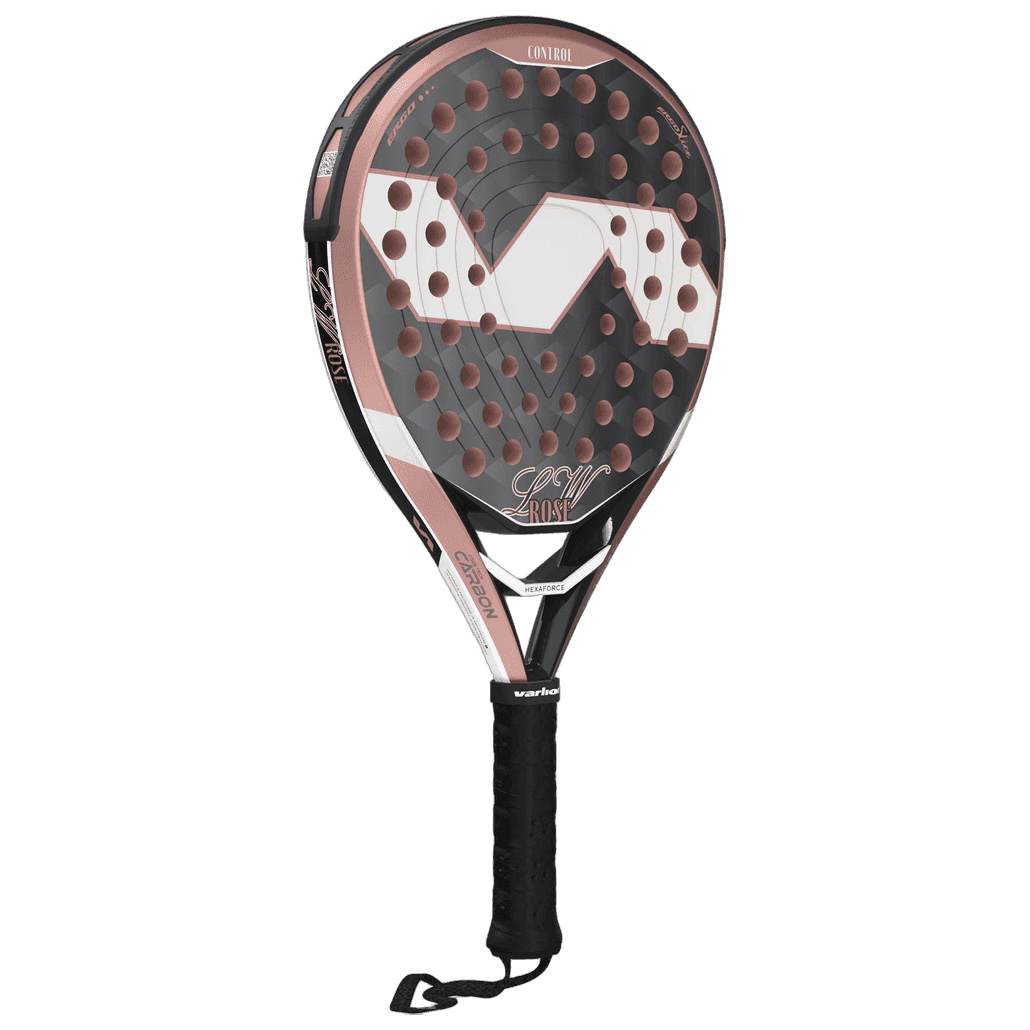
The Varlion LW Rose Carbon Ti 2025 is a light, quick-handling racket built around comfort, defensive speed, and easy ball exit. It feels like a racket that wants to keep you in the point rather than finish it in one swing.
Its round shape and low-medium balance make it very easy to move through compact strokes. I would look at this for a developing or intermediate player who values clean contact, quick reactions, and a forgiving response over raw attacking weight.
The trade-off is straightforward: this is not a racket for overpowering opponents. Against heavy pace, or when I catch the ball well outside the center, it can lose stability and depth.
Technical analysis
Shape & balance
The round mold gives the racket a broad, accessible sweet spot, and that shows up most clearly in defensive exchanges. I found its character geared toward fast preparation: blocks, quick volleys, and off-the-wall recoveries do not require a big swing or much racket-head speed.
That maneuverability is a real strength, especially for players who arrive late to the ball or prefer to defend with short, controlled movements. Still, the lighter build does not provide much resistance through contact. When an opponent drives hard at the body, I need to hold the racket firmly; otherwise, the face can get pushed around.
Materials & construction
Varlion uses a Hexagon carbon frame, faces made from fiberglass reinforced with carbon fiber and titanium dioxide, and an EVA SOFTCOLOR core. On court, that combination reads as a soft feel rather than a crisp, hard carbon response.
The ball exits easily without needing to force the shot. That is useful from the baseline, where I can send a defensive lob deep with a relaxed stroke, but it also means I get less of the compact, punchy response that firmer rackets give on aggressive volleys. The fiberglass-led feel is comfortable and forgiving, though players who like a very direct, sharp contact may find it too muted.
On-court feel
Baseline play
This is where the LW Rose Carbon Ti makes the most sense to me. It is quick through defensive swings, and the soft core helps on glass recoveries and blocks. I can open the face late, absorb pace, and still get enough ball exit to lift the ball back with shape.
Low-driven lobs are easy to control because the racket does not feel demanding in the hand. The limitation comes when I try to drive from deep court or defend a fast ball with a firmer, flatter block: the racket offers less stability than a heavier, stiffer model, particularly on off-center contact.
At the net
At the net, I like the speed. Quick exchanges and touch volleys suit it well, while a chiquita or drop shot benefits from the soft response and wide hitting area. It is easy to adjust the racket face at the last moment.
Hard punch volleys are less convincing. I can place them accurately, but I do not get much free penetration unless I generate the acceleration myself. This is a racket for constructing pressure, not simply hitting through opponents.
Bandeja and víbora
The racket is comfortable for a controlled bandeja, especially when I prioritize depth and placement. Its maneuverability also helps me keep the preparation compact on a defensive overhead.
A fast, aggressive víbora is not its strongest shot. The softer response and lower stability reduce the heavy, skidding ball that more head-heavy carbon rackets can produce.
Conclusion
I would choose this racket for its comfort, speed, and forgiving defensive behavior. It suits players who spend plenty of time retrieving from the baseline, blocking at the net, and using placement rather than brute force.
The compromise is power and stability. A flat smash, a hard volley, or a wide off-center contact will not carry the same authority as with a firmer, more attack-focused racket.
For a player who wants easy handling and a soft response, it is a sensible, honest option. For someone whose game depends on finishing points overhead, I would look elsewhere.
What other reviewers say
- padel.howen
The reviewer finds it exceptionally quick and comfortable, particularly effective for defence, glass recoveries, blocks and touch volleys. Its low mass and flexible response sacrifice punch and stability against heavy pace, so flat smashes and wide off-centre contacts lose depth and precision.
Switch Intelligence
Be the first to share where you switched from.
Community reviews
Real feedback from players who used this racket.
Add your review
To submit your review, log in first. You can still read all approved community reviews below.
Add review


