

Vibora Titan Black 3K 2026
A head-heavy diamond racket with sharp finishing power, yet enough touch to keep the rally alive when the point turns messy.
Our Take
Shape
Diamond
Weight
360 - 375 gr
Touch
Medium-Hard
Core
EVA PRO
Faces
3K carbon
Frame
Carbon fiber
What we like
- Explosive smash loading
- Firm, direct volley response
- Clean *bandeja* and *víbora*
What we don't
- Demanding on late swings
- Defense needs more effort
- Off-center hits feel clear
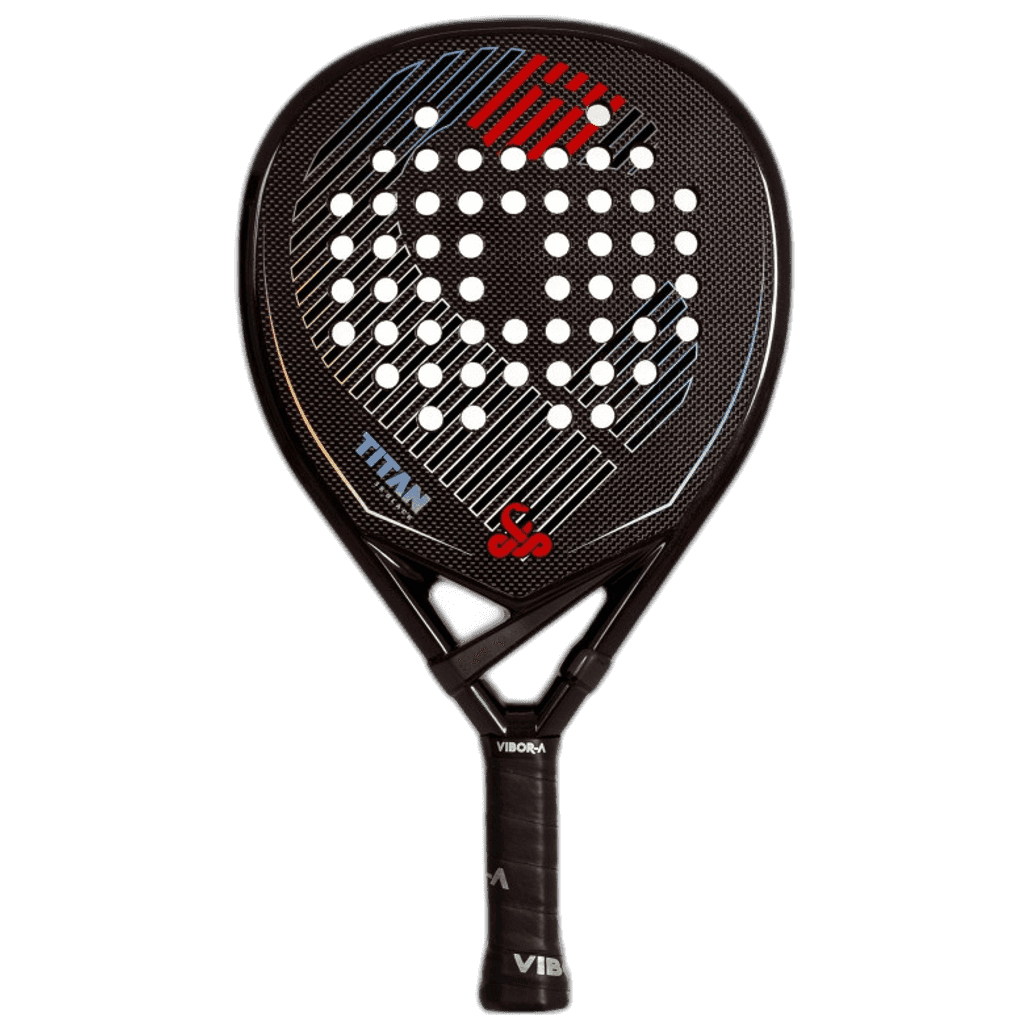
Vibora Titan Black 3K 2026 is an offensive racket with a firm hand and a clear taste for finishing points. It leans into power first, but it does not feel completely wild. I get a racket that wants to attack from above the shoulder and keep enough order in the rest of the court to stay usable in long rallies.
The diamond shape and medium-hard feel put it squarely in the hands of players who already swing with intent. It is not trying to be friendly in the way softer, rounder rackets are. Instead, it rewards clean mechanics, especially when the rally opens up and you can load the ball.
Technical analysis
Shape & balance
The high-bias shape gives this Vibora a very attack-minded personality. I felt that from the first balls: overheads come naturally, and the racket likes a faster, more vertical swing path. That extra mass up top helps when you want to punish a high ball or push the opponent back with depth.
What it does not do well is disguise your timing errors. If you arrive late or try to force the wrist, the head-heavy feel can make the swing feel a bit demanding. It is manageable, but not especially forgiving.
Materials & construction
The fiberglass carbon frame and 3K carbon faces give the racket a firm, lively response without crossing into the harsh side of the spectrum. The EVA PRO core adds that middle-ground firmness that experienced players usually recognize right away: solid contact, decent ball exit, and enough structure to control the volley when the pace rises.
In the hand, the build feels stable and direct. I would not call it plush. The response is more immediate than soft, which helps in attack but means you feel off-center hits clearly. The sweet spot is usable, but it still asks for decent precision.
On-court feel
Baseline play
From the baseline, this racket is better when you are proactive than when you are purely surviving. Defensive lobs come out with good depth if I set the face early, and blocks are stable enough against heavier pace. The ball exit is not lazy, but it is also not trampoline-like, so you need to work the point rather than expect free depth.
On low balls and rushed exchanges, I noticed the usual trade-off of a diamond racket: less comfort than a round control frame and a bit more effort on the wrist and shoulder. It is usable in defense, just not effortless.
At the net
This is where the Titan Black 3K makes the most sense. Volleys come out firm, direct, and with enough weight to keep pressure on the opponent. I liked it most in fast exchanges where I could keep the racket in front and let the structure do the work.
It is also competent on the chiquita and drop shots, though that is not where it lives. The touch is there, but the racket clearly prefers a more aggressive tempo than a delicate one.
Bandeja and víbora
These shots suit it very well. The racket gives me a clean response on the bandeja and enough bite on the víbora to keep the ball low and awkward after the bounce. I found the control on guided overheads better than I expected from the shape, which makes it easier to keep the point alive before going for a finish.
Smash
This is the natural habitat. The racket loads easily when I swing hard, and the firm core helps transfer energy in a very direct way. I would not call it effortless, but it is undeniably effective when the contact is clean. If your game includes frequent finishing attempts, this racket gives you something real to work with.
Conclusion
I see the Vibora Titan Black 3K 2026 fitting players who already live comfortably in the attacking phase of the point and want a racket that matches that intent. It is strongest for intermediate-advanced to advanced players who rely on overheads, pressure at the net, and a firm response off the face.
The trade-off is clear: you give up some comfort and easy defense for a more aggressive, more demanding character. If you want a racket that behaves like an extension of an attack-first game, this one makes sense. If you want easy ball exit from the back of the court, I would keep looking.
Switch Intelligence
Be the first to share where you switched from.
Community reviews
Real feedback from players who used this racket.
Add your review
To submit your review, log in first. You can still read all approved community reviews below.
Add review


