

Adidas Metalbone HRD+ 2026 - Ale Galan
A stiff, high-balance diamond racket that hits with real authority, then asks for clean hands when the point turns defensive.
Our Take
The Court
3 reviewsShape
Diamond
Weight
345 - 360 gr
Touch
Medium-Hard
Core
High Memory EVA
Faces
16K aluminized carbon
Frame
Carbon fiber
What we like
- Explosive smash and volleys
- Stable blocks against pace
- Clean *bandeja* and *víbora*
What we don't
- Defense demands extra effort
- Average maneuverability at net
- Harsh on off-center contact





Updated on 26 Oct (shipping cost not calculated)
Are you a store owner? Join our platform to be featured here.
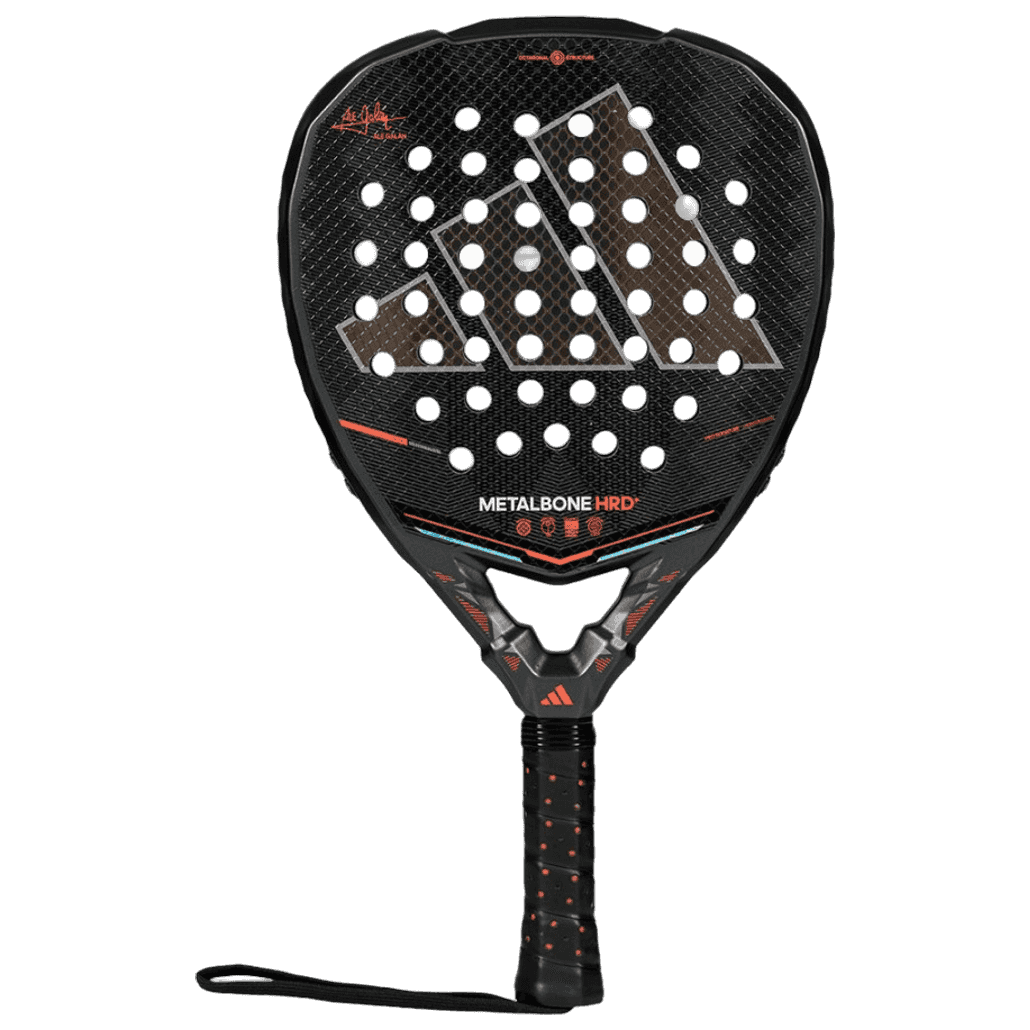
Adidas Metalbone HRD+ 2026 - Ale Galán is a pure attack racket with a stiff, dry response and a very defined personality. I feel it immediately in the hand: this is not trying to smooth anything over. It wants fast swings, clean contact, and players who already know how to create their own pace.
The diamond shape and medium-hard feel push it toward aggressive padel from the first point. It gives me the sense of a racket built for finishing, pressuring at the net, and taking time away from rivals. The trade-off is obvious. It asks a lot in defense and it doesn’t hide off-center mistakes.
Technical analysis
Shape & balance
The diamond shape and high balance are doing most of the work here. That head-heavy setup loads the top of the racket, so when I accelerate on a smash or an overhead volley, the ball comes off with real violence. It feels like a racket that rewards committed arm speed rather than lazy timing.
What it does not do well is help on slower, awkward exchanges. If I’m late or under pressure, the head weight is there to remind me. Maneuverability is only average, so at the net I can feel the racket asking for an extra split second to set the face.
Materials & construction
The Carbon Aluminized 16K faces and EVA High Memory core give this racket a very firm, direct response. The first thing I notice is how dry it feels on contact. There’s not much trampoline effect, and that suits players who like a precise, honest connection with the ball.
That construction also gives the frame a very stable feel on hard impact. Blocks against fast balls hold up well, and the racket doesn’t wobble much when the pace jumps. On the downside, that stiffness makes it unforgiving. Center contact matters here, because mishits lose quality quickly and the feedback can feel harsh.
On-court feel
Baseline play
From the baseline, I can get depth and directional control if I’m active with my feet and early with my preparation. Defensive lobs come off with good weight once I commit to the swing, and the racket is stable enough to absorb heavy pace without folding.
Still, this is not a comfort-first racket for grinding long defensive exchanges. When I’m stretched or half-set, it offers limited help. The ball exit is solid rather than lively, so I have to work for length instead of getting easy free power from the frame.
At the net
This is where the Metalbone HRD+ feels most convincing. Volleys come out explosive, with a firm response that lets me press hard and keep the ball low. It has enough precision for controlled aggression, which matters when I’m looking to close the net without spraying errors.
The racket is especially effective on fast hands exchanges, where its stability helps me block and redirect with confidence. What I miss is ease. It is not a relaxed net racket, and after longer sessions I feel the demand in the arm and shoulder. It rewards timing more than instinct.
Bandeja and víbora
On bandeja and víbora, the racket gives me a clean, direct path through the ball. I can hit with bite, and the stiff response helps keep the shot sharp rather than floaty. The head weight also helps the overheads carry through with authority.
The limitation is comfort on off-tempo balls. If the contact is not clean, the racket does not rescue me much. For advanced players, that’s a fair trade. For everyone else, it can feel unforgiving fast.
Conclusion
I’d put this racket in the hands of an advanced player who attacks often and likes a firm, precise, high-output feel. If you build points around the net, smash with intent, and enjoy a dry response, there’s a lot to work with here.
What you give up is comfort and forgiveness. Defense takes more effort, maneuverability is only decent, and the stiffness can be tiring over time. This is a racket with a clear edge, but it asks you to earn every aggressive shot.
What other reviewers say
- PadelScouten
The racket is framed as a clearly attack-first option, with a high balance, medium-hard feel, and strong output on smashes and volleys. In exchange, it demands clean technique because it gives little help from the back of the court and feels less comfortable in defense.
- Pádel Reviewes
The review presents it as the stiffer, power-oriented version for players who find other rackets too soft and want to maximize the smash. The playing message is straightforward: if you have technique and a fast arm, it gives very high power, but it punishes players who want help or comfort.
- PadelReviewes
The listing and analysis place it as a stable racket from the baseline, able to lift lobs and block fast balls without feeling overly demanding. The overall read is that it combines very high power with enough manageability for advanced players.
- Reddit r/Padelracketen
A user who played it for more than 30 sessions says the power is excellent, but maneuverability drops and the trampoline effect undermines confidence on volleys and slices. They also say it feels slow at the net because of the weight.
- Reddit r/Padelracketen
Several comments agree that the HRD is a very demanding racket with an extremely stiff feel, better suited to advanced or tournament players. Compared with easier options, it is seen as more powerful but also less forgiving.
Switch Intelligence
Be the first to share where you switched from.
Community reviews
Real feedback from players who used this racket.
3 reviews


Need decent biomechanical weight transfer and technique on groundstrokes and volley. hard to use for defending from back glass. Need some kind of confident hit & good technique on every ball to give decent pace and heavy ball due to dry feel from hard EVA foam. Definitely not for beginner & intermediate players who lacks on technique like me who rellies on soft rebound core to help add the pace and depth to the ball on attacking volley & blocking and groundstrokes. Best to pick the lightest base weight from the shelves because the default racquet protector and overgrips also add weight and you could fine tune the balance & static weight with the WBS which is one of the ADIDAS Metalbone main selling point. the build quality feel solid, premium and consistent with perfectly drilled hole. it is worth the price.
Add your review
To submit your review, log in first. You can still read all approved community reviews below.
Add review


