

Babolat Technical Viper 3.1 2027 Juan Lebron
A hard-edged diamond built for the player who attacks early, hits clean, and wants every smash and *víbora* to carry weight.
Our Take
Shape
Diamond
Weight
360 - 380 gr
Touch
Hard
Core
Hard EVA
Faces
3K Carbon
Frame
Carbon
What we like
- Heavy, penetrating centered volleys
- Low, spinning *víbora* trajectory
- Exceptional smash pace transfer
What we don't
- Small sweet spot punishes mishits
- High balance burdens late defense
- Hard feel lacks easy exit
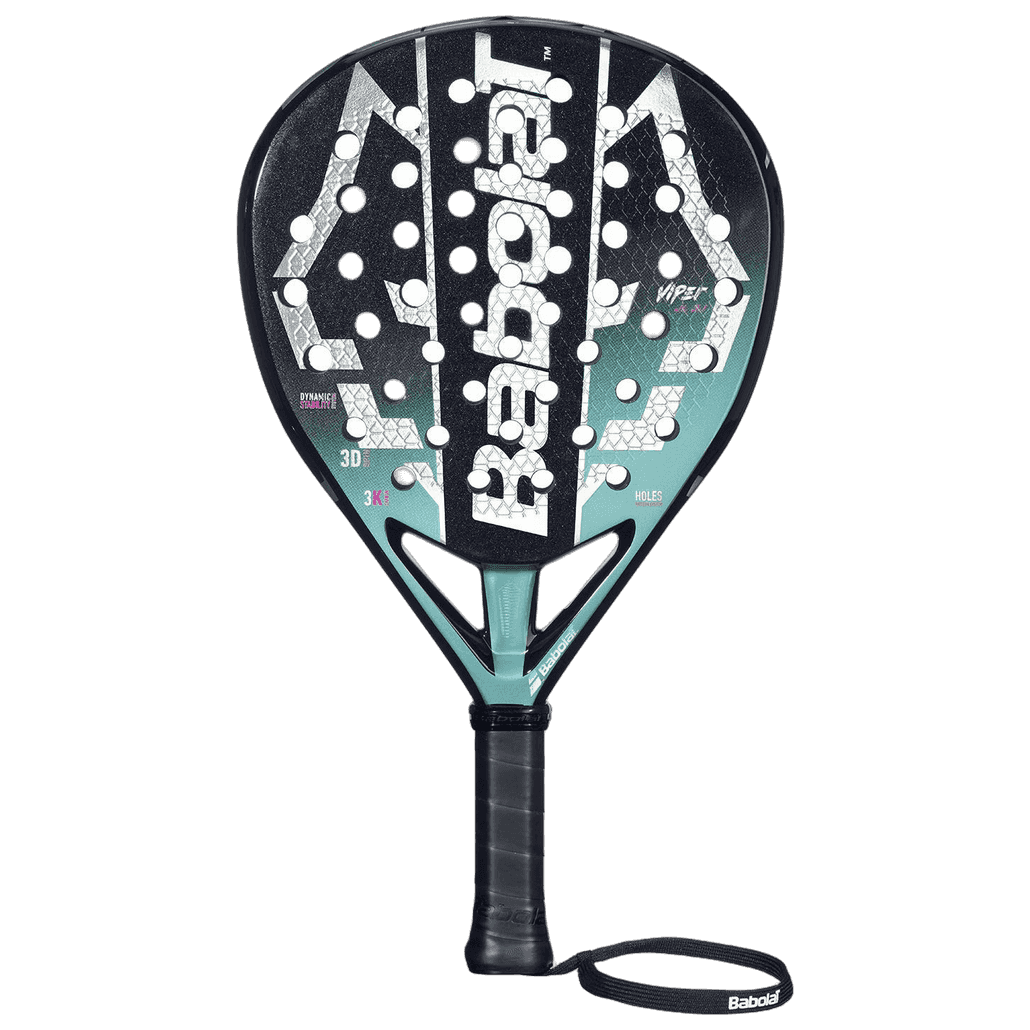
Babolat Technical Viper 3.1 2027 Juan Lebron is an unapologetically attacking racket. It feels built for players who want to take time away at the net, drive the ball through the court, and finish points with a committed overhead swing.
I found it demanding rather than friendly. Give it early preparation and clean contact, and it feels brutally effective. Arrive late or catch the ball outside the center, and it does not do much to rescue the shot.
Technical analysis
Shape & balance
The Diamond shape and high balance put the mass toward the top of the racket, which explains much of its behavior. The racket head carries serious momentum through volleys, overheads, and attacking drives. Once I had it moving, it felt stable and authoritative rather than twitchy.
That same setup is less comfortable in reactive defense. Quick wrist blocks, rushed returns, and low balls played late all require more work than with a lower-balanced racket. The sweet spot is usable, but it feels concentrated; centered contact is rewarded, while off-center hits lose both depth and direction.
Materials & construction
A carbon frame, 3K carbon faces, and Hard EVA core create a distinctly hard feel. The response is dry, direct, and low on automatic ball exit. I had to generate the acceleration myself, but the upside was a very predictable launch when I hit through the ball cleanly.
The face also gives enough bite to work the ball rather than simply hit flat power. This is not a cushioned racket for absorbing pace or floating defensive lobs effortlessly. Players who prefer a softer response may find it tiring over a long match.
On-court feel
Baseline play
From the baseline, I needed to prepare earlier than usual. On well-set balls, the racket can send a deep defensive lob and play a firm counter from off-the-wall situations, but it does not help much when the opponent has rushed me.
Blocks are stable if I get the face behind the ball. Late blocks, especially against fast volleys, can feel heavy in the hand because the balance wants to keep traveling forward. I would not choose this racket for a defense-first game based on improvised wrist work.
At the net
This is where the Viper makes more sense. The racket stays very solid through firm volleys, and a centered strike produces a heavy, penetrating ball without needing an oversized swing. I could press through the middle or angle the volley short with confidence.
Fast exchanges are effective once the racket is already in position. The limitation is maneuverability: rapid hand battles demand sharp preparation, so it is less forgiving than a head-light control racket when the ball arrives unexpectedly.
Bandeja and víbora
The firm face and rougher surface suit a loaded bandeja and an aggressive víbora. I could keep the trajectory low, add spin, and drive the ball deep enough to prevent an easy counterattack. It rewards a full, technical swing rather than a passive overhead.
Smash
The smash is its clearest strength. With proper timing and racket-head speed, it transfers pace exceptionally well and produces a heavy ball. It is not a shortcut for poor technique, though; mishits are obvious, and the hard response offers little comfort.
Conclusion
I would put this racket in the hands of an advanced attacking player who already prepares early and likes to dictate from the net. It suits someone who generates their own pace and trusts their overhead technique.
The trade-off is clear: enormous attacking potential in exchange for less forgiveness in defense. It will reward clean volleys, víboras, and smashes, but it will not make late contact, soft hands, or rushed baseline play feel easy.
What other reviewers say
- Mundo Deportivoes
In attack, the Viper 3.1 produces explosive pace on volleys, víboras and, above all, smashes; its rough face helps create a low, heavily spun víbora. It offers more comfortable ball output and precision from the back than expected, but the high balance demands quick preparation when defending under pressure.
- PadelVerdicten
This review frames it as an exceptionally powerful, stable racket: a clean smash turns racket-head speed into a very heavy ball, while the face stays solid through fast volleys. The trade-off is a small sweet spot and 270 mm balance that punish late contact and reactive wrist-based defense.
- Padel Magazinees
It describes a dry, firm response that does not provide effortless ball output but becomes highly precise and stable at the net on centered contact. Its inertia and power stand out on bandejas, víboras and smashes, whereas defense requires anticipation, technique and clean contact to regain depth.
Switch Intelligence
Be the first to share where you switched from.
Community reviews
Real feedback from players who used this racket.
Add your review
To submit your review, log in first. You can still read all approved community reviews below.
Add review


