

Bullpadel Raider PWR
A round racket with easy power and a firm response, built for players who want attacking intent without losing control at the back court.
Our Take
Shape
Round
Weight
360 - 370 gr
Touch
Medium
Core
EVA Rubber
Faces
Fiberglass
Frame
Carbon
What we like
- Easy power on overheads
- Forgiving round sweet spot
- Stable *bandeja* and *víbora*
What we don't
- Defense still asks for timing
- Not very precise on touch
- Limited bite for angled volleys
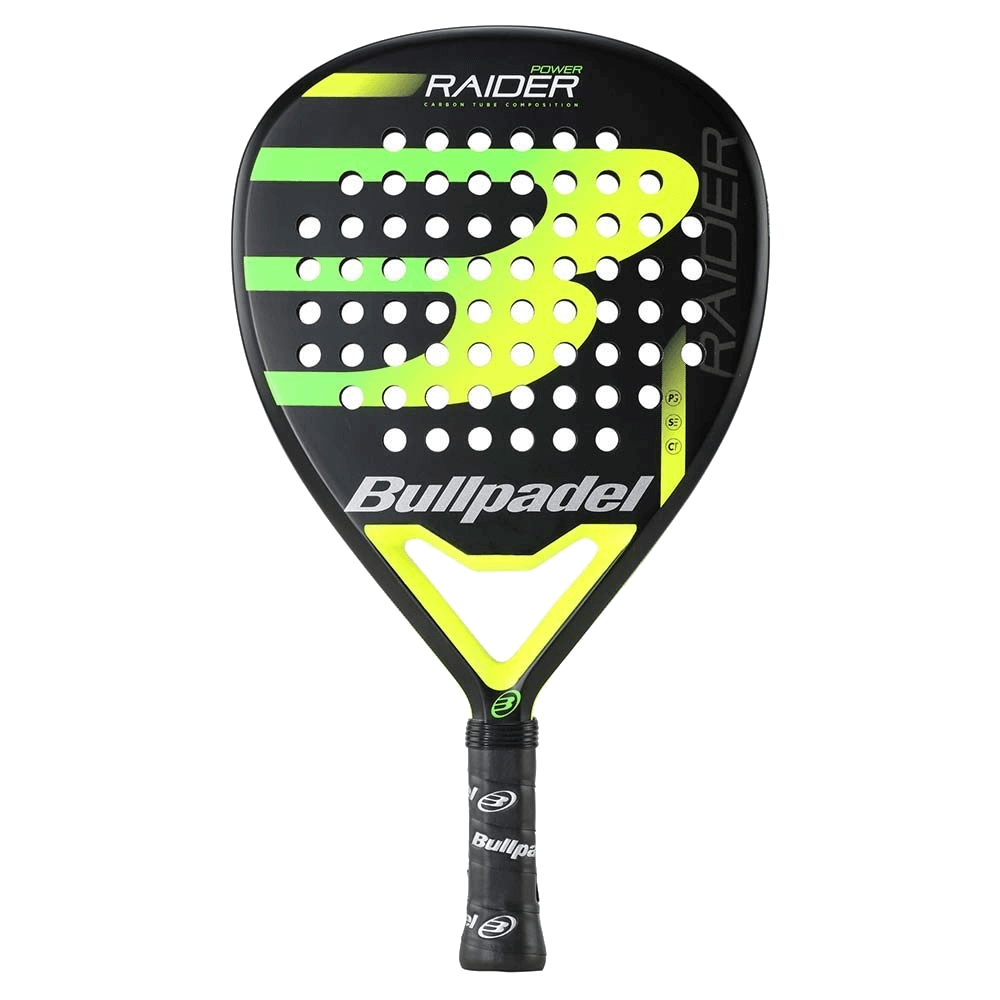
The Bullpadel Raider PWR is an attacking racket with a forgiving edge, but it never hides where its priorities are. I feel it as a straightforward, offense-first frame that still gives enough order in defense to stay playable for weekly players.
Its identity is pretty clear: easy power, a medium touch, and a response that leans more toward firm than plush. It is not trying to be the most precise racket in the room. It wants to help you accelerate the ball and live higher on the court.
Technical analysis
Shape & balance
The round shape is a big part of why this racket stays manageable even with its offensive bias. It gives the sweet spot a little more breathing room than you’d expect from something named PWR, and that helps on off-center contact. I never felt like I had to be perfect just to keep the ball in play.
The balance sits in a place that supports overhead work without making the racket feel clumsy. It is not head-light, so there is enough weight up top to help the ball travel, but it does not feel like a sledgehammer either. That middle ground makes sense for players who want help finishing points without giving up all court awareness.
Materials & construction
The Carbon frame and Fiber Glass faces give the Raider PWR a response that is fairly direct, but not harsh. The EVA Rubber core softens the contact enough to keep the feel in the medium zone, which is exactly where this racket lives: lively, but not explosive in a wild way.
That construction also explains why the racket is more honest than flashy. The ball exit is good when you swing cleanly, and the face has enough give to avoid feeling empty on blocks. Still, this is not a soft-touch control frame. If you want a very crisp, surgical sensation, this one will feel a bit looser than that.
On-court feel
Baseline play
From the baseline, the Raider PWR is stable enough to defend with blocks and low-driven lobs, but it rewards you more when you take the initiative. I liked it most on compact defensive swings where I could absorb pace and send the ball back with depth. It does the job without demanding much drama.
What it does not do especially well is make defensive work effortless. If you are late or stretched, the racket will not magically rescue the point. You get decent forgiveness, yes, but not the kind of easy control that bails you out every time.
At the net
Up at the net, it feels more alive. Volleys come off with good ball exit, and I found it easy to keep pressure on opponents without overhitting. The medium feel helps here because the contact stays controlled enough to place the ball, yet the racket still carries the pace you put into it.
It is not the sharpest racket for carving angles or going full surgeon on every volley. The feedback is a little softer than a more precise frame, so touch players may want more bite.
Bandeja and víbora
This is one of the better zones for the Raider PWR. The racket gives enough stability for a solid bandeja and enough help on the release to keep the ball deep. On the víbora, I got a decent blend of control and easy acceleration, which makes it more comfortable than many low-cost power models.
That said, the finish is more functional than nasty. It helps you keep the opponent pinned, but it does not generate a huge amount of heavy spin or vicious snap on its own. You still need to supply the technique.
Conclusion
I’d put the Bullpadel Raider PWR in the hands of players who want a racket with attacking intent, but do not want something demanding or overly stiff. It is approachable, fairly stable, and better in the air than its price and category might suggest.
The trade-off is clear. You get easier power and decent comfort, but you give up some precision, bite, and sharp defensive control. If your game lives on placement and fine touch, this probably feels a little too loose. If you like finishing points with overheads and want a racket that helps you pressure from the net, it makes a lot more sense.
Switch Intelligence
Be the first to share where you switched from.
Community reviews
Real feedback from players who used this racket.
Add your review
To submit your review, log in first. You can still read all approved community reviews below.
Add review


