

Kombat Legend Hunter 2026
A medium-firm tear-shape with a generous sweet spot and balanced ball exit, keeping enough punch in reserve for decisive overheads.
Our Take
Shape
Tear
Weight
360 - 370 gr
Core
Black EVA
Faces
3K Carbon
What we like
- Punchy, stable net volleys
- Forgiving off-the-wall ball exit
- Controlled bandeja and víbora direction
What we don't
- Passive blocks can land short
- Delicate chiquitas need deliberate hands
- Lacks maximum smash acceleration
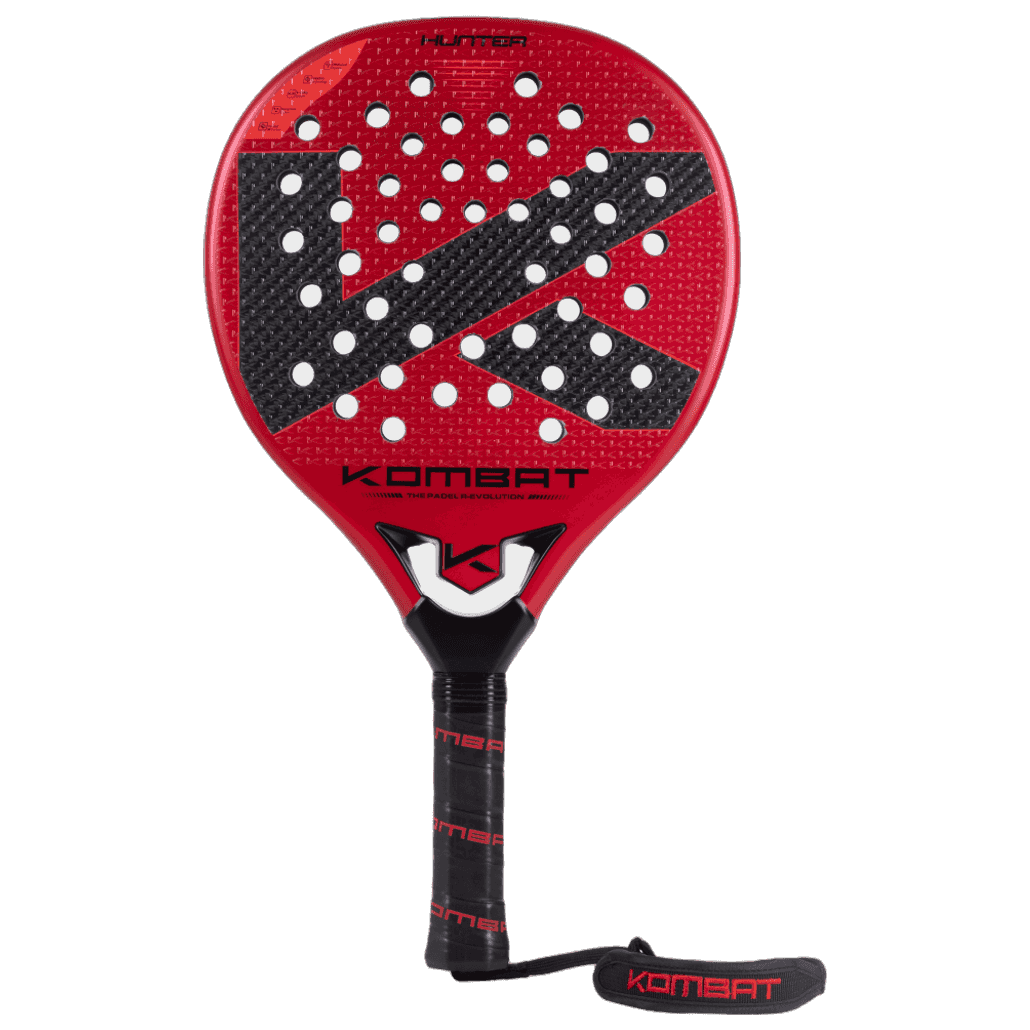
The Kombat Legend Hunter 2026 is a direct, attacking-leaning racket that stops short of being a pure power weapon. It looks built for players who want to press from the net but still need enough forgiveness to stay useful through defensive exchanges.
I’d call its character medium-firm rather than brutally stiff. There is useful ball exit here, but the racket still asks you to prepare early and hit through the ball.
Technical analysis
Shape & balance
Its tear shape puts the sweet spot slightly above center without pushing it as high as a diamond racket. That is a sensible layout for a player who wants extra help on volleys, bandejas, and overheads without feeling disconnected at the baseline.
The balance sits in the medium range. I would expect enough head presence to make attacking balls feel heavy, while keeping the racket quick enough for fast exchanges at the net. It is not the type of setup I’d choose for a very wrist-led, ultra-light feel. Quick hand changes are possible, but the head will still make itself known when the pace rises.
Materials & construction
The faces use 3K Carbon, a relatively conventional carbon layup that usually brings a cleaner, firmer contact than fiberglass without becoming overly demanding. Combined with the Black EVA core, the Hunter should offer a response with some compression rather than a dry, abrupt impact.
That construction points toward a medium-firm feel: enough firmness to direct volleys and accelerate a víbora, with a balance between control and ball exit rather than a trampoline effect. The listed sweet spot and ball exit characteristics support that profile. I would not expect the same pinpoint feedback as from a denser, harder carbon racket, especially when you catch the ball high on the face or late in defense.
On-court feel
Baseline play
From the baseline, I’d use the Hunter to play proactive defense rather than simply absorb pace. Off-the-wall balls played with intent should reach depth, and defensive lobs should come off comfortably when contact is clean.
The trade-off is passive defense. Because the Black EVA core is on the firm side, a late or loose block can land short. Players who expect the core to do the work on slow balls will need to push with arm and legs.
At the net
This is where the Hunter’s format makes the most sense. It should move through compact volleys well, with enough stability to punch the ball deep and enough maneuverability to react in quick body-shot exchanges. I’d expect a particularly useful response on aggressive backhand volleys, where you want pace without opening the racket face too much.
Touch shots are workable. The 3K faces should allow reasonable fine control on a chiquita or drop volley, although a clean hand still makes the difference.
Bandeja and víbora
The tear shape should give the Hunter a good working zone for controlled overheads. I would lean on it for a deep bandeja with a compact swing, then use the firmer face to add pace and direction to the víbora. It should reward a player who strikes forward through the ball rather than one who relies entirely on wrist snap.
On a full smash, it likely delivers respectable acceleration, but it is not built around all-out head-heavy violence. Players whose game depends on finishing every short lob with raw power may want a more aggressively balanced racket.
Conclusion
I see the Hunter fitting intermediate and advanced players who spend plenty of time building pressure at the net but do not want a demanding diamond racket. It has the ingredients for solid volleys, useful overhead control, and forgiving enough defensive ball exit.
What you trade away is absolute touch and maximum smash power. The response is firm rather than soft, and players who want the racket to add depth on slow balls may find it asks for too much effort.
What other reviewers say
- PadelSpaines
The 2026 Hunter returns as the balanced model of the Kombat Legends relaunch: a rounder teardrop than earlier versions, braided 3K carbon and the new Black EVA 2026 core.
- Vibrando Pádeles
The Hunter is the middle option of the relaunch, for players who want a balance between control and ball exit; the article says none of the four models is a beginner racket.
- Padel Tonicen
The spec summary lists the Hunter as a teardrop with braided 3K carbon and Black EVA 2026, built for balanced attack and defense.
Switch Intelligence
Be the first to share where you switched from.
Community reviews
Real feedback from players who used this racket.
Add your review
To submit your review, log in first. You can still read all approved community reviews below.
Add review


