

NeuronPadel Ronin v1 2026
A versatile tear-shaped racket with real power and fine control, built to take the net without losing composure in defense.
Our Take
Shape
Tear
Weight
360 - 380 gr
Core
Multi EVA
Faces
18K Alum
Frame
Power Frame
What we like
- Punchy volleys with stable face
- Controlled, heavy *bandeja* trajectories
- Strong power on committed smashes
What we don't
- Restrained ball exit from baseline
- Moderate sweet spot punishes mishits
- Slower in rushed net exchanges
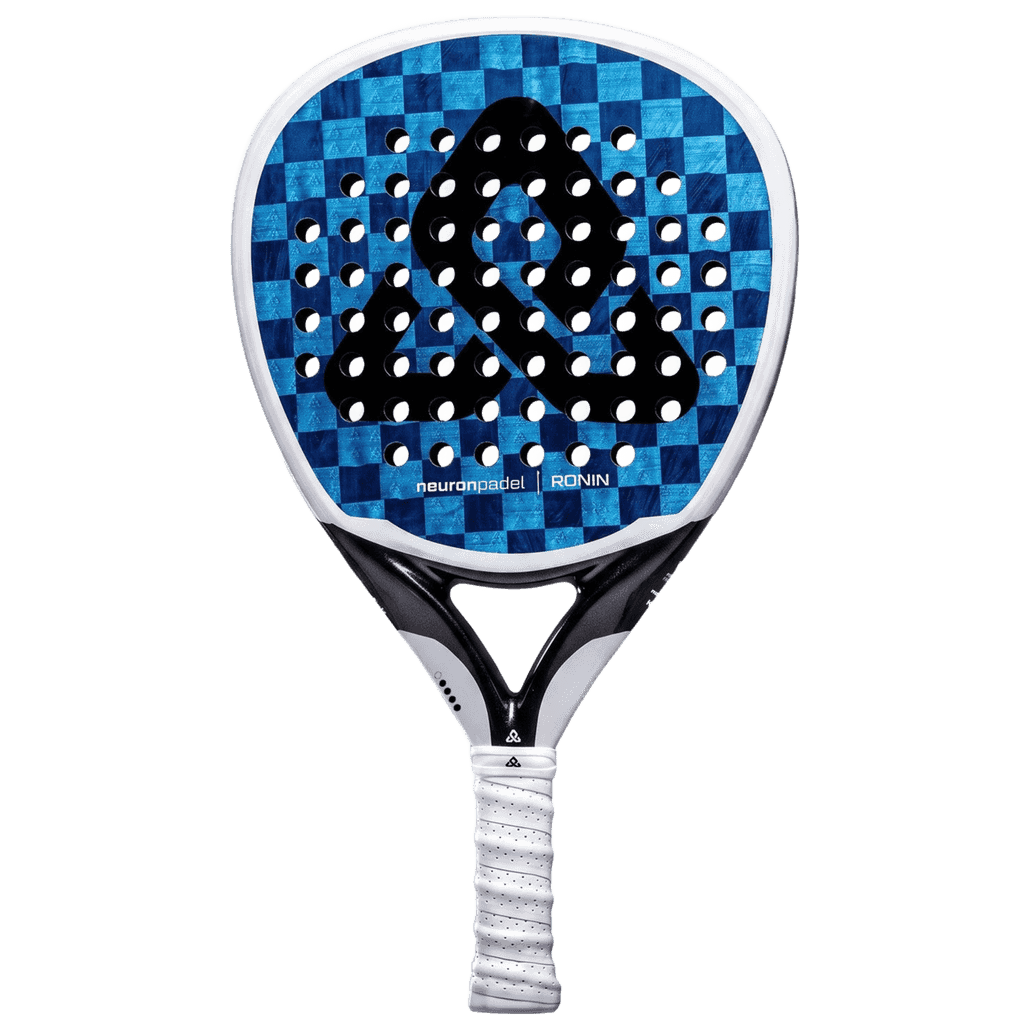
NeuronPadel Ronin v1 2026 is a versatile tear-shaped racket with a serious appetite for pace, but it is not a one-dimensional smash machine. The high power and control figures point to a racket made for players who want to dictate rather than simply survive rallies.
I see it suiting an experienced player who builds points from a stable base, then steps forward to finish. It asks for clean preparation and committed swings; this is not the soft, easy-going option for rescuing every late contact.
Technical analysis
Shape & balance
The tear shape puts the Ronin in the middle ground between a round control racket and a full diamond power racket. That matters: it should give more usable contact area than an aggressive diamond while still carrying enough weight through the swing for overhead work.
Its balance is medium, so it sits between a head-light control racket and a head-heavy diamond. I would expect it to feel planted on volleys and overheads, though less quick through rapid hand exchanges than a low-balance round model. The rated sweet spot is only moderate, so lazy contact near the frame is unlikely to be forgiven.
Materials & construction
The Power Frame, 18K Alum faces, and Multi EVA core suggest a firm, structured build rather than a springy fiberglass racket. The aluminized carbon should provide a more direct response, particularly when I accelerate through the ball, while the Multi EVA construction should give it some variation between softer defensive touches and harder attacking impacts.
That said, the rebound rating is not especially high. I would not expect free ball exit from the baseline. On slower swings, the Ronin will likely ask me to supply the pace myself. That can be a benefit for players who dislike an overly lively racket, but it also makes defensive recovery more demanding.
On-court feel
Baseline play
From the baseline, I would use the Ronin for controlled depth rather than relying on passive defense. Blocks and defensive lobs should be accurate when I meet the ball in front, with the firmer faces helping keep the racket face stable through contact.
The trade-off is clear. Late off-the-wall play, especially when I need the racket to do the work, may feel less comfortable than with a softer core and higher ball exit. I would not choose it for a player whose game depends on absorbing pace and floating the ball back deep.
At the net
This is where its profile makes more sense. The frame and carbon faces should give volleys a compact, solid response, allowing me to punch through the court without overhitting. The moderate sweet spot means I would keep my hands quiet and my contact clean; it should reward precise volleys more than improvised ones.
Fast exchanges could expose its maneuverability limit. It is not likely to feel as whippy as a lighter, head-light racket, particularly on rushed backhand blocks or sharp body volleys.
Bandeja and víbora
The Ronin should be at its best when I can set up under the ball and drive through an aggressive bandeja or víbora. The firm face construction ought to help with directional control and a lower, heavier trajectory rather than a floaty ball.
A full smash should have plenty of available power, but it will not manufacture technique. Players without a consistent overhead swing may find the response demanding rather than helpful.
Conclusion
I would put the Ronin in the hands of advanced intermediates and advanced players who want power and control in one racket without moving all the way to an unforgiving diamond shape. It looks built for assertive net play, controlled overheads, and finishing points with a committed swing.
The compromise is comfort. Its moderate maneuverability, restrained rebound, and less generous sweet spot mean it will not flatter late defense or loose technique. If I want a racket that supplies effortless exit and easy recovery, I would look elsewhere.
Switch Intelligence
Be the first to share where you switched from.
Community reviews
Real feedback from players who used this racket.
Add your review
To submit your review, log in first. You can still read all approved community reviews below.
Add review


