

Nox AT10 Genius Attack 18K Alum 2027 Agustin Tapia
A demanding diamond built to end points above the net, with a firm response that asks for clean, early contact.
Our Take
Shape
Diamond
Weight
360 - 375 gr
Touch
Medium
Core
MLD Black Eva
Faces
Carbon Fiber 18K Alum
Frame
Carbon
What we like
- Heavy, fast attacking volleys
- Strong bite on *víboras*
- Powerful flat and *por tres* smashes
What we don't
- High sweet spot punishes lobs
- Slow in fast hand battles
- Harsh on off-center blocks
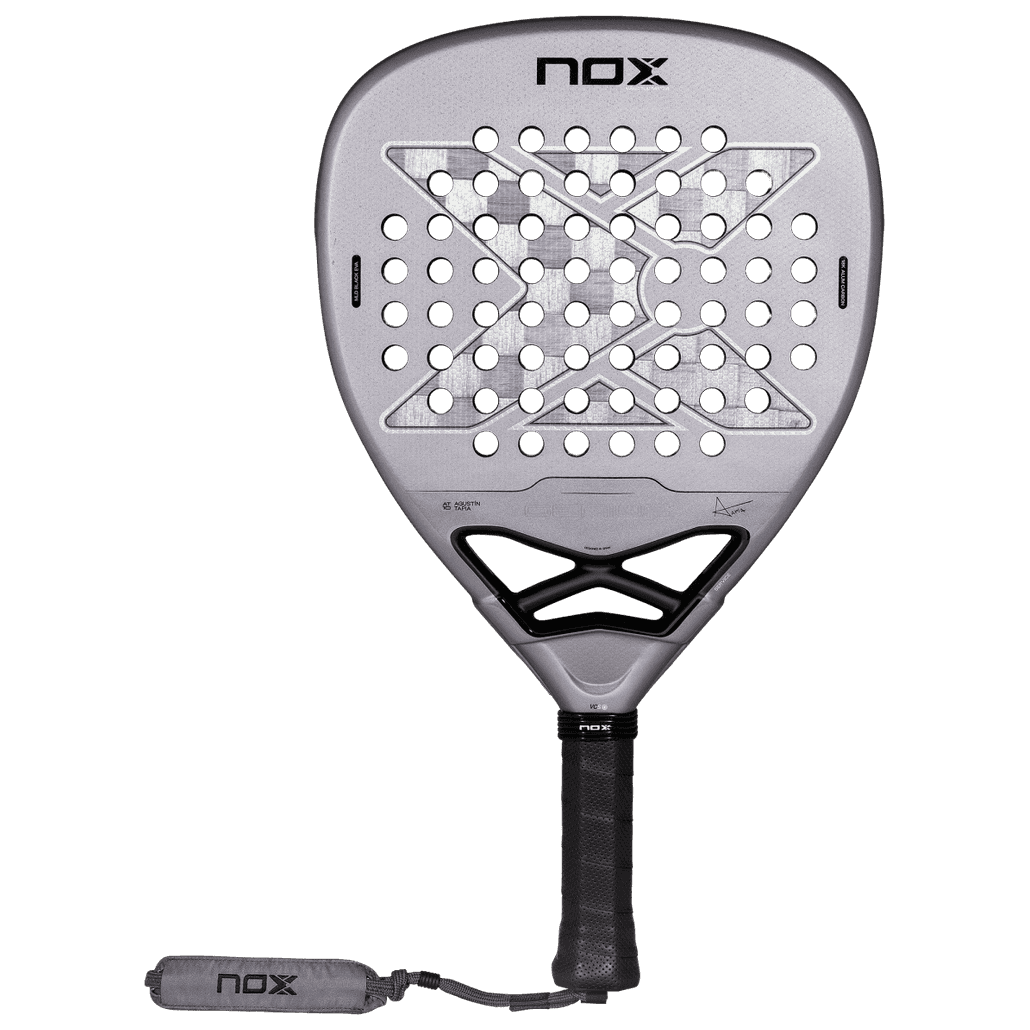
Nox AT10 Genius Attack 18K Alum 2027 Agustin Tapia is a committed attacking racket. Its diamond shape, high balance, and direct response make it feel built to finish points rather than absorb pressure comfortably.
I found its character very clear: get the racket prepared early, take the ball in front, and it rewards you with serious pace and bite. Arrive late or make contact low on the face, and it becomes far less forgiving.
This is not a soft, easygoing option for long defensive exchanges. It asks for clean technique and an aggressive mindset.
Technical analysis
Shape & balance
The diamond mold places the sweet spot high, and the head-heavy balance is obvious from the first overhead. It helps the racket carry through the ball on attacking volleys and smashes, but it also makes quick reactions more demanding.
That balance is the main trade-off. I would not choose it for a player who relies on late blocks, short preparation, or relaxed off-the-wall play. The racket wants a full, organized swing; otherwise, it can feel slow to position and slightly awkward below net height.
Materials & construction
The Carbon Fiber 18K Alum faces give the contact a firm, crisp edge without feeling completely dead. Combined with the MLD Black Eva core and Carbon frame, the response sits in a medium feel range, although it plays firmer when I accelerate through the ball.
Ball exit is decent, but it is not the kind of racket that sends the ball deep with a compact defensive touch. It responds best when I put intent into the shot. The face texture also gives the ball noticeable grip, particularly on sliced overheads.
On-court feel
Baseline play
From the baseline, I had to stay proactive. Defensive lobs need clean contact because the elevated sweet spot does not help much when the ball drops low or arrives fast after the glass. On off-center blocks, the racket can feel harsh and the ball does not always leave with enough margin.
Low-driven lobs are more reliable when I can step into them and use the racket’s firmness. Still, this is not a racket that makes defense easier. It rewards good footwork, early preparation, and a stable wrist; it punishes lazy positioning.
At the net
At the net, the AT10 Attack becomes much more convincing. Firm volleys come off fast and heavy, especially when I take the ball early. The head carries momentum through the contact, so I can pressure the opposing pair without needing an oversized swing.
Quick exchanges are less comfortable, though. In fast hand battles, the balance can make the racket feel a half-step behind a more neutral model. I could block effectively with solid technique, but I would not call it particularly maneuverable.
Bandeja and víbora
The textured face and firmer response suit an aggressive bandeja and, even more, a víbora. I found it easy to create bite and keep the ball skidding after the bounce. When contact is high and out in front, the racket gives a direct, penetrating trajectory.
A defensive bandeja played late is another story. The racket does not mask poor timing, and the high balance can pull the face open if the arm is not stable.
Smash
The smash is its natural territory. Flat smashes feel powerful, and there is enough firmness in the face to drive through the ball for por tres attempts. Players with a technically sound overhead should find real value here.
Conclusion
I would put this racket in the hands of an advanced player who builds points to attack at the net and has the preparation to use a high-balance diamond racket properly. It is especially strong for aggressive volleys, víboras, and finishing smashes.
The trade-off is comfort. Defense, late blocks, low contacts, and off-center shots demand more from the player than from the racket. If I wanted easy handling or a larger safety margin from the baseline, I would look elsewhere.
What other reviewers say
- PadelTestLabfr
This review frames it as a finishing racket: the firm face and head-heavy balance reward flat and por-three smashes, while the textured surface produces pronounced bite on viboras and sliced bandejas. The trade-off is early preparation; its small, high sweet spot punishes defensive glass shots, lobs, and late blocks.
- PadelSapienses
Its ratings highlight very high power and spin, particularly for smashes and viboras, but place it well below that level for control, handling, bandejas, and baseline play. The diamond shape, high balance, and extended grip are described as physically demanding and unforgiving when the player’s technique is not up to it.
Switch Intelligence
Be the first to share where you switched from.
Community reviews
Real feedback from players who used this racket.
Add your review
To submit your review, log in first. You can still read all approved community reviews below.
Add review


