

Nox ML10 Pro Cup Silver 2027 Miguel Lamperti
A soft, forgiving round racket that makes defense feel simpler, with easy ball exit and the calm control to build points patiently.
Our Take
Shape
Round
Weight
350 - 365 gr
Touch
Soft
Core
HR3 EVA
Faces
Silver Fiberglass
Frame
Carbon
What we like
- Forgiving sweet spot on blocks
- Easy depth from baseline defense
- Controlled *bandeja* placement and handling
What we don't
- Flat smashes lack finishing punch
- Smooth face limits *víbora* spin
- Flat volleys lack real weight
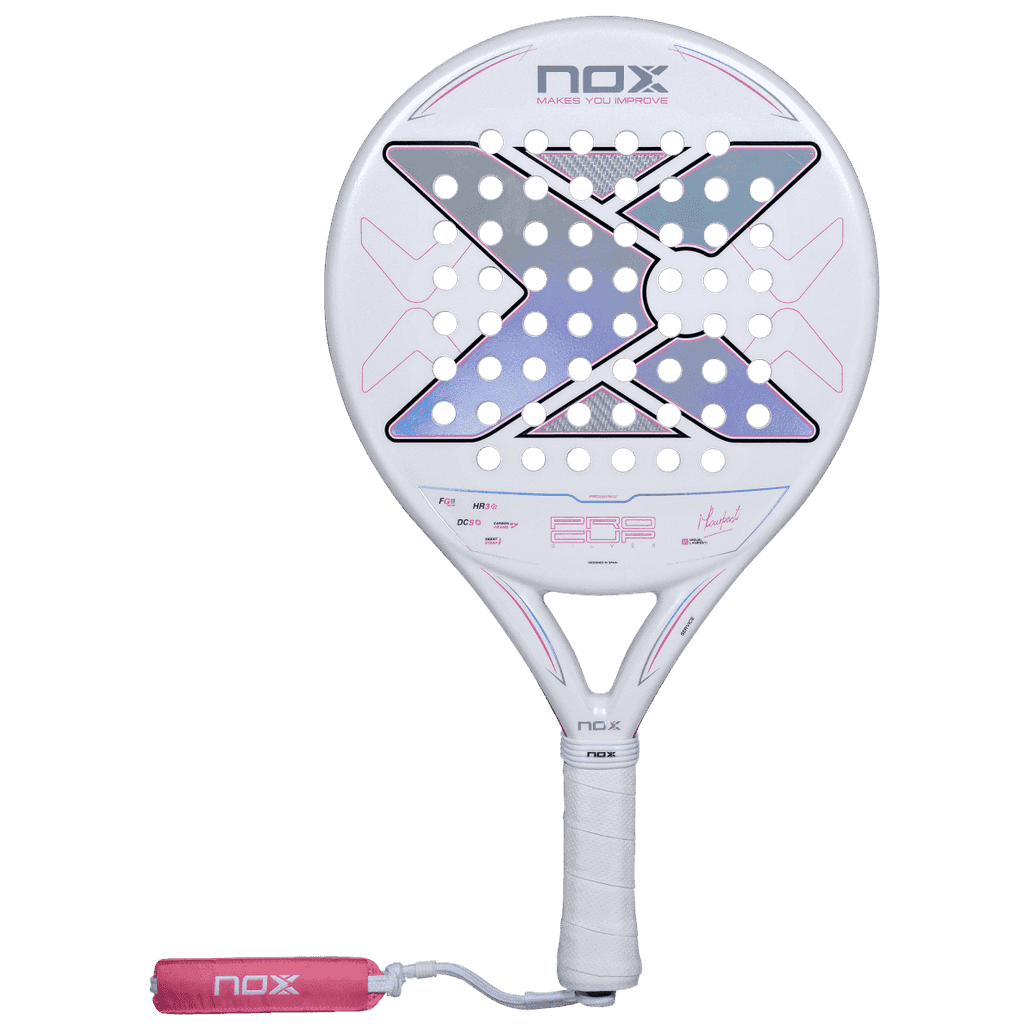
Nox ML10 Pro Cup Silver 2027 Miguel Lamperti is a forgiving, comfort-first racket built around easy depth and a wide margin for error. I see it as a control racket for players who spend plenty of time defending, resetting points, and building their way to the net rather than trying to end rallies with one swing.
Its round shape and soft feel give it a very approachable response. The ball comes off the face willingly, even when contact is not quite clean.
Technical analysis
Shape & balance
The round format puts the sweet spot in the most usable part of the face, and it feels broad in play. That matters most under pressure: late blocks, defensive lobs, and off-the-wall balls do not need perfect contact to travel with decent length.
I found the handling quick enough for fast exchanges at the net without feeling nervous or flimsy. It does not feel head-heavy or ask you to force every overhead. Instead, it favors placement and repeatability. Players who like to accelerate hard through the ball may find that controlled character a little too muted.
Materials & construction
The carbon frame gives the structure some stability, while the Silver Fiberglass faces keep impact comfortable and add easy ball exit. Fiberglass is doing much of the work here: the response is elastic rather than sharp, so the racket helps when your swing is short or defensive.
Inside, the HR3 EVA core reinforces that forgiving behavior. Blocks feel stable, and the racket does not punish slightly off-center contact. The trade-off is a less direct, less explosive hit than a firmer carbon-faced model. There is also no pronounced rough texture to help grip the ball, so heavy slice is not its strong suit.
On-court feel
Baseline play
From the baseline, this is where I think the ML10 Pro Cup Silver makes the most sense. The large sweet spot and generous rebound make defensive lobs easier to lift, while balls coming off the glass leave the face with enough help to regain depth without overhitting.
That easy output is useful in long defensive points. I could play a low-driven lob or a controlled chiquita without feeling that the racket needed a full swing to respond. Still, players who prefer a very firm, surgical touch may find the softer contact slightly less exact on delicate drop shots.
At the net
Volleying is simple and reliable. On compact blocks, the racket stays stable and returns enough pace to keep opponents from taking over the point. It is particularly comfortable for absorbing a hard volley and redirecting it through the middle.
What it does not do is add much extra damage by itself. To make volleys bite and penetrate, I needed to provide the acceleration. The racket helps me keep the ball in play; it does not turn routine contact into a winner.
Bandeja and víbora
The bandeja suits this racket well. Its manageable handling and soft response make it easy to guide the ball deep and keep control of the net without forcing the shot.
The víbora is less convincing. Because the face is smooth and the response is geared more toward rebound than bite, I could not load the same amount of side spin that I would expect from a textured, firmer face. Placement works. Heavy rotation does not come as naturally.
Smash
Flat smashes require honest work. There is enough output for a well-timed smash, but the racket does not provide the crisp, head-heavy punch that helps finish points through pure speed. I would not choose it for a game built around bringing the ball back or overpowering opponents overhead.
Conclusion
I would recommend this racket to intermediate players and regular club players who value comfort, control, and dependable defense. It is especially well suited to players who want help on blocks, lobs, and off-the-wall recovery shots.
The trade-off is clear: you gain forgiveness and easy ball exit, but give up some finishing power and spin potential. If your point construction relies on patience, placement, and a controlled bandeja, that is a sensible exchange.
What other reviewers say
- PadelTestLabfr
The review presents it as highly forgiving in defence: easy ball exit, a large sweet spot and stable blocking help with lobs, volleys and shots off the glass. In return, flat smashes require the player to generate the pace, while the smooth face reduces bite on viboras and sliced shots.
- PadelSapienses
Its ratings clearly favour control, rebound and baseline play, with good results on wall-descending shots and bandejas. Power and spin rate much lower, so it does not come across as a racket for finishing through smashes or heavily loaded spin.
Switch Intelligence
Be the first to share where you switched from.
Community reviews
Real feedback from players who used this racket.
Add your review
To submit your review, log in first. You can still read all approved community reviews below.
Add review


